Fashion Production Company Insurance
A fashion production company is a small studio business in dress rehearsal between Tuesday and Friday and a fully staffed film unit on Saturday. The same EIN that runs payroll for two full-time employees on Monday is the named insured underwriting a 35-person crew at Pier 59 on Sunday, with a producer signing the call sheet, a DP loading $40K in glass into a hard case, a wardrobe stylist pulling six figures of borrowed sample, and a SAG-AFTRA principal walking into a fitting at 9:00 AM under the 2025 Commercials Contract.
The brokerage places insurance built for that mode-switching reality. Coverage works across the full editorial-to-commercial spectrum: editorial shoots for magazines and digital publishers; brand campaigns for fashion houses; lookbook days for designers; e-commerce production for DTC operators; branded content and short-form video for paid social; SAG and non-SAG commercials; music-video sequences with fashion elements; and the increasingly common single-day single-location shoot that still needs a real production policy in force at 06:00 load-in.
What A Fashion Production Company Actually Is, On An Insurance Form
A fashion production company is an unusual underwriting object. The day-to-day operations look like a creative services consultancy — a small office, a few full-time producers and PMs, project management software, accounts payable for vendors. The shoot-day operations look like a film unit — payroll spike, equipment trucks, crew of 25 to 80, location moves, hazardous-environment exposures, talent agreements, union compliance, and a per-day burn that can exceed what the office spends in a month. Both modes coexist under one legal entity, and the insurance has to respect both.
The way the market handles this is to write a production policy that's elastic across the production calendar. The named insured is the production company; the policy covers the entity's everyday operations and the productions it executes. Some carriers do this on a single annual form with production endorsements; others split it between a base CGL/property policy and a separate DICE policy — Documentary, Industrial, Commercial, Educational — that covers the per-production exposures. Single-shoot or short-term production policies pick up the gap when an annual form isn't right.
A clean fashion production policy is one document the production company can hand to a client, a location, a SAG agent, an equipment rental house, and a talent agency — and have everyone read what they need on the same certificate.This page is the operator's view of how the form gets built: the production phases where exposure shifts, the twelve production departments that each carry their own risk, the coverage ladder a brokerage builds for a fashion production account, the SAG / Part 107 / OSHA compliance layer, and the certificate logistics that determine whether load-in actually happens on schedule.
Where The Form Activates Across The Calendar
A production isn't a single moment; it's a five-phase timeline that runs from initial bid through final delivery. Different coverage forms activate at different phases, and a clean production company program is structured so the right form is in force when each phase begins.
Pre-Production
Casting, location scouting, crew booking, sample pulls, prop sourcing, pre-pro meetings. Exposure tilts toward sample bailment, location agreement liability, and IP / clearance risk on creative direction.
Build / Pre-Light
Set construction, paint, scenic, lighting pre-rig. Working-at-height exposure activates; crew payroll begins; equipment rental in-bound on care-custody-control.
Principal Photography
Shoot days. Full crew, full talent, full equipment, full liability. Every form is active simultaneously: CGL, equipment, samples, talent W&A, weather contingency, third-party property at the location.
Wrap
Strike, equipment returns, location restoration, sample returns to bailors, talent agreements settled. Last-minute damage discoveries and missing-equipment claims peak in this 48-hour window.
Post / Delivery
Editorial, color, sound, VFX, deliverables to client. Errors & omissions becomes the dominant exposure; copyright clearance, music sync, and right-of-publicity verification all happen pre-delivery.
Each Department Carries Its Own Insurable Risk
A fashion shoot is structured into discrete departments, each with its own head, its own crew, its own equipment package, and its own liability profile. A production company's policy has to address each one specifically — the form rated at the entity level still has to respond when something happens at the camera department, the grip & electric department, the talent department, or anywhere else on the call sheet.
Production Office
Producer, line producer, production manager, production coordinator, PAs. Owns the call sheet, the schedule, and the legal exposure for everything that happens on set.
Camera Department
DP / cinematographer, camera op, 1st AC, 2nd AC, DIT, loader. Highest-value equipment package on set — bodies, glass, monitors, follow-focus, matte boxes.
Grip & Electric
Gaffer, best boy electric, key grip, best boy grip, electricians, grips. Working at height; high-amp distro; rigging; modifying ambient environment. Highest-injury department.
Wardrobe / Styling
Wardrobe stylist, assistant stylists, tailor. Borrowed samples on bailment from brands; pull authorizations; return condition disputes; sample loss frequency dominates this department.
Hair & Makeup
Key hair, key makeup, additional artists. Personal injury exposure from products (allergic reactions, burns from heated tools). Kit-and-equipment loss; talent property handling.
Art / Set Design
Production designer, art director, set decorator, prop master, scenic carpenters. Set construction, scenic, props, paint. Working at height during build; tool injuries; structural collapse risk.
Talent / Models
Principal performers, featured talent, fitness talent, models, kids. SAG-AFTRA compliance, minor work permits, agency indemnity. Right-of-publicity and image-release management.
Sound Department
Sound mixer, boom op, sound utility. Sync sound capture for branded content and commercials. Music licensing for any temp music used on set.
Locations
Location manager, location assistants, location PAs. Permits, location agreements, additional insureds, property damage at filming location, neighbor noise complaints, vehicle-on-property risk.
Transportation
Drivers, picture cars, production vehicles. Hired and non-owned auto; cargo coverage on equipment in transit; commercial driver licensing for larger trucks.
Aerial / Drone
FAA Part 107 remote pilot, visual observer. Aircraft hull and liability coverage for the UAS; airspace authorizations; operations over people and at night require specific 2021-rule compliance.
Post Production
Editor, assistant editor, colorist, sound designer, VFX supervisor. E&O exposure, music sync, clearance verification, AI / generative tool use risk under 2025 SAG-AFTRA digital replica rules.
The Five Tiers Of A Fashion Production Program
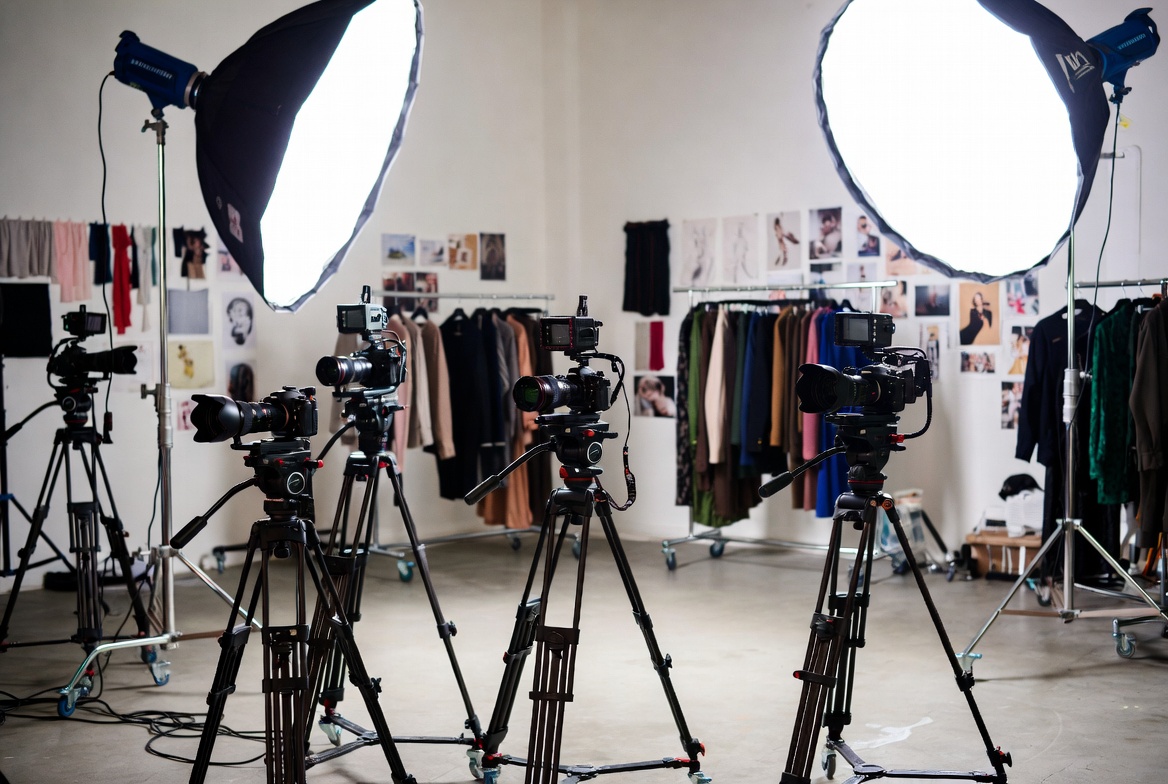
The ladder to the right represents the layered structure a brokerage builds for a fashion production company account. Tier 1 is non-negotiable — it's the load-bearing form. Each ascending tier addresses additional exposures that the production calendar dictates.
Not every production company needs every tier. A small production company doing exclusively e-commerce work in a controlled studio environment might stop at Tier 3. A company executing nationwide commercial campaigns with SAG talent and drone footage needs all five.
DICE policy stands for Documentary, Industrial, Commercial, Educational — an industry term for the production-specific package form that covers per-production exposures (third-party property, equipment, faulty stock, civil authority, weather, props/sets/wardrobe, cast). Some carriers package it as "Producer's Package Policy" or "Short-Term Production Policy"; the coverage scope is the same.
Production Coverage Ladder
Core
Commercial General Liability
Third-party bodily injury and property damage at any production location. Personal & advertising injury. Damage to rented premises. The baseline that issues additional insured endorsements to clients, locations, and vendors.
Workers' Comp
Workers' Compensation & Employer's Liability
Statutory workers' comp for W-2 crew. Employer's liability for state-law tort claims. Critical for productions with W-2 PAs, in-house producers, and any direct-hire crew. State-rated; multi-state crews require schedule review.
Production
DICE / Producer's Package Policy
The production-specific package: third-party property damage at the production location, owned and rented equipment, faulty stock / camera / processing, civil authority, props/sets/wardrobe, extra expense, and cast insurance.
Liability+
Excess / Umbrella · Hired & Non-Owned Auto
Umbrella sits over CGL, EL, and HNOA. Hired and non-owned auto for production vehicles, picture cars, equipment trucks. Excess limits typically required by major clients and venues — $5M to $10M is a common contractual minimum.
Specialty
E&O · Cyber · Aviation · Foreign
Errors and omissions for finished media; cyber for the studio's data environment and any live-stream; aviation (typically Lloyd's) for drone operations under Part 107; foreign liability for international locations; weather contingency for outdoor shoots.
Where Fashion Production Insurance Gets Specific
A generic commercial production policy doesn't fit a fashion production company. The exposures below are the ones that make this class its own thing — they distinguish a fashion-production placement from a TV-commercial-production placement, and they're the ones that turn a clean account into a hard-to-place one when they're handled wrong.
Borrowed Sample Bailment
A fashion shoot often involves five- to seven-figure aggregate sample value on set, borrowed from brands, showrooms, PR houses, or sample-rental services. None of those samples are the production's property. All of them are the production's exposure.
Inland marine sample bailment with sub-limit per pull, valuation method (replacement vs. wholesale vs. retail) agreed in advance, and pull-out / pull-in documentation requirements. The pull form is the underwriting artifact.
Mixed W-2 / 1099 / Loan-Out Crew
A typical fashion production day has a mixed crew: salaried producers (W-2), freelance crew on 1099, talent through loan-out corporations, PAs sometimes day-rated as W-2, agency contractors. Each classification has different workers' compensation, EPLI, and tax-withholding implications.
Workers' comp with multi-state schedule, payroll service coordination for properly classified crew, EPLI with misclassification endorsement, and a documented internal classification methodology aligned to the IRS economic-reality test and state-specific ABC tests.
Talent & Right Of Publicity
Every face on a fashion campaign is a right-of-publicity property. Models, principals, featured talent, even the visible PA. Use beyond what the agreement allows — territory expansion, channel expansion, derivative cuts — is one of the most common E&O claims in the class.
Talent and model agreements with specific use windows, territories, and channels. E&O coverage for finished media. Documented review of usage prior to delivery. SAG-AFTRA Commercials Contract compliance for signatory productions.
Drone / Aerial Footage
Aerial cinematography in fashion has become standard — campaign films, location B-roll, drone-driven hero shots. Any commercial use of a drone under 55 lbs in US airspace requires an FAA Remote Pilot Certificate under 14 CFR Part 107.
Aviation liability and hull coverage for the UAS, typically placed through Lloyd's or specialty aviation markets. Pilot must hold an active Part 107 certificate. Operations over people, night operations, or operations beyond visual line of sight require specific waivers or rule compliance.
Client / Location Additional Insured Cascade
A single shoot day routinely requires additional insured endorsements for: the client brand, the client's parent company, the agency, the location, the location owner, the property manager, and sometimes a real-estate trust. Each AI has its own contract requirements for limits, P&NC language, and waiver of subrogation.
Annual production policy with blanket additional insured endorsements where contract requires. Same-day certificate issuance protocol with the carrier. Primary and non-contributory language, waiver of subrogation, and 30-day notice of cancellation routinely available on production forms.
AI / Generative Tool Use In Post
Use of generative AI tools in post-production — face replacement, retouching, scene generation, voice synthesis — engages the 2025 SAG-AFTRA Commercials Contract's digital replica framework for any union performer. Outside of SAG, the underlying training-data IP, right-of-publicity, and downstream client warranty exposure all need to be assessed before delivery.
E&O coverage for finished media. Documented internal AI-use policy. Written informed consent and compensation from any performer whose likeness is replicated. The 2025 Commercials Contract requires minimum compensation of 1.5× applicable scale session fee, plus use and holding fees, for digital replica use of union performers.
Four Federal Regimes That Sit Above The Coverage Form
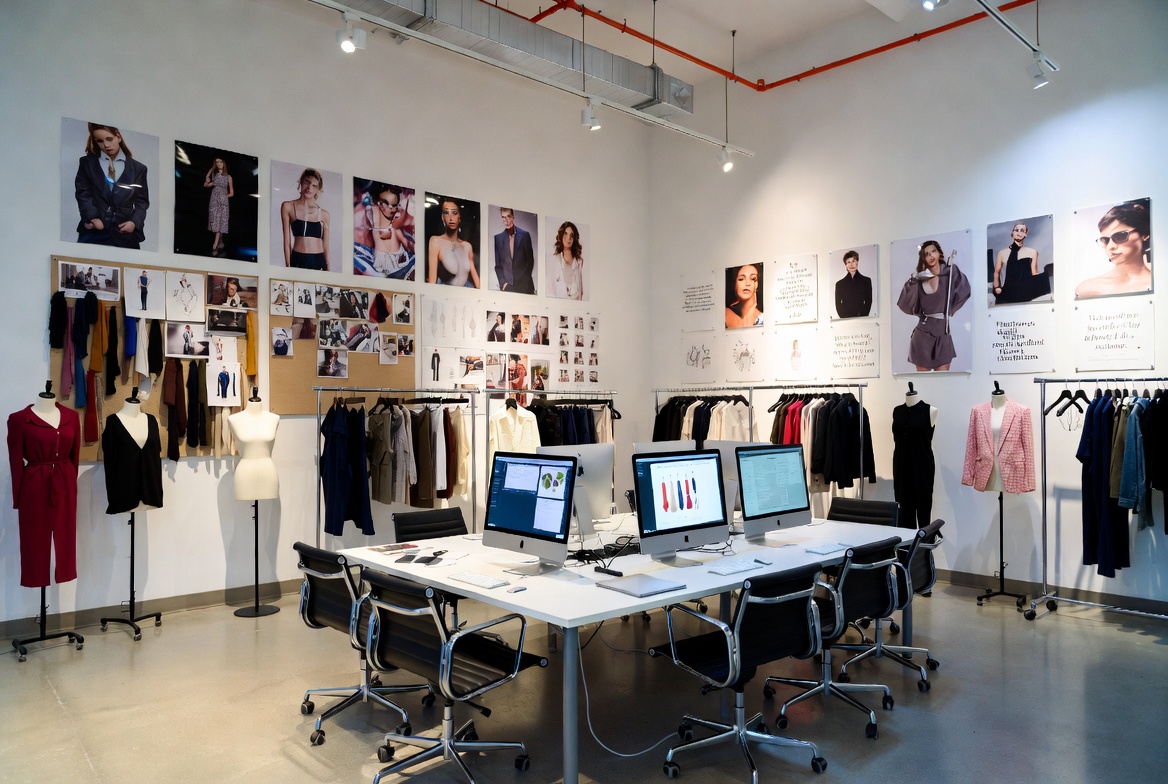
Insurance sits underneath compliance. A defensible fashion production company keeps a clean file on each of the federal regimes below, and the policy submission is rated as much on the compliance posture as on the production volume.
The four regimes below are the ones most relevant to a fashion production specifically. Other industries layer their own — child performer rules, environmental disclosures, healthcare-product regulation for beauty shoots — that the brokerage addresses separately as the production mix requires.
SAG-AFTRA Commercials Contract
- 2025 MOAThree-year agreement effective April 1, 2025, negotiated with the Joint Policy Committee.
- Digital ReplicasMinimum 1.5× scale session fee plus use and holding for digital replica performances.
- Informed ConsentProducers must obtain performer consent for any digital replica use; replicas must be destroyed after the maximum period of use absent consent to retain.
- Streaming Use Fee52-week streaming use cycle pays on-camera principals $10,000 under the 2025 contract.
FAA Part 107 (Drone)
- Certificate RequiredRemote Pilot Certificate required for any commercial drone operation;
14 CFR Part 107. - RecertificationValid 24 months; recurrent online training required to maintain.
- Aircraft WeightPart 107 covers UAS under 55 lbs (including payload) at takeoff.
- Operations Over PeopleEffective April 21, 2021; flight over people and at night permitted under specific rule conditions.
- Remote IDRequired for all drones requiring registration, effective September 16, 2023.
OSHA General Industry
- 29 CFR 1910OSHA General Industry standards apply on most production sets; subpart D covers walking-working surfaces and fall protection.
- Fall Protection29 CFR 1910 Subpart D — applies to grip/electric working at height during rig.
- Electrical Safety29 CFR 1910 Subpart S — applies to lighting distro, generator use, and any temporary electrical work on set.
- Hazard Communication29 CFR 1910.1200 — applies to fog/haze fluids, scenic paint, and any chemicals on set.
Child Performer / Minor Labor
- NY DOL PermitNew York Department of Labor child performer permit required for minors working in entertainment / modeling.
- California CooganCalifornia Family Code §6750 et seq. requires Coogan trust accounts for minor earnings; 15% gross minimum withholding.
- Hour LimitsState-specific limits on hours worked, education time, rest breaks; on-set studio teacher / welfare worker required above thresholds.
- Federal FLSAFederal Fair Labor Standards Act minimum-age and hour rules apply baseline; state rules add layer on top.
For a SAG-signatory production company, the carrier underwriting the production package will request the SAG agreement number, the names of the SAG performers on the call sheet, and the production company's signatory status with SAG-AFTRA. For a non-SAG production, the carrier will request the agency or model agreements directly. Misclassification of a SAG performer as non-union creates not only union enforcement risk but also coverage risk on the E&O form.
Pages That Connect To A Production Company Account
A fashion production company account sits at the intersection of three coverage clusters: production / entertainment, fashion, and the broader specialty book. The pages below describe the related placements that frequently sit alongside a production company program.
Production & Entertainment Coverage
Fashion Industry Cluster
Supporting Coverage Lines
Fashion Production Company Insurance FAQ
Is annual coverage better than per-shoot coverage for a fashion production company?
What does "DICE" mean and is that what we need?
How fast can you issue a certificate for a same-day shoot?
Do we need workers' compensation if our crew is all freelance?
What about SAG-AFTRA — are we a signatory automatically?
How do we cover borrowed samples on a shoot?
Does our policy cover drone footage we shoot ourselves?
14 CFR Part 107 for the operator, (2) FAA registration for any UAS over 0.55 lbs, (3) Remote ID compliance for any drone requiring registration (effective September 16, 2023), and (4) aircraft hull and liability coverage on the UAS itself, typically placed through Lloyd's or specialty aviation markets. If the production company subcontracts drone work to a licensed operator, the operator's insurance plus a vendor agreement with proper additional insured language is the cleaner structure.What is "errors and omissions" coverage and when do we need it?
What kind of additional insureds will clients and locations ask for?
CG 20 26 (designated person or organization) and CG 20 11 (managers or lessors of premises). Primary and non-contributory language and waiver of subrogation are typically required by the underlying contract; the brokerage coordinates with the carrier to issue the certificate to match.Does our existing camera-rental house insurance cover the equipment on our shoots?
What is "faulty stock, camera, and processing" coverage?
What if our production company has been declined or non-renewed?
Start The Production Company Submission
Use the intake portal to begin the submission, or schedule a discovery call to walk through the production calendar, the crew profile, and the certificate requirements before any paperwork moves. Production company placements typically bind within 5 to 10 business days; single-shoot policies within 24 to 72 hours.