COSTUME DESIGNER INSURANCE
Costume designer insurance for theatrical costume designers, film wardrobe departments, costume shops, period-piece studios, touring productions, wardrobe rentals, historical costume vaults, cosplay builders, opera wardrobe teams, dance costume creators, and production designers handling garments that may be owned, borrowed, rented, altered, archived, transported, fitted, worn, damaged, or returned under contract.
 WARDROBE VAULT
START YOUR COSTUME DESIGNER QUOTE WITH THE INTAKE FORM
Costume designer insurance is not a one-line quote when the account includes borrowed wardrobe, historical pieces, performer fittings, production contracts, touring movement, studio tools, rental costumes, archives, or property belonging to theaters, productions, clients, designers, actors, or museums. Start with the intake so the submission can be organized around custody, value, movement, contracts, and operations.
COMPLETE THE COSTUME DESIGNER INTAKECOVERAGE FOR THE GARMENTS, TOOLS, FITTINGS, LOANS, ARCHIVES, AND PRODUCTION HANDOFFS
COSTUME DESIGNER INSURANCE is a commercial insurance program built around the real costume workflow: design, sketching, sourcing, sewing, fittings, alterations, dyeing, distressing, storage, rental, set delivery, stage use, performer handling, return inspection, and archive storage. Depending on the operation, the program may include general liability, commercial property, inland marine, property of others, crime, cyber, workers compensation, professional liability review, hired and non-owned auto, special event or production coverage, and umbrella or excess liability.
WHAT IS COSTUME DESIGNER INSURANCE?
A production-aware coverage stack for designers and wardrobe studios that handle costumes before, during, and after performance.
Costume designers work in a risk category that sits between fashion, manufacturing, theater, film production, archive management, and property custody. A single designer may sketch original looks, source vintage garments, modify rented wardrobe, build custom period pieces, coordinate fittings, transport costumes to set, maintain a wardrobe rack backstage, store historical pieces, and return borrowed garments under a production agreement.
The underwriting question is not simply whether the business makes clothing. The better question is: who owns each costume, who has custody, where is it located, what is it worth, what contract controls it, who wears it, how is it transported, and what happens if it is lost, damaged, late, altered, stained, burned, or not returned?
Costume designer insurance should be coordinated with adjacent coverages such as Fashion Stylist Insurance, Dress Rental & Wardrobe Insurance, Fashion Photography Production Insurance, Short-Term Production Insurance, and Special Event Insurance.
COSTUME DESIGNER COVERAGE AREAS
Each coverage area solves a different part of the wardrobe workflow. The right program depends on whether the operation designs, builds, rents, stores, transports, fits, repairs, archives, or supervises costume use on set or stage.
GENERAL LIABILITY FOR STUDIO & FITTING OPERATIONS
Premises and operations liability for clients, performers, vendors, couriers, models, production staff, and visitors entering the studio, fitting room, shop, storage area, or temporary wardrobe space.
COMMERCIAL PROPERTY FOR TOOLS, EQUIPMENT & STUDIO CONTENTS
Coverage review for sewing machines, sergers, dress forms, steamers, cutting tables, pressing equipment, fabric inventory, sketch tables, storage racks, costumes, office contents, and studio improvements.
PROPERTY OF OTHERS / BAILEE-STYLE REVIEW
A critical discussion when the designer holds costumes owned by a theater, production company, museum, actor, client, rental house, studio, designer, estate, or collector.
INLAND MARINE FOR COSTUMES IN TRANSIT
Costumes may move from studio to stage, set, trailer, hotel, fitting location, production office, rental house, storage facility, museum, courier, or touring venue. Location-only property may not be enough.
WORKERS COMPENSATION & SHOP EXPOSURE
Employees and shop staff may sew, cut, press, steam, dye, glue, lift racks, handle costumes, or work during load-in and strike. Payroll, employee status, contractors, and temporary workers need review.
CYBER, CRIME & PRODUCTION PAYMENT RISK
Digital measurement files, performer information, invoices, vendor payments, production deposits, shipping accounts, client lists, and project files can create cyber, crime, and funds-transfer exposure.
Have a production contract, rental agreement, or wardrobe custody requirement? Send the contract language before the certificate is requested.
Complete The Costume Designer Intake →WARDROBE STORAGE, ARCHIVE VALUE & PROPERTY OF OTHERS
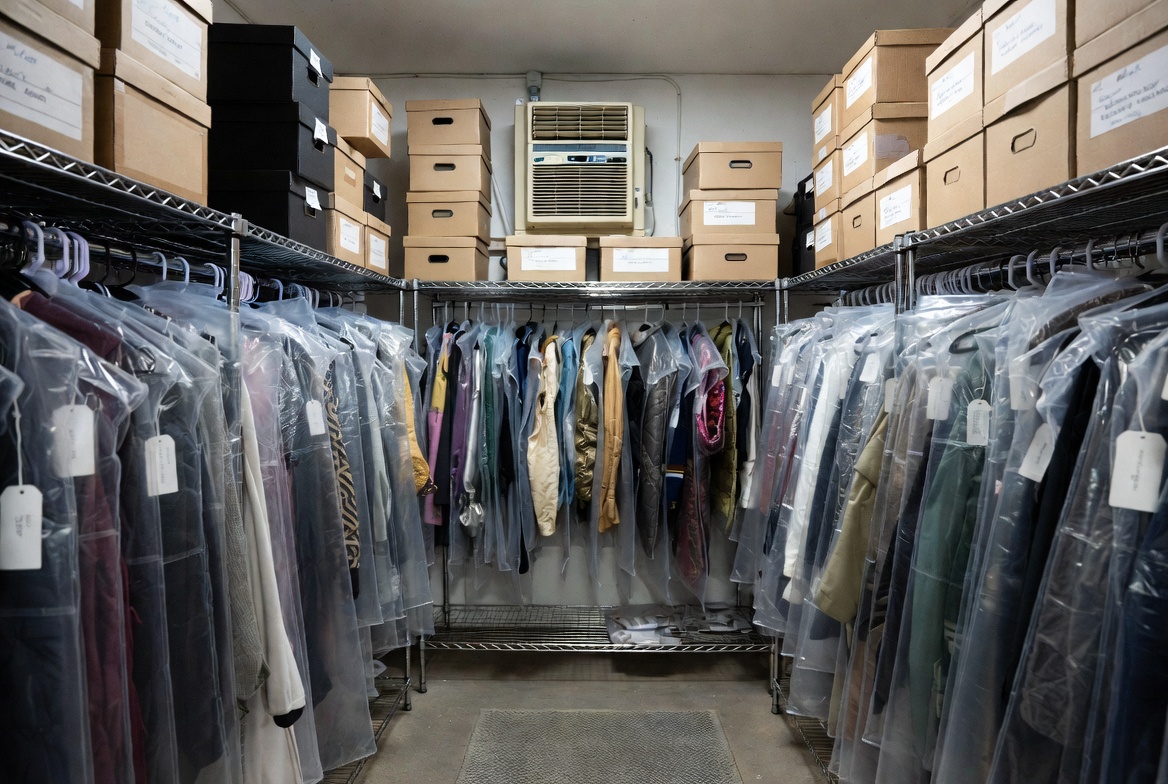
The costume vault is where the most serious valuation questions start: owned pieces, borrowed pieces, period garments, rentals, irreplaceable builds, and archive inventory may all sit on the same rack.
WHEN A COSTUME VAULT IS MORE THAN INVENTORY
A costume storage vault can hold owned costumes, rented costumes, borrowed historical pieces, custom builds, production-owned garments, client property, archive looks, period garments, distressed pieces, specialty accessories, hats, shoes, armor, masks, wigs, and props-adjacent wardrobe.
The insurance file should separate the rack by owner, value basis, use case, condition, and movement. A costume owned by the designer is different from one borrowed from a museum, pulled from a rental house, loaned by a collector, or paid for by a production company.
The strongest submissions include a schedule or log showing garment ID, owner, condition photos, replacement basis, storage location, current holder, and contract responsibility.
COSTUME DESIGNER POLICY STRUCTURE
A costume designer program works best when built in layers: business foundation, wardrobe property, movement, production contract, and digital/payment protection.
FOUNDATION
General liability, commercial property, business income, workers compensation, and auto review for the operating business, studio, shop, and employees.
WARDROBE PROPERTY
Owned costumes, rented garments, property of others, archive pieces, client garments, historical items, wardrobe stock, and storage-location values.
MOTION & PRODUCTION
Inland marine, transit, off-premises property, rented equipment, production coverage review, stage/set delivery, and touring wardrobe movement.
CONTRACT & DIGITAL
Certificates, additional insured requests, cyber, crime, funds transfer fraud, professional/service review, and umbrella/excess liability where required.
THE HARD PART: COSTUMES CHANGE STATUS
A costume can be design property in the morning, production property in the afternoon, performer-worn property at night, and a damaged-return dispute by the next day.
THE STATUS OF THE COSTUME MATTERS. A sketch-table build, a rehearsal costume, a hero wardrobe piece, a stunt duplicate, a rented period coat, a borrowed archive garment, a performer’s personal item, and a production-owned costume all require different underwriting questions.
Costume designer insurance should document who owns the piece, who paid for it, who is responsible under the production contract, where it is stored, how it moves, whether it is worn by performers, whether it is altered, whether it is rented or borrowed, and whether it can realistically be replaced.
This is why property of others, inland marine, bailee-style review, contract review, and certificate wording can matter as much as the base general liability policy.
COSTUME STUDIO, SKETCH TABLES & SHOP OPERATIONS
The studio is not just creative space. It can include cutting, sewing, steaming, dyeing, distressing, fittings, sourcing, alterations, tool use, and production deadlines.
WHEN CREATIVE WORK BECOMES A SHOP EXPOSURE
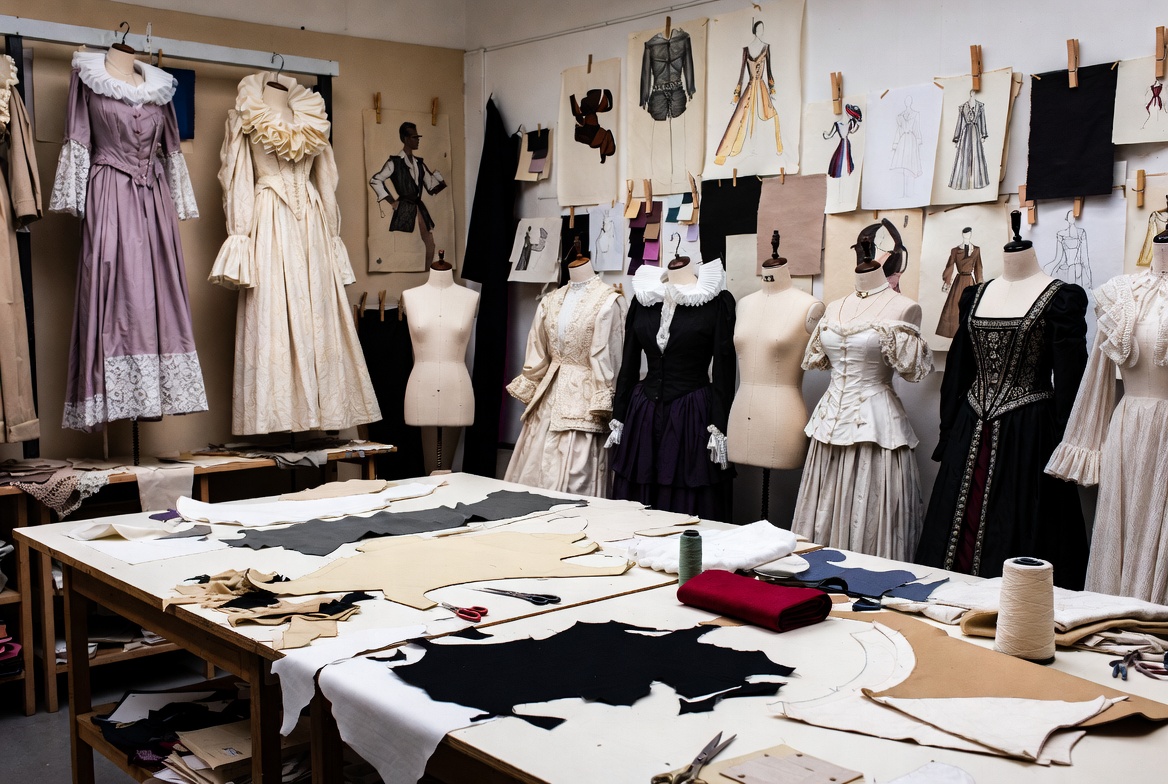
A costume design studio can include sketch tables, cutting tables, sewing machines, sergers, steamers, dye pots, adhesives, paints, trims, wigs, masks, footwear, hats, period garments, armor-like pieces, and fitting stations.
OSHA identifies apparel and footwear workplace exposures involving sewing, cutting, gluing, and stitching; OSHA’s sewing eTool also highlights musculoskeletal concerns tied to sewing stations, fine work, scissor work, and material handling. If the shop uses dyes, sprays, adhesives, solvents, or specialty chemicals, hazard communication may also become part of the workplace review.
The insurance submission should explain whether the studio only designs, or whether it also builds, alters, repairs, rents, stores, dyes, distresses, transports, or supervises costume use.
SOURCE-BACKED COSTUME DESIGNER RISK NOTES
These are not cost estimates or legal opinions. They are factual source anchors that help explain why costume designers are underwritten differently from ordinary clothing retailers.
APPAREL SHOP HAZARDS
OSHA identifies apparel and footwear activities such as sewing, cutting, gluing, and stitching as workplace exposure areas. Costume shops should disclose those operations when present. Official OSHA source
SEWING ERGONOMICS
OSHA’s sewing eTool notes that sewing workers may face musculoskeletal disorder risks, including risks tied to sewing stations, fine work, scissor work, and material handling. Official OSHA source
TEXTILE FIBER LABELING
The FTC Textile Fiber Rule applies to certain textiles sold in the United States and addresses fiber names, percentages, manufacturer or marketer identity, and processing or manufacturing country disclosures. Official FTC source
CARE LABELING
The FTC Care Labeling Rule applies to manufacturers and importers of textile wearing apparel and certain goods and requires regular care instructions through labels or other methods. Official FTC source
CLOTHING TEXTILE FLAMMABILITY
CPSC’s 16 CFR Part 1610 standard provides methods for testing and classifying textile flammability for apparel and prohibits textile fabrics with burning characteristics unsuitable for apparel. Official eCFR source
HAZARD COMMUNICATION
OSHA’s Hazard Communication Standard addresses chemical hazard classification and hazard communication. This may matter when costume shops use dyes, solvents, sprays, adhesives, paints, or other hazardous chemicals. Official OSHA source
PRODUCTION & VENUE CERTIFICATE REQUIREMENTS — EXAMPLES
Costume designers often receive certificate requests from theaters, production companies, studios, rental houses, venues, universities, museums, festivals, and event producers. The exact contract wording should always be reviewed before issuing a certificate.
PRODUCTION COMPANY ADDITIONAL INSURED
Contractor shall maintain commercial general liability insurance covering costume design, wardrobe preparation, fitting, delivery, and related operations. The production company, producer, studio, venue, and their respective affiliates may be required to be named as additional insureds where required by written contract.
PROPERTY OF OTHERS / BORROWED WARDROBE
Designer shall be responsible for borrowed, rented, or production-owned wardrobe while in designer’s care, custody, or control, including during storage, alteration, fitting, transportation, and return, subject to the applicable written agreement and available insurance terms.
VENUE OR THEATER CERTIFICATE REQUEST
Venue may request evidence of liability insurance before allowing wardrobe, fittings, racks, garment bags, sewing tools, pressing equipment, or temporary backstage costume operations on premises. Certificate wording may require additional insured, waiver, primary wording, or higher limits.
RENTAL HOUSE OR MUSEUM LOAN AGREEMENT
Owner of loaned or rented wardrobe may require proof of insurance, condition documentation, item schedule, values, custody procedures, approved transport, and return inspection before releasing historical, archive, specialty, or high-value costume pieces.
RELATED COSTUME, WARDROBE, FASHION & PRODUCTION COVERAGE
Sitemap-aware internal links that keep the costume designer page connected to the broader KIG specialty library.
WARDROBE, COSTUME & FASHION DESIGN COVERAGE
FILM, THEATER, EVENT & PRODUCTION COVERAGE
COSTUME DESIGNER INSURANCE FAQ
Common questions from costume designers, wardrobe studios, theatrical shops, film productions, and rental-heavy operations.
What does costume designer insurance cover?
Costume designer insurance is a commercial insurance program for costume design, construction, fittings, alterations, storage, transportation, rental, production support, wardrobe supervision, and property custody. Depending on the business, it may include general liability, commercial property, inland marine, property of others, workers compensation, cyber, crime, hired and non-owned auto, and umbrella or excess liability.
Is costume designer insurance the same as fashion designer insurance?
Not always. Fashion designer insurance usually focuses on apparel design, retail, wholesale, ecommerce, samples, product liability, and brand operations. Costume designer insurance often adds production contracts, wardrobe rentals, borrowed pieces, performer fittings, theater/stage use, set movement, historical items, costume vaults, and property belonging to productions or third parties.
Does general liability cover damaged costumes?
General liability is generally designed for certain third-party bodily injury and property damage claims. Damage to owned costumes, rented costumes, borrowed wardrobe, archive pieces, or property in transit usually requires property, inland marine, bailee-style, or property-of-others review. The actual policy wording controls the answer.
What if costumes belong to a theater, production, museum, or actor?
That should be disclosed before placement. Costume property owned by another party may need property of others, bailee-style review, contractual liability review, inland marine, or scheduled property treatment depending on the agreement and the policy form.
Does costume designer insurance cover costumes while they are on set or backstage?
That exposure must be reviewed specifically. Costumes on set, backstage, in a trailer, at a theater, in a hotel, at a fitting location, or in a touring truck may be outside ordinary scheduled-location property coverage. Inland marine, production insurance, or off-premises property terms may be needed.
What information is needed to quote costume designer insurance?
Useful information includes legal entity, locations, operations, annual revenue, payroll, employee count, owned costume values, borrowed costume values, property of others, shop tools, equipment values, production contracts, rental agreements, transportation methods, storage controls, current policies, and prior loss history.
Do costume designers need workers compensation?
Workers compensation requirements depend on state law and employment structure. Employees, stitchers, cutters, wardrobe assistants, shop staff, interns, temporary workers, and production crew relationships should be disclosed because injury exposure and legal requirements may differ by arrangement.
What if the studio uses dyes, adhesives, sprays, or distressing chemicals?
Chemical use should be disclosed. Dyes, adhesives, sprays, paints, solvents, distressing products, fabric treatments, and cleaning chemicals may create hazard communication, employee safety, fire, property damage, and pollution-related questions depending on the materials and process.
Can one policy cover design, rentals, fittings, storage, and production work?
Sometimes one coordinated program can address several activities, but the operations still need to be separated for underwriting. Costume design, rental inventory, borrowed wardrobe, fittings, alterations, on-set work, theater work, archive storage, and transportation each create different coverage questions.
What makes a costume designer account hard to place?
Hard-to-place factors can include high-value archive costumes, borrowed museum pieces, frequent production travel, unclear property ownership, prior losses, poor inventory documentation, hazardous shop processes, touring operations, complex contracts, uninsured subcontractors, production deadline pressure, or incomplete loss history.
Does cyber insurance matter for costume designers?
It can. Digital measurement files, production contracts, invoices, deposits, performer information, vendor payments, shipping accounts, design files, and client data can create cyber and crime exposure. Cyber and crime coverage should be reviewed when the business relies on digital workflow or payment systems.
Is this page legal, product-safety, labor, or coverage advice?
No. This page is insurance education and underwriting preparation only. Legal, labor, product safety, textile labeling, chemical safety, production contract, and coverage questions should be reviewed with qualified counsel, compliance professionals, or a licensed insurance advisor reviewing the actual policy.
START THE COSTUME DESIGNER INSURANCE SUBMISSION
Send the custody story first: what costumes are owned, what belongs to others, where they are stored, how they move, who wears them, what contracts require, what tools and equipment are used, and what prior losses exist.
OPEN THE INSURANCE INTAKE FORMS PORTAL