Fashion House Insurance
A fashion house isn't a business line — it's a federation of risk classes operating under one logo. A single luxury label can simultaneously sit inside a Federal Trade Commission textile labeling regime, a Consumer Product Safety Commission children's-product testing regime if it sells minis, a Customs and Border Protection counterfeit enforcement regime, a U.S. Copyright Office and Patent and Trademark Office defense posture, an Occupational Safety and Health Administration general industry regulatory footprint at the atelier, an Employer of Record obligation across multiple states, and a Securities and Exchange Commission disclosure posture if it's investor-backed. Each of those layers behaves differently in a loss event.
The brokerage builds Fashion House programs the way the carriers actually structure them — modular, by exposure class, with the right specialty market sitting under each line rather than a packaged BOP forced to cover everything badly. We work with admitted markets where the appetite fits and excess-and-surplus markets where it doesn't. Most fashion houses use both inside the same insurance year.
Coverage Footprint Of A Typical Fashion House
Why The Word "Fashion" Hides Five Different Insurance Companies
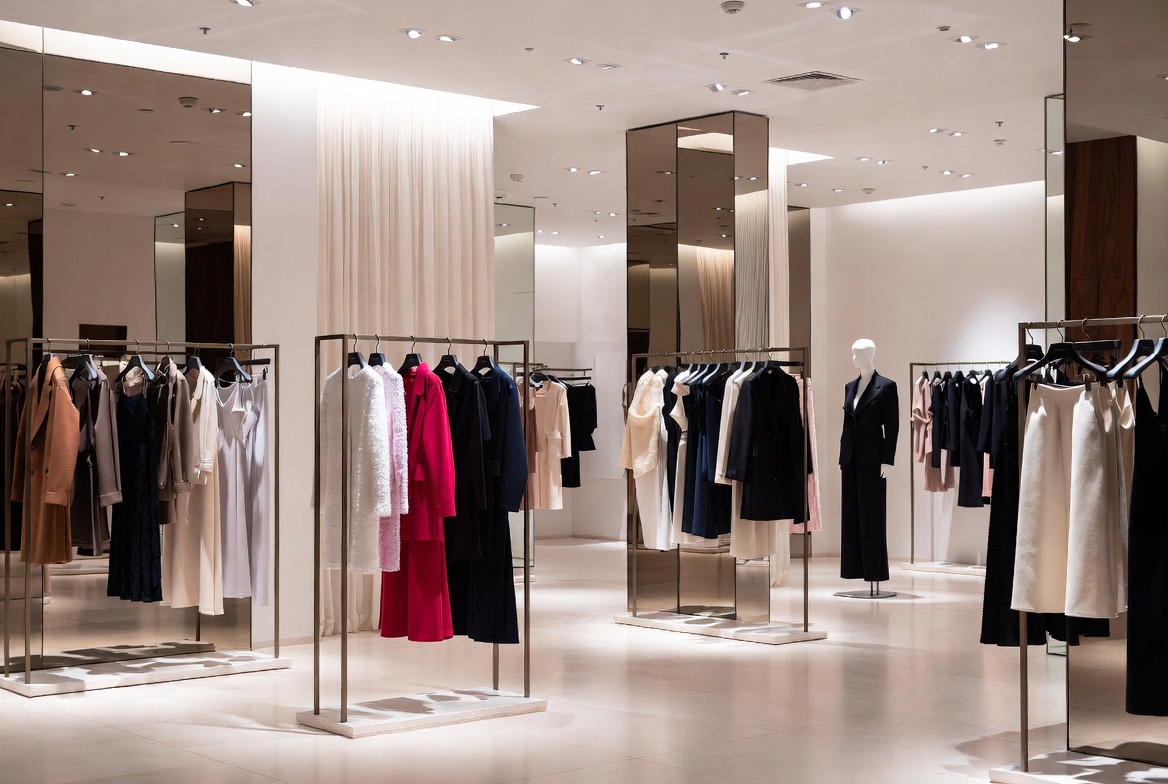
The fashion industry shows up to an underwriting desk in many disguises. A fashion house signs a building lease, hires a creative team, contracts with a CMT factory abroad, ships goods across an ocean, stores them in a New Jersey warehouse, sells them through a Madison Avenue boutique, an e-commerce platform, a wholesale account at Bergdorf Goodman, and a series of celebrity stylist loans — and somewhere in there, sits the runway show. Each of those activities lives inside a different ISO form, a different rating bureau class, and frequently a different carrier.
That fragmentation is why a packaged BOP — the kind that works fine for a yoga studio or a tax preparer — leaves a fashion house exposed. The events that produce six- and seven-figure claims in this industry are concentrated in places the BOP doesn't reach: a print copyright suit from an independent artist, a recall of children's resort wear that fails third-party retesting, a stock loss when a fulfillment center's roof fails over a season's worth of unticketed inventory, a wage-and-hour collective action from a piece-rate atelier, a stolen sample bag from a press send-out that never came back, a runway accident with a model injured on a constructed set. The brokerage's job is to make sure the form, the limit, the endorsement, and the carrier sitting underneath each of those scenarios is the right one.
Our Fashion Industry cluster is built around that reality. Each specialty page in the cluster addresses one of those exposure pockets — the manufacturing floor, the showroom, the trade show, the photography production, the runway, the e-commerce channel, the high-value inventory in transit. This hub explains how they connect, what regulations sit underneath each one, and where the carriers actually live for fashion accounts.
Find Your Operating Segment
Click the segment that matches your operation. The map returns the primary exposure narrative for that segment, the cluster page where it's covered in depth, and the regulatory environment your underwriter will read first.
Fashion Industry Operating Segments
// SELECT A SEGMENT FOR DETAILDesign House & Creative Studio
The creative and IP-generating center of a fashion house. Risk concentrates on intellectual property (trademark, copyright, design patent), defamation and personal injury in editorial work, samples and prototypes leaving the studio, and the data security of the design archive.
The Federal Statutes A Fashion House Operates Underneath
A fashion house, depending on its product mix, is subject to a stack of federal rules enforced by multiple agencies. Underwriters expect operators to know the rules that apply to them, and they price the risk according to how well an applicant demonstrates that compliance is in hand. Below is the regulatory framework with the relative compliance load each represents for a vertically integrated fashion house with kids and accessories in the mix.
Textile Fiber Products Identification Act
15 USC § 70 · 16 CFR Part 303Mandatory fiber content labeling, manufacturer or RN, and country-of-origin labels on textile products. Enforced by the FTC; misbranding is a §5 unfair-or-deceptive practice.
Wool Products Labeling Act
15 USC § 68 · 16 CFR Part 300Additional disclosure regime for products containing wool, including percentage by weight of wool, recycled wool, and any other fibers, plus identifying information.
Fur Products Labeling Act
15 USC § 69 · 16 CFR Part 301Disclosure of animal name, country of origin, and processing information on fur products. Several states (California, New York City) layer outright sale bans on top of federal rules.
Flammable Fabrics Act / Clothing Textiles
16 CFR Part 1610CPSC standard for the flammability of clothing textiles — three-class burn rate test. Class 3 (rapid and intense burning) fabrics are prohibited from sale as wearing apparel.
Children's Sleepwear Flammability
16 CFR Part 1615 / 1616Stricter open-flame ignition standard for children's sleepwear sizes 0 through 14, with FPU and GPU testing required, or qualification under the tight-fitting / infant garment exception.
Consumer Product Safety Improvement Act (CPSIA)
15 USC §§ 1278a, 2057c, 2063 · 16 CFR 1303, 1307Lead in children's product substrates capped at 100 ppm; lead in surface coatings capped at 90 ppm; eight regulated phthalates capped at 0.1% in accessible plasticized components; third-party testing, Children's Product Certificate, and permanent tracking labels required.
Care Labeling Of Textile Wearing Apparel
16 CFR Part 423FTC rule requiring a permanent label disclosing regular care procedures (wash, dry, iron, bleach, dry-clean) in plain English. Instructions must protect the garment from harm if reasonably followed.
Made In USA Labeling Rule
16 CFR Part 323 · 15 USC § 45aCodified FTC standard: an unqualified Made in USA label requires final assembly and all significant processing in the US, with all or virtually all components US-sourced. Civil penalties currently up to $53,088 per violation.
Country Of Origin Marking
19 USC § 1304CBP requires every imported article to be legibly and indelibly marked with its country of origin. Penalties include seizure, marking duties of 10% ad valorem, and Section 1592 fraud assessments.
Lanham Act / Trademark Protection
15 USC § 1051 et seq.Federal trademark law protecting brand names, logos, and trade dress. Disputes over distinctive marks and counterfeits drive much of the fashion-house litigation calendar.
Copyright Act / Visual Works
17 USC § 101 et seq.Prints, embellishments, photographs, lookbooks, and music in editorial content all fall under copyright. Useful pictorial elements separable from the garment can also be protected.
Design Patent Protection
35 USC § 171Ornamental design of a manufactured article protected for 15 years from grant. Handbags, footwear silhouettes, and jewelry are particularly active design-patent classes.
Fair Labor Standards Act
29 USC § 201 et seq.Federal minimum wage, overtime, and recordkeeping. DOL Wage and Hour Division has historically prioritized the apparel sector for enforcement, including joint-employer findings.
All regulatory citations above are taken from the U.S. Code, Code of Federal Regulations, and current Federal Trade Commission, Consumer Product Safety Commission, and Customs and Border Protection guidance. Nothing on this page is generated by paraphrasing third-party commentary.
How A Fashion House Insurance Program Is Built
A correctly built Fashion House program has four tiers. Each tier is rated differently, sometimes by different carriers, and frequently with different brokers — which is why fashion brands so often find coverage gaps at claim time. The architecture below is how this brokerage assembles the stack.
Foundation Lines
Statutory & First-DollarThe lines no fashion house operates without. Workers' compensation is statutory; commercial auto follows any owned or hired vehicles; commercial property covers building and contents at the named locations.
Liability Tower
Primary & ExcessCGL with products-completed operations, personal & advertising injury, and an umbrella tower meeting retailer vendor agreement minimums. Most luxury wholesale accounts require $5M to $10M in total liability limits.
Specialty Layer
Industry-Specific FormsCoverage written specifically for the way fashion houses operate — high-value inventory, IP-driven brand value, ocean cargo, recall costs, samples and bailees, and event exposures.
Management & Privacy
Executive RiskThe lines that respond to leadership, employment, and information-security exposures — increasingly critical as fashion houses take on investor capital and operate omnichannel data platforms.
What Makes Fashion Different From Other Manufacturing
Other manufacturers worry about machines, supply chains, and product liability. Fashion houses do too — but fashion uniquely adds the kind of intangible-asset exposure that the rest of manufacturing doesn't carry. Four dimensions, each handled by a different coverage form.
The Brand Itself Is The Asset
For most manufacturers, value is in the machinery and the inventory. For a fashion house, the trademark, the silhouettes, the prints, and the brand mythology are the assets — and they're under constant infringement pressure from counterfeiters, fast-fashion lookalikes, and digital marketplace pirates. Customs and Border Protection's FY2022 IPR report documented over 21,000 seizures with nearly $3 billion MSRP value — and apparel and accessories sat at the top of the volume table.
- Trademark infringement: confusingly similar marks on competing goods
- Trade dress infringement: signature aesthetic features copied
- Copyright infringement: prints, lookbook photography, music
- Design patent infringement: ornamental designs of accessories and footwear
- Counterfeit goods: outright fakes intercepted by Customs or sold on platforms
The Inventory Floats
Apparel and accessories inventory rarely sits still. A season's collection might be made in Italy, shipped to a Newark warehouse, picked into wholesale orders, drop-shipped to department stores, with the unsold balance flowing to outlet, then to off-price. Each of those handoffs is an insurable handoff. The piece sitting in a Vegas trade show booth, the press loan at a celebrity stylist, and the editorial sample at a magazine shoot are all real exposures the brand owns.
- Goods in transit on water (ocean cargo) and land (inland marine)
- Goods at finishing operations and third-party fulfillment centers
- Samples in transit between showroom, market, and press
- High-value display units at trade shows and pop-ups
- Wholesale-account goods on consignment or memo
The Press Cycle Is A Risk Cycle
Fashion is one of the few industries where unpaid media coverage drives more revenue than paid advertising — which means the brand cycles content (lookbooks, campaigns, runway moments) at a constant pace, and each cycle creates a fresh wave of IP exposure. Stylists pull product. Editors borrow samples. Influencers receive paid posts that have to meet FTC Endorsement Guides. Music in a runway show needs sync licensing. Celebrity images need a release. All of it produces standing IP and personal-injury exposure that the CGL doesn't fully address.
- Music sync licensing for shows and campaigns
- Photographer work-for-hire vs. licensed-use distinctions
- Model and celebrity image releases
- FTC Endorsement Guides compliance on paid posts
- Right of publicity claims from talent featured without consent
The Workforce Is A Network, Not A Building
A modern fashion house is rarely all under one roof. The cutters and sewers are in another state, or another country. The pattern grader is on a 1099. The tailor for couture fittings is independent. The runway production crew is hired per show. The DTC fulfillment team works for the 3PL. Each of those relationships generates a different workers' comp and employment-practices exposure — and joint-employer doctrine means a brand can be on the hook for the wage practices of an independent contractor it never directly hired. EPLI and wage-and-hour endorsements are how the brokerage closes that gap.
- 1099 vs. W-2 classification disputes
- Joint-employer liability for contract manufacturing
- Piece-rate wage and overtime exposures
- Multi-state EPLI on remote and hybrid staff
- Workers' compensation across multiple jurisdictions
Generic BOP vs. Built-For-Fashion Program
The single biggest mistake we see in fashion is a brand placing its first program on a generic Business Owners Policy because it's fast and inexpensive — and discovering, two seasons later, that the form has none of the right language for what the business actually does.
Generic BOP — What's Missing
- No ocean cargo coverage at all — water transit is outside BOP scope
- Product recall and withdrawal costs are typically excluded
- IP infringement coverage limited to narrow "advertising injury" definitions
- Stock valuation at actual cash value of materials, not at selling-price-less-unincurred-expense
- Property limits often inadequate during peak inventory seasons
- No bailee coverage for samples on press loan or wholesale memo
- Cyber coverage is a rider, not an integrated policy
- Special event coverage absent — runway and trade show booth need standalone
- Joint-employer EPLI coverage is rarely included
- Pollution liability exclusion bites on dye, wash, and finishing operations
Built-For-Fashion Program — What's Included
- Open ocean cargo certificate with warehouse-to-warehouse extension
- First-party recall + third-party recall liability available
- Standalone IP infringement form covering all four IP classes
- Stock throughput at selling price with goods-in-process valuation
- Seasonal value endorsements matching inventory peaks
- Bailee form for samples, memo, and consignment
- Full cyber policy including ERP business interruption
- Special event and runway coverage with cancellation and abandonment
- EPLI with wage-and-hour endorsement and joint-employer defense costs
- Pollution legal liability for finishing operations
The above is generalized. Real coverage outcomes depend on specific policy wording, endorsements, sub-limits, deductibles, and exclusions in force at the time of loss. This page is editorial — not a coverage opinion, not a guarantee of payment, and not a substitute for reading your own policy with a licensed broker.
Where The Real Property Numbers Live
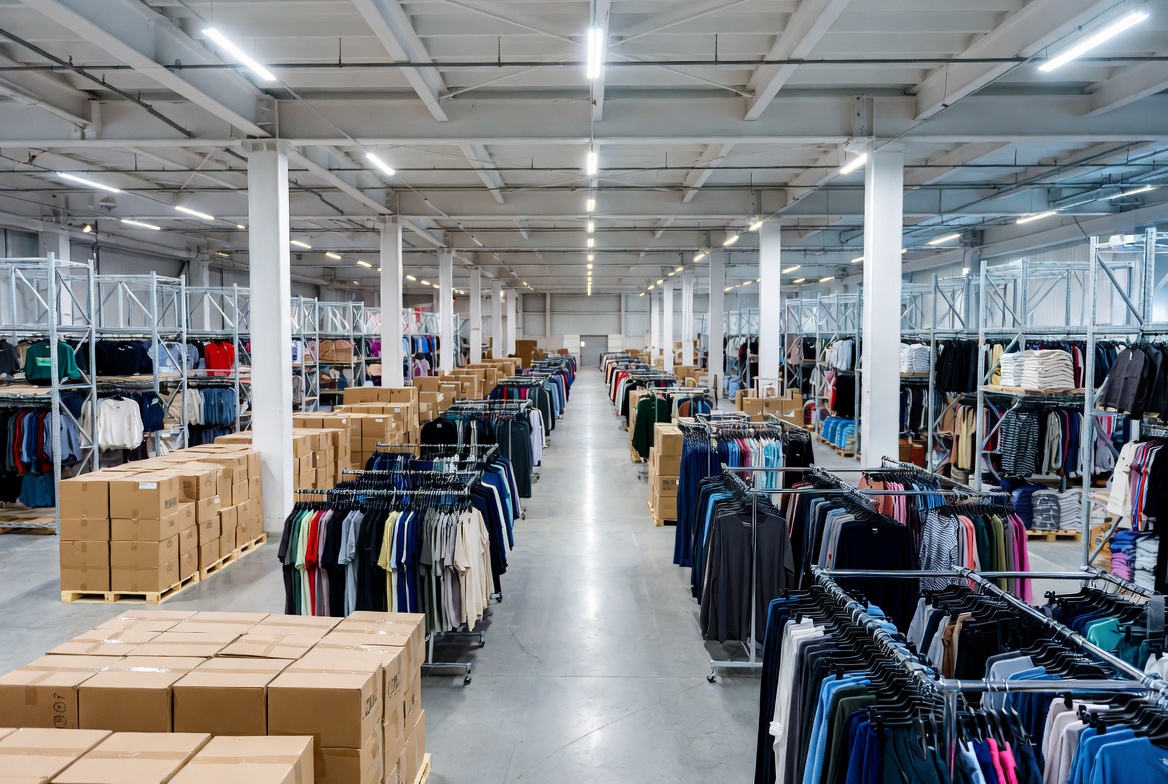
A fashion house's largest insurable property exposure is rarely the storefront and rarely the atelier — it's the warehouse where the season lives between landing and sell-through. The values stack up: pre-pack inventory from overseas, ticketed and folded for wholesale ship-out, picked-and-packed cartons for DTC, and the inevitable layer of unsold season goods waiting for outlet or off-price.
Conventional property forms struggle with that picture. They don't capture the difference between cost and selling price, they don't follow inventory at off-premises locations like 3PLs, and they often impose seasonal peak sub-limits that drop coverage right when the brand needs it most. The brokerage builds the property layer using stock throughput where appropriate, named-location property forms where appropriate, and dependent-property endorsements when a contracted finisher or fulfillment partner concentrates revenue risk.
Stock throughput coverage was developed specifically for fashion, footwear, and luxury accessories accounts because the conventional split between cargo policy and property policy left a documented gap during the trans-shipment portions of the supply chain. The form follows the goods on a single all-risks basis from sourcing to final delivery.
The 29 Specialty Spokes Under This Hub
Each page below addresses a specific operating segment within the fashion industry. The depth of treatment on each spoke goes well past hub-level summary — coverage logic, regulatory citations, claim patterns, underwriting documentation, and the carrier appetite that actually places the risk.
Apparel & Manufacturing Cluster
Design & Couture Cluster
Retail, E-Commerce & Wholesale
Events, Production & Trade
Fine Jewelry, Watches & Hard Goods
Supporting Coverage Lines (Broader KIG Library)
What Engagement Looks Like
The brokerage is a fourth-generation Pittsburgh specialty house — Franklin B. Kelly's original agency wrote the same kind of manufacturing and import risk that the mid-20th-century industrial Pittsburgh economy generated, and the firm has carried that hard-to-place specialty role forward through every reorganization of American manufacturing since. Our company history is on the history page and the about page. Current markets are at the carriers page.
For fashion accounts, the standard engagement looks like this: a discovery call to understand the operating segment mix; an exposure inventory pulled from sales, sourcing, and headcount data; a markets shortlist based on what the carriers will write; a submission package built to the appetite; and indications back to the operator within 2 to 5 business days for clean accounts. Hard-to-place accounts — declines, non-renewals, prior recalls, prior CPSC or FTC correspondence — take a longer narrative build but remain placeable.
There is no obligation to engage at any step. The intake forms portal at insurance-intake-forms is the cleanest way to start. Direct line: (412) 212-2800. Bookings via book an appointment.
Fashion House Insurance FAQ
What does "Fashion House Insurance" actually cover?
How is a fashion house different from a generic apparel business for underwriting purposes?
Are we required to carry insurance to operate a fashion brand?
What is the FTC's "Made in USA" Labeling Rule, and why does it matter for a brand?
How does CBP enforcement on counterfeit goods affect a legitimate brand?
Do we need ocean cargo coverage if we import from Italy or China?
What is "stock throughput" and why does the brokerage recommend it for fashion accounts?
How does intellectual property insurance for a fashion brand work?
Is a runway show or trunk show covered under our regular policy?
Does cyber insurance matter for a fashion brand?
What documents does a Fashion House submission require?
What if we've been declined or non-renewed?
Start The Fashion House Submission
Use the intake forms portal to start the submission, or book a call to walk the operation through the program structure before any paperwork. Clean accounts move from intake to first-carrier indication within 2 to 5 business days.