Fashion Ecommerce Business Insurance
A fashion e-commerce business is digital first, but every claim it produces is physical: a real package that arrived damaged, a real customer whose card data was exposed, a real influencer who didn't disclose, a real return that landed in a fulfillment center already over its peak limit. The conventional insurance market often misreads these operations as either retail or technology, when they're actually a hybrid running on a four-sided risk surface: the storefront (the site), the inventory (someone else's warehouse), the brand (the IP), and the data (every customer touching checkout).
The brokerage builds programs for fashion e-commerce operators across the full channel mix — owned DTC sites on Shopify and Magento, marketplace sellers on Amazon Fashion and Farfetch and SSENSE, subscription rental and rotating-closet operators, social commerce on TikTok Shop and Instagram, and live-shop platforms. Each channel changes the form mix slightly, and missing one of those shifts is what produces the avoidable claim.
The Risk Surface Of A Fashion E-Commerce Business
Most fashion e-commerce operators discover the gaps in their coverage the same way: a problem happens, the broker pulls the policy, and the form turns out to be a generic retail BOP issued for a brick-and-mortar boutique. Same coverage code, completely different operation. The BOP doesn't follow inventory to a 3PL. It doesn't cover a card-data breach. It doesn't pay defense costs on an FTC investigation. It doesn't respond to chargebacks or fraudulent funds-transfer. And it certainly doesn't pick up the IP infringement defense when a fast-fashion competitor sues over a print.
Fashion e-commerce operates across four insurable surfaces simultaneously. The storefront is the site itself — its uptime, accessibility, payment processing, and shopping cart code base. The inventory is rarely owned property; it's contracted to a third-party logistics provider whose warranty rarely matches the brand's exposure. The brand is the marks, the prints, the lookbook photography, and the editorial content — every asset under copyright, trademark, or trade dress protection. The data is every customer record collected at checkout, every wholesale buyer credential, every analytics pixel firing back to the brand's stack. Each of those surfaces produces a different kind of claim and lives under a different policy form.
The single most expensive moment for any fashion e-commerce operator is the gap between when the BOP stops responding and when a real coverage line should have started.What follows in this page is the operator's view of that coverage problem — the channels, the transaction lifecycle, the FTC and state-AG enforcement environment, the influencer compliance layer, and the policy stack that's actually built to absorb a real loss. The brokerage works exclusively in this space for fashion brands operating omnichannel — placing programs through specialist cyber markets, admitted multi-line carriers, and Lloyd's where the appetite requires it.
Six Channels, Six Different Risk Profiles
Fashion e-commerce isn't one risk class — it's six. Each channel below changes which coverage form matters most and which exposure dominates the loss picture. A brand running three of these simultaneously needs all three rated separately on the submission.
Brand-owned storefront on a SaaS or self-hosted platform. The operator controls every PII checkpoint and inherits liability for every breach, every payment processor outage, every fraudulent transaction.
- PCI-DSS scope at full level
- State breach notification across all jurisdictions
- FTC Mail Order Rule (30-day) applies in full
- ADA web accessibility under Title III
Selling through Amazon Fashion, Farfetch, SSENSE, Lyst, eBay, or department-store marketplaces. The platform owns the customer; the brand still owns the product liability.
- Marketplace AI insurance requirements
- Vendor agreement additional insured language
- Product liability for any platform sale
- Counterfeit-listing takedown enforcement
Buyer-facing line-sheet and order portal for wholesale accounts. Concentrates buyer credentials, pricing, and order data — high-value target for credential-stuffing attacks.
- Wholesale account credential management
- Pricing data confidentiality
- EDI / integration platform security
- Vendor-of-record contractual obligations
Direct purchase flows on TikTok Shop, Instagram Shopping, Pinterest, Facebook, and emerging platforms. Influencer activity, FTC Endorsement Guide compliance, and user-generated content rights are all elevated.
- 16 CFR Part 255 endorser disclosure
- Platform-mandated returns & refunds
- UGC licensing & right-of-publicity
- Algorithm-driven mass takedown risk
Rotating-closet, dress-rental, or curated-box subscription operations. Garments cycle through customer possession and back — bailee exposure dominates the property line.
- FTC Negative Option Rule compliance
- State auto-renewal disclosure laws
- Bailee coverage on rental inventory
- Return-condition dispute exposure
Live-stream selling on Whatnot, TikTok Live, Amazon Live, NTWRK, and proprietary platforms. Inventory commits made in real time, performance claims happen live, sync licensing applies to any music.
- Live broadcast E&O exposure
- Music sync licensing on every stream
- Real-time inventory commitment risk
- Talent and host professional liability
Where The Claim Actually Starts
A claim against a fashion e-commerce operator rarely starts at the moment of injury. It starts at one of seven specific points in the customer transaction lifecycle — and which point the claim originates at determines which policy form will respond.
Site Discovery & Browsing
STAGE · PRE-CARTCustomer lands on the site. Risk concentrates on advertising claims, ADA accessibility for screen-reader compatibility, behavioral analytics consent, and any third-party pixel tracking that triggers state privacy law obligations.
Add To Cart & Checkout
STAGE · CARTPII collected, payment method tendered. PCI-DSS scope engaged. Magecart-style skimmer attacks target this exact moment — malicious JavaScript injected into the checkout flow scrapes card data before it reaches the payment processor.
Payment Authorization & Capture
STAGE · TRANSACTCard auth runs through the payment processor. Fraudulent transactions, card-not-present chargebacks, and processor outages all show up here. EMV liability shift placed CNP fraud on the merchant in most cases.
Order Fulfillment & Picking
STAGE · WAREHOUSEGoods picked from inventory, packed, labeled, and handed to a carrier. Often happens at a 3PL the brand doesn't own. Property loss at the 3PL, mispicks creating liability, and the FTC's 30-day Mail/Internet/Telephone Order rule kick in here.
Carrier Transit & Delivery
STAGE · IN TRANSITGoods on a carrier's truck, plane, or ship. Carrier liability limits are routinely lower than declared values. Porch piracy, theft from delivery vehicles, and damaged-on-arrival claims all live here.
Customer Use & Product Performance
STAGE · POST-DELIVERYGarment is worn. Performance failures (zipper, seam, dye transfer, allergic reaction, regulatory non-compliance on children's products) produce the conventional product liability claim. CPSC reporting under 15 USC § 2064 applies if a hazard is identified.
Return, Review & Resolution
STAGE · POST-SALECustomer initiates return or posts a review. Disputed-return chargebacks, refusal-to-refund consumer-protection claims, defamation in response to negative reviews, and FTC fake-review rule violations all surface here.
Content Production Is An Insurable Activity
Every fashion e-commerce operator runs a constant content engine: lookbooks, campaign shoots, influencer collaborations, UGC reposts, product photography, behind-the-scenes reels. Each output carries downstream legal exposures the operator owns even when the work is done by a freelancer or partner — copyright in the image, the right of publicity for any identifiable subject, model releases for talent, location releases for any space that's not a public sidewalk, and music sync licensing for anything with audio.
When an influencer posts a paid promotion for one of your products, your brand is in the chain of responsibility for whether that influencer complied with the FTC Endorsement Guides. The 2023 update to 16 CFR Part 255 made the disclosure obligations broader, the platform-specific guidance more aggressive, and brand liability for unaddressed disclosure failures clearer.
The revised FTC Endorsement Guides became effective on June 29, 2023. The Commission emphasized that advertisers may be liable for statements made by third parties — including unaffiliated reviewers — if the brand republishes or reposts those statements without correcting non-compliant content.
FTC Endorsement Guide Quick Audit
Tap each line to mark it complete for an active influencer agreement. Anything left unchecked is a gap your underwriter will want to discuss before binding the advertising injury layer. This tool is illustrative and does not constitute legal advice.
Endorsement Guides Audit
-
Written endorser agreement signed
A signed agreement requiring the influencer to comply with FTC Endorsement Guides on all sponsored content. Brand has documented training or notice that disclosure is required.
16 CFR § 255.5 · Compliance evidence -
Material connection disclosed clearly & conspicuously
The relationship between brand and endorser is disclosed in a way a significant minority of the audience would understand. "Clear and conspicuous" — not buried, not in a hashtag chain, not after a "more" expand.
16 CFR § 255.5(a) -
Disclosure appears in both visual & audible portions
If content is video, the disclosure appears both on screen and verbally. If purely visual, the on-screen disclosure is clear. If purely audio, the audio disclosure is clear. Single-medium disclosure on multi-medium content is non-compliant.
16 CFR § 255.0(f) -
Endorser actually uses or has used the product
If an endorsement implies the influencer is a bona fide user, they must be one. Brand has product-shipment records or audit trail confirming the endorser received and used the product before posting.
16 CFR § 255.1(b) -
Performance claims substantiated
Specific claims (moisture-wicking, UV protection, slimming, recycled content percentage, etc.) supported by competent and reliable evidence on file. Brand can produce substantiation if FTC asks.
FTC Act § 5 · Substantiation Doctrine -
"Typical" results disclosed for atypical endorsements
If an endorser describes results that aren't generally representative — major weight loss, dramatic fit change — the typical experience is disclosed or the endorsement is positioned as atypical.
16 CFR § 255.2(b) -
Brand monitors endorser compliance
The brand has documented monitoring procedures: random spot checks, automated compliance tools, corrective action protocols when a non-compliant post is identified. Documented monitoring is a recurring factor in FTC enforcement decisions.
FTC Enforcement Policy Statements -
UGC repost / republish review protocol in place
Before a brand republishes user content (positive review reposts, customer photos), an internal review confirms the underlying content meets endorsement and advertising standards. Republished content can transfer liability.
16 CFR Part 255 · 2023 revision -
Fake-review prohibitions documented
Brand has not purchased reviews, has not coerced reviewers, has not suppressed negative reviews on the brand's own site, and has not used AI-generated reviews. Internal policy documented and trained.
16 CFR Part 465 · Fake Reviews Rule
The Regulatory Patchwork A Single Breach Triggers
A single data breach at a fashion e-commerce operation can trigger notification obligations in every state where an affected customer resides. The map below shows the relative speed of the deadline each state imposes. Some require notification within 30 days; others use the "without unreasonable delay" standard.
All 50 States + DC + 3 Territories Have Active Breach Notification Laws
California enacted the first state data breach notification statute in 2002. Alabama and South Dakota were the final two states to adopt, in 2018. All 50 states, the District of Columbia, Puerto Rico, Guam, and the US Virgin Islands now have active breach notification laws. Washington, Florida, Colorado, and Maine impose the shortest hard deadline at 30 days from discovery. Source: National Conference of State Legislatures.
The California Consumer Privacy Act creates a private right of action for breaches of unencrypted, unredacted personal information, with statutory damages of $100–$750 per consumer per incident under California Civil Code § 1798.150(a)(1). For a fashion DTC operator with 200,000 California-resident customer records, the maximum statutory exposure on a single breach can exceed $150 million — without proof of any actual damages.
What A Real Fashion E-Commerce Program Includes
This is the program structure the brokerage builds for fashion e-commerce operators. The order matters: cyber sits at the top because it's the single line most likely to respond on a fashion DTC claim, ahead of even products liability.
The cornerstone of any fashion e-commerce program. Breach response, regulatory defense and fines, business interruption from a ransomware or DDoS event, social engineering and funds-transfer fraud, PCI fines and assessments, payment card industry liability shift exposure.
CGL with products-completed operations, personal & advertising injury, and product withdrawal expense. For brands with kids' or beauty SKUs, the products tower needs to address CPSC-regulated exposure separately.
Property coverage that follows inventory wherever it actually sits — at the brand's office, at the 3PL warehouse, in carrier transit, at a pop-up, at a press loan. Stock throughput consolidates this into one all-risks form.
D&O for venture- and PE-backed brands. EPLI scaled for multi-state remote workforces. Fiduciary if a 401(k) is in place. K&R for founders with notable visibility. IP infringement on the prints, prints, embellishments, trade dress and design patents.
The Other Insurable Footprint
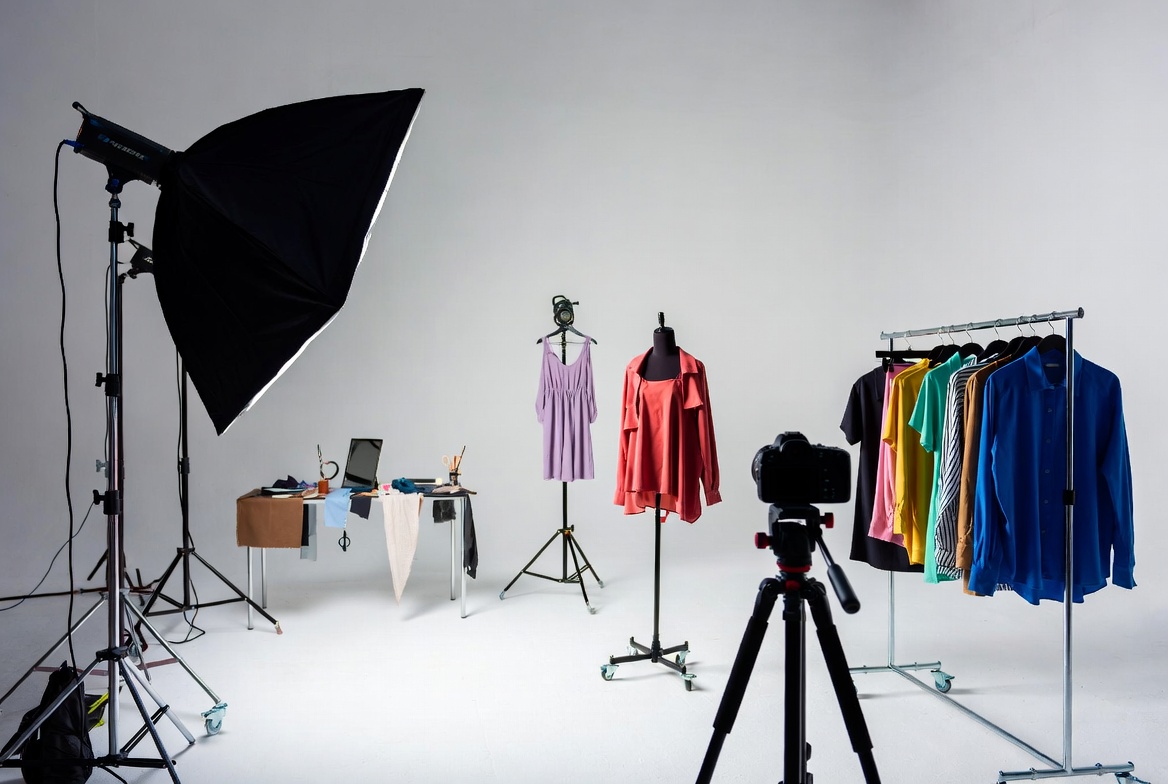
A fashion e-commerce business that controls its own content pipeline runs a small production company alongside the storefront. The studio space, the lighting and camera kit, the freelance photographers and stylists, the models, and the visiting press all sit inside a different risk frame than the digital storefront.
Workers' compensation responds to crew injuries. Inland marine equipment coverage protects the camera bodies, lenses, and lighting on hand, including kit pulled for off-site shoots. Care-custody-control is the form that activates when a borrowed lens or rented strobe is damaged. Talent E&O sits behind model and influencer agreements. For brands running formal campaign shoots, a dedicated production policy is usually warranted — and the brokerage's fashion photography production insurance page covers that specifically.
For brands that hire larger crews for editorial campaigns, the production exposure can graduate into a separate fashion production company insurance placement. The line between "we shoot our own product" and "we operate a production studio" is exactly where the form has to evolve.
How A Submission Gets Built
A clean submission for a fashion e-commerce account answers six structural questions. The brokerage walks operators through these on the discovery call, and the answers determine which carriers see the file.
Q1. Is the operator the merchant of record, or are sales through marketplaces?
Determines who owns the PCI scope, the chargeback risk, the return policy, and the customer relationship for breach notification.
Q2. Does the brand sell or market to children, beauty, or wellness?
Triggers the CPSIA testing regime for kids' products and the FDA cosmetic regulatory environment for beauty.
Q3. Is inventory held at the brand's own location, or 3PL, or both?
Determines whether property coverage needs off-premises extensions or whether stock throughput is the right consolidated form.
Q4. Does the operator use influencer marketing, affiliate marketing, or paid creator content?
Triggers FTC Endorsement Guides exposure and elevates the advertising injury portion of the GL.
Q5. Is the brand investor-backed or seeking institutional capital?
D&O appetite shifts dramatically by whether the cap table includes outside investors and whether SEC reporting is anywhere on the timeline.
Q6. Does the operator sell internationally?
GDPR (EU/UK), Canadian PIPEDA, and country-specific consumer protection rules apply once cross-border sales happen.
Pages That Connect To This One
Fashion e-commerce sits at the center of multiple specialty exposure clusters. The pages below address adjacent and supporting coverage in detail.
Fashion Industry Specialty Cluster
Core Coverage Lines That Build The Stack
Fashion E-Commerce Insurance FAQ
Why isn't a Shopify or platform-provided insurance offer enough?
What is the FTC's Mail, Internet, or Telephone Order Merchandise Rule and does it apply to us?
16 CFR Part 435, it prohibits sellers from soliciting Internet, mail, or phone orders unless they have a reasonable basis to expect they can ship within the time advertised or, if no time is stated, within 30 days of receiving a properly completed order. If shipment can't be made within that window, the seller must obtain consent to a delay or refund the buyer's payment. The Rule applies to virtually every fashion e-commerce sale to a US consumer. Compliance failure is a §5 FTC Act violation enforced by the Commission and frequently mirrored by state Attorneys General.What is a Magecart attack and why is it specific to e-commerce checkout?
How does the FTC Endorsement Guides update of 2023 affect our influencer program?
16 CFR Part 255 and effective June 29, 2023, broadened the disclosure requirements in several ways. The "clear and conspicuous" standard now explicitly requires that disclosures appear in both visual and audible portions of multi-medium content. The standard for when disclosure is required shifted: a material connection must be disclosed when a "significant minority of the audience" would not understand or expect it. Brands can be liable for endorsements they repost or republish even from unaffiliated reviewers. Documented compliance monitoring is now a factor the FTC weighs in enforcement decisions.If our customer data is held by Shopify or another platform, are we still liable for a breach?
Do we need workers' compensation if all our staff are remote contractors?
What's the difference between cyber liability and tech E&O for our brand?
Does our policy cover stock loss at a third-party 3PL warehouse?
What is the ADA web accessibility exposure for an e-commerce site?
If we operate a subscription rental or rotating-closet model, what changes?
What happens if our brand gets a CPSC enforcement letter?
15 USC § 2064(b) and a relatively tight window to respond. Defense costs, voluntary corrective action expenses, and the operational impact of any recall typically sit inside the product recall coverage form rather than the CGL. Without recall coverage in force at the time of notice, the brand absorbs the full direct cost of notification, return logistics, replacement, and destruction.How long does a fashion e-commerce submission typically take?
Start The Fashion E-Commerce Submission
Use the intake portal to begin the submission, or schedule a discovery call to walk through the channel mix, the data environment, and the carrier appetite before any paperwork moves. Clean accounts move from intake to first indication within 2 to 5 business days.