Dress Rental & Wardrobe Insurance
Dress rental and wardrobe insurance is built for businesses where the inventory does not simply sit on a rack — it leaves the premises, gets worn, returns in a different condition, moves through cleaning, may need alteration, and is often tied to a fixed event date. A rental gown, wardrobe pull, bridal piece, costume, or formalwear set can create a property claim, a customer dispute, a bailee issue, a delivery problem, or a timing loss depending on where it is in the rental cycle.
The insurance program has to follow the garment workflow: intake, fitting, alteration, cleaning, packaging, delivery, event use, return inspection, repair, storage, and re-rental. A standard retail policy may not adequately describe owned rental inventory, property of others, garments in transit, event-delivery exposure, stylist pulls, ecommerce rental platforms, customer data, employee handling, or cleaning operations. KIG structures the submission around how the wardrobe actually moves.
Coverage Footprint Of A Dress Rental Business
Why Dress Rental Insurance Is Not Ordinary Boutique Insurance
A dress rental business is not just selling access to garments. It is managing a rotating library of property with repeated handling cycles. The same gown may be fitted, altered, cleaned, photographed, packed, shipped, worn at an event, inspected for damage, repaired, restocked, and rented again. Every handoff creates a different claim story.
The exposure is different from a boutique because the customer gives the garment back. Return-condition disputes, late returns, stains, tears, zipper failures, missing garment bags, lost accessories, unsuccessful cleaning, event-deadline pressure, and off-premises movement all belong in the underwriting file. If the business also styles photoshoots, loans pieces to productions, rents bridal collections, or holds client-owned wardrobe, the program needs to separate owned inventory from property of others.
This page is built for dress rental shops, bridal gown rental businesses, wardrobe rental companies, formalwear rental operations, fashion stylists with inventory, event wardrobe businesses, costume and wardrobe operators, ecommerce rental platforms, and businesses that package, ship, alter, clean, or store valuable garments for short-term customer use.
Find The Dress Rental Exposure
Click the segment that matches the operation. The map returns the primary exposure narrative, the coverage priority, and the operational controls that belong in the submission.
Dress Rental Operating Segments
// SELECT A SEGMENT FOR DETAILRental Collection & Owned Stock
Owned rental inventory is the financial center of the business. The underwriting file should separate everyday stock, premium gowns, bridal pieces, accessories, garment bags, repair inventory, retired inventory, and pieces temporarily unavailable because they are out with customers.
The Rules A Dress Rental Operation Should Understand
Dress rental businesses are usually underwritten more like a property custody and service operation than a simple retailer. Some rules apply directly to manufacturers or importers, while rental operators may still rely on those labels, care instructions, cleaning controls, and product documentation to protect the garment cycle.
Care Labeling Of Textile Wearing Apparel
16 CFR Part 423The FTC Care Labeling Rule requires manufacturers and importers of textile wearing apparel and certain piece goods to provide regular care instructions. Rental operators should preserve and follow care-label information when building cleaning and damage protocols. Official source
Textile Fiber Product Labeling
16 CFR Part 303The FTC Textile Fiber Rule requires certain textile products sold in the United States to carry fiber, manufacturer or marketer, and country-processing or manufacturing disclosures. Rental operators that also sell retired gowns or imported apparel should keep product-labeling issues visible. Official source
Flammability Of Clothing Textiles
16 CFR Part 1610CPSC’s clothing textile flammability standard provides national methods for testing and rating flammability of textiles and textile products for clothing use. Rental operators should be especially careful with costumes, older garments, embellished pieces, and altered garments. Official source
Dry Cleaning Operations
OSHA Dry Cleaning GuidanceOSHA identifies chemical, fire, and ergonomic hazards associated with dry cleaning processes. If a dress rental business cleans garments in-house, cleaning workflow should be disclosed separately from retail or rental activity. Official source
Hazard Communication
29 CFR § 1910.1200OSHA’s Hazard Communication Standard addresses hazardous chemicals, labels, safety data sheets, and employee training. This can be relevant when the operation uses stain removers, cleaning solvents, spotting agents, adhesives, or other chemicals. Official source
Perchloroethylene Dry Cleaning Facilities
40 CFR Part 63 Subpart MEPA regulations apply to the owner or operator of each dry cleaning facility that uses perchloroethylene. This is conditional: it matters if the dress rental business performs qualifying dry cleaning in-house using that solvent. Official source
Children’s Product Analysis
CPSC Children’s Products GuidanceIf the rental collection includes garments primarily intended for children, product safety analysis can change. CPSC evaluates children’s products using factors such as marketing, packaging, themes, sizing, appearance, and play value. Official source
The regulatory citations above are tied to official federal sources: the Federal Trade Commission, Consumer Product Safety Commission, Occupational Safety and Health Administration, Environmental Protection Agency, and the Electronic Code of Federal Regulations. This page is insurance education and underwriting preparation, not legal or compliance advice.
How A Dress Rental Insurance Program Is Built
A dress rental program should not be built as a generic retail policy with a contents limit. The program should be organized around owned wardrobe, property of others, garments in transit, alteration and cleaning operations, event delivery, cyber exposure, crime, and contractual certificate requirements.
Foundation Lines
Premises, Property & EmployeesBase commercial lines for the operation: customer appointments, fitting-room liability, business personal property, equipment, employee exposure, and ordinary business interruption following a covered property loss.
Wardrobe Property Layer
Owned Stock vs. Property Of OthersThe core layer for dress rental. It separates owned rental inventory, premium gowns, accessories, garment bags, customer garments, consigned pieces, stylist pulls, and pieces out for repair or cleaning.
Movement & Service Layer
Transit, Cleaning, Alterations & EventsRental garments create risk while they move and while they are being prepared. Delivery, courier, return shipping, cleaning, steaming, alteration, event drop-off, production pulls, and venue handling should be disclosed clearly.
Cyber, Crime & Contract Layer
Digital Rentals, Fraud, CertificatesRental platforms, payment systems, customer accounts, shipping labels, deposits, employee access, vendor contracts, venue certificate requests, and return disputes can create exposures outside the property policy.
Coverage depends on actual policy wording, endorsements, exclusions, deductibles, sub-limits, warranties, values, operations, locations, contracts, cleaning process, and carrier underwriting. This page is educational and not a coverage opinion or guarantee of payment.
What Makes Dress Rental Different
Dress rental is a property business, a service business, a logistics business, and a customer-experience business at the same time. Four dimensions drive the insurance program.
Condition Is The Product
The garment has to come back in a condition that allows it to be cleaned, repaired, restocked, and rented again. The value of the business depends on documenting condition before rental, after return, after cleaning, and after repair.
- Pre-rental and post-return photographs
- Stain, tear, zipper, beadwork, hem, and closure records
- Garment ID and rental-history tracking
- Return-condition dispute procedures
- Repair and retirement decisions for damaged pieces
Event Timing Creates Pressure
Rental garments are often tied to weddings, galas, pageants, photoshoots, award events, performances, and productions. A late delivery, incorrect size, failed alteration, missing garment bag, or damaged return can affect more than one rental cycle.
- Wedding and formal event deadlines
- Backup garment procedures
- Rush alterations and final fitting controls
- Delivery and pickup windows
- Customer communications around size, condition, and return timing
The Inventory Moves And Gets Worn
A dress rental shop owns inventory that leaves the premises intentionally. Garments may be shipped, couriered, hand-delivered, packed for a venue, taken to a hotel, loaned to a stylist, or returned by a customer using a shipping label.
- Garments in transit
- Delivery, pickup, and courier handoffs
- Off-premises rental inventory
- Lost garment bags and accessories
- Venue, hotel, production, and customer custody
Cleaning And Alteration Are Not Back-Office Details
Cleaning, stain treatment, steaming, pressing, temporary alterations, hems, straps, beads, closures, and repairs can create property damage allegations, employee exposure, chemical controls, and customer-service disputes.
- Care-label and fabric-handling procedures
- Stain-treatment and cleaning vendor workflow
- Heat, steaming, pressing, and embellishment risk
- Alteration instructions and customer approval
- Garments damaged during cleaning, repair, or handling
Generic Retail Policy vs. Built-For-Rental Wardrobe Program
The mistake is treating a dress rental operation as a standard clothing boutique. A boutique primarily sells goods. A rental wardrobe business repeatedly places garments into someone else’s custody and then depends on the garments returning safely enough to rent again.
Generic Retail Policy — Common Gaps
- May treat rental wardrobe as ordinary contents at a scheduled location
- May not adequately address garments while out with customers
- May not address property of others, consignment pieces, or stylist pulls
- May contain off-premises, theft, or transit restrictions
- May not separate owned rental stock from customer-owned garments
- May not address cleaning, stain treatment, steaming, or alteration operations
- May not respond cleanly to ecommerce rental platform or customer account issues
- May not match venue, production, or event certificate requirements
- May not reflect peak inventory during wedding, gala, or prom seasons
- May not address employee dishonesty, shipping label fraud, or funds-transfer exposure
Built-For-Wardrobe Program — What Gets Reviewed
- Separates owned rental stock, client garments, consigned wardrobe, and production pulls
- Documents maximum value on premises, off premises, in transit, and with customers
- Reviews storage, garment IDs, condition photos, return process, and damage documentation
- Addresses delivery, pickup, shipping, courier, and event-location movement
- Builds around property, inland marine, property of others, crime, cyber, and liability
- Reviews alteration, fitting, cleaning, stain treatment, and outside vendor workflow
- Coordinates certificates for venues, production companies, landlords, and partners
- Accounts for rental platform, customer data, payment workflow, shipping accounts, and deposits
- Uses underwriting narratives for prior losses, return-condition disputes, or unusual rental terms
- Matches coverage structure to the full garment cycle from booking to return inspection
This comparison is general. Actual coverage depends on carrier appetite and policy wording. Dress rental businesses should review forms, endorsements, warranties, security conditions, off-premises limits, transit terms, property of others terms, and exclusions before relying on any coverage.
Where The Garment Leaves The Building
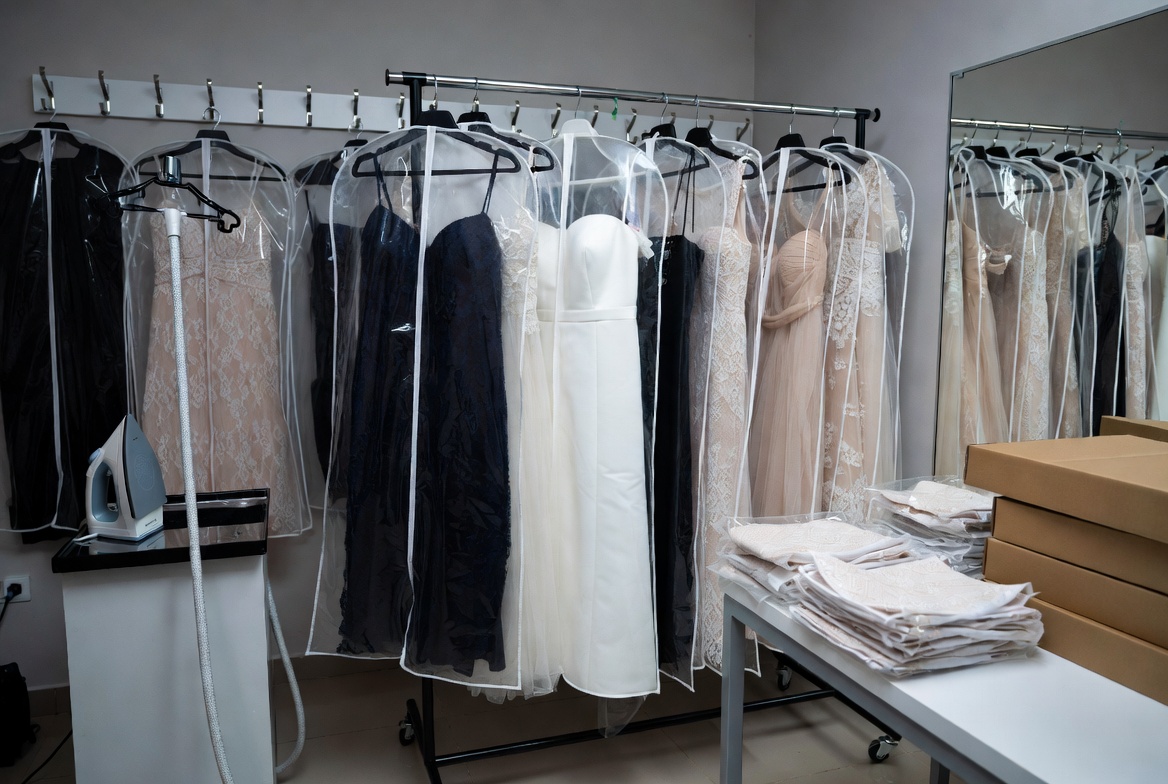
The packaging station is where the dress rental exposure changes form. A gown that was controlled inside the showroom becomes a transit risk, a delivery risk, a customer custody risk, and a return-condition risk. The garment bag, hanger, box, shipping label, return label, accessory checklist, inspection photo, and rental agreement all become part of the insurance story.
The strongest submissions explain how each garment is documented before it leaves, how shipping or delivery is handled, how accessories are logged, who confirms delivery, how the return inspection works, and what happens when a garment is stained, damaged, late, lost, or not returned. For a rental business, documentation is not just operations. It is loss control.
For dress rental and wardrobe businesses, the packaging workflow can be as important as the showroom. The cleaner the handoff records, the stronger the explanation of custody, condition, and movement.
What A Strong Dress Rental Submission Includes
A dress rental submission should show the underwriter what is owned, what belongs to customers or consignors, how garments move, how condition is documented, and how cleaning, alterations, delivery, and returns are controlled.
Values & Wardrobe Schedule
- Owned rental inventory by location
- Premium gowns, bridal pieces, couture pieces, costumes, and accessories
- Garment bags, packaging, racks, steaming equipment, and showroom fixtures
- Customer-owned garments, consigned pieces, and stylist pull inventory
- Maximum values on premises, off premises, in transit, and with customers
- Peak values during wedding, gala, pageant, prom, and event seasons
Condition & Return Controls
- Garment ID system and rental history
- Pre-rental and post-return photographs
- Damage, stain, odor, missing accessory, and late-return procedures
- Cleaning, repair, and retirement workflow
- Customer agreement and return-condition documentation
- Deposit, replacement, or damage-charge procedure where used
Operations & Service Detail
- In-person showroom, appointment-only, ecommerce, styling, and production channels
- Fittings, measurements, temporary alterations, hems, and repair work
- Cleaning performed in-house versus through outside vendors
- Stain treatment, steaming, pressing, and care-label process
- Children’s garment exposure, if applicable
- Outside seamstresses, dry cleaners, couriers, or fulfillment partners
Transit, Contracts & Loss History
- Shipping carriers, courier procedures, hand delivery, pickup, and return-label process
- Venue, hotel, production, stylist, and event delivery activity
- Landlord requirements, venue requirements, production contracts, and certificate wording
- Prior loss runs and narrative around theft, garment damage, return disputes, or cleaning claims
- Cyber controls, rental platform access, payment verification, and customer data handling
- Current policies, renewal date, prior declinations, and known underwriting concerns
Sitemap-Aware Internal Links For Dress Rental, Wardrobe, Fashion & Specialty Coverage
These internal links connect the dress rental and wardrobe page to the larger Kelly Insurance Group specialty library. Keep these links crawlable in the HTML so the page is not orphaned and search engines can understand its relationship to adjacent risks.
Wardrobe, Rental & Fashion Operations
Events, Production & Luxury Accessories
Supporting Coverage Lines
Live Sitemap Search
This module searches the Kelly Insurance Group sitemap from the browser and surfaces related pages. If the sitemap cannot load in the browser, the static links above remain crawlable.
What Engagement Looks Like For A Dress Rental Business
Dress rental insurance starts with the garment cycle. The most useful submission does not just say “formalwear rental.” It explains what is owned, what belongs to customers or consignors, how garments are identified, how condition is documented, how rentals are shipped or delivered, how cleaning is handled, and how damaged or late-returned pieces are resolved.
The next layer is control. Underwriters look for inventory tracking, garment photos, customer agreements, delivery logs, alteration procedures, cleaning vendor contracts, in-house chemical controls where applicable, employee access, shipping account controls, payment controls, and prior loss history. A wardrobe rental business with a clear custody narrative is easier to present than a business that only provides a revenue estimate and a stock total.
Use the insurance intake forms portal, book through book an appointment, or start through the contact page. Direct line: (412) 212-2800.
Dress Rental & Wardrobe Insurance FAQ
What does dress rental and wardrobe insurance cover?
Is dress rental insurance the same as boutique insurance?
Does general liability cover damaged rental dresses?
What is the difference between owned rental inventory and property of others?
Does dress rental insurance cover garments in transit?
What information is needed to start a dress rental insurance submission?
Does cleaning or stain treatment change the insurance review?
Do alterations and fittings need to be disclosed?
Can one policy cover showroom rentals, ecommerce rentals, delivery, and styling pulls?
What makes a dress rental business hard to place?
Does cyber insurance matter for an online dress rental business?
Is this page legal or compliance advice?
Start The Dress Rental & Wardrobe Submission
Use the intake forms portal to start the submission, or book a call to walk through the garment cycle before paperwork. The strongest submissions explain owned inventory, property of others, cleaning, alterations, delivery, returns, cyber, crime, certificates, contracts, and loss-history details before the carrier asks.