High-Value Fashion Inventory Insurance
High-value fashion inventory insurance is built for the part of a fashion business where the balance sheet can disappear into boxes, garment bags, rolling racks, sample closets, fulfillment bins, trade show crates, storage cages, and third-party warehouse systems. The issue is not just “inventory.” The issue is where the goods are, who controls them, what value method applies, how they move, and whether the policy follows them before and after they sit at a named location.
Kelly Insurance Group builds the submission around the inventory control file: owned stock, finished goods, samples, archive pieces, consigned goods, customer property, imported shipments, 3PL stock, showroom racks, trade show stock, returns, damaged goods, high-value accessories, and seasonal peak values. That structure gives underwriters a real inventory story instead of a single stock number.
What is high-value fashion inventory insurance?
High-value fashion inventory insurance is a commercial insurance program built around designer apparel, samples, luxury accessories, seasonal stock, warehouse inventory, inventory in transit, 3PL storage, trade show stock, showroom racks, property of others, and theft-sensitive fashion goods.
Stock is not one number.
Cost, selling price, landed cost, replacement cost, sample value, and archive value can all point to different answers.
Goods move constantly.
Inventory may sit with a supplier, carrier, customs broker, 3PL, showroom, stylist, trade show, or final customer.
Records decide.
SKU logs, warehouse receipts, photos, carrier data, cycle counts, and transfer records can make or break the claim story.
The Stock Has To Be Separated Before It Can Be Insured Correctly
A high-value fashion inventory account should not be submitted as “clothing stock.” Underwriters need to see the lanes: finished goods, samples, archive pieces, accessories, goods in process, returns, consignment property, and inventory sitting outside the insured’s direct control.
LANE 01
Finished Goods
Ticketed, packaged, ready-to-ship apparel and accessories held for wholesale, ecommerce, retail, or marketplace distribution.
LANE 02
Samples & Prototypes
Development samples, showroom samples, press samples, fit samples, trunk show samples, and one-of-one pieces.
LANE 03
Luxury Accessories
Handbags, footwear, jewelry-adjacent accessories, belts, eyewear, watches, leather goods, and higher per-unit value stock.
LANE 04
Inventory In Transit
Goods moving by parcel carrier, freight carrier, courier, hand-carry, ocean cargo, air cargo, or domestic transfer.
LANE 05
Third-Party Storage
Stock held at 3PL warehouses, fulfillment centers, bonded storage, showrooms, consignment partners, contractors, or retail accounts.
LANE 06
Returns & Damaged Stock
Returned, rejected, repaired, quarantined, damaged, sample-sale, off-price, or relabeled goods that do not fit a clean stock value.
Click The Status That Matches The Stock
Fashion inventory changes status quickly. The same SKU can be finished goods on Monday, trade show stock by Friday, return inventory next week, and off-price stock next month. This selector maps status to exposure, coverage priority, and documents that should go into the submission.
Warehouse Stock
Warehouse stock is the anchor exposure. The underwriting file should show maximum value by location, security controls, fire protection, water exposure, stock concentration, rack system, cycle count process, and how values change during seasonal peaks.
Where High-Value Fashion Inventory Becomes An Underwriting Problem
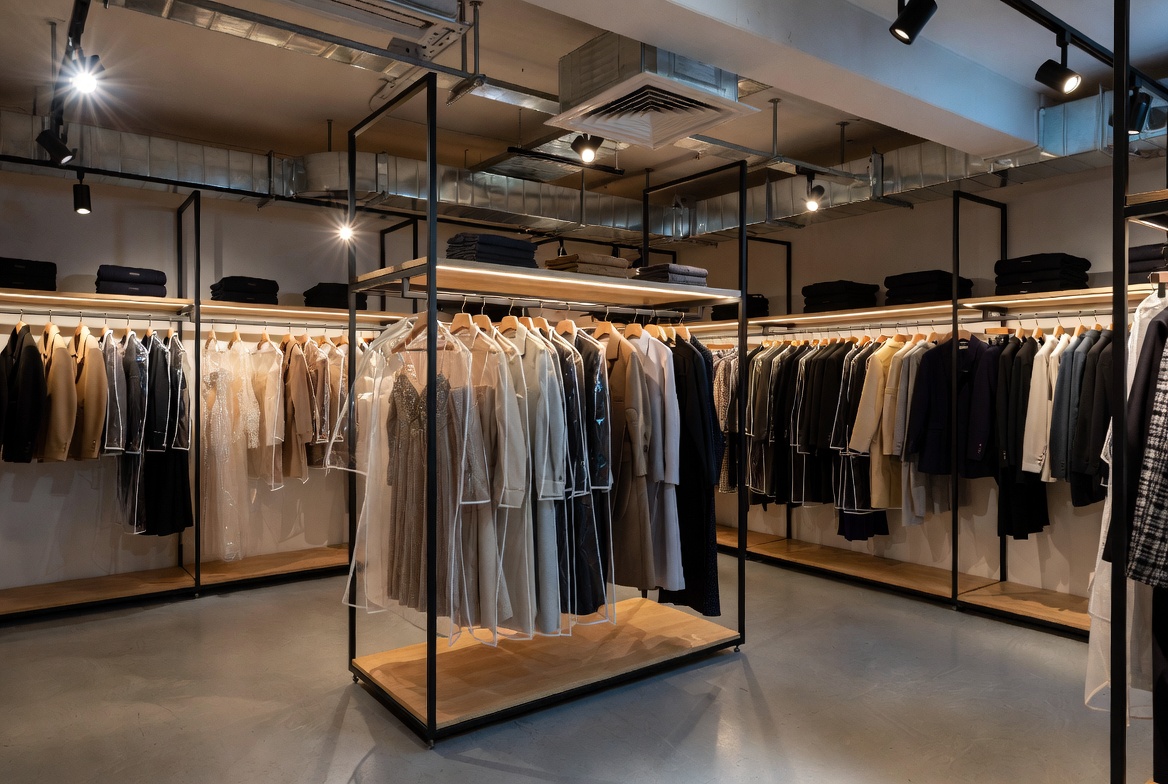
The Secure Storage Question Is Not Just “How Much Stock?”
A single stock limit can hide the real risk. A protected garment storage facility may hold finished apparel, couture pieces, samples, returns, showroom rack overflow, archive pieces, high-value accessories, customer property, and incoming or outgoing transfers. Each category needs a different value story.
The best inventory submissions show the control system: who can enter, who can release goods, how transfers are approved, how cycle counts are performed, how values are reported, how damages are recorded, and how peak inventory is handled before major launches, market weeks, wholesale shipments, or seasonal drops.
The Compliance Layer That Sits Under Fashion Stock
Inventory insurance is not compliance advice. But the underwriting file should recognize that fashion inventory can sit under labeling, flammability, import, warehouse safety, and counterfeit-enforcement regimes. These official sources explain why underwriters ask for product class, country-of-origin, warehouse controls, and product documentation.
Textile Fiber Rule
The FTC Textile Fiber Rule requires certain textiles sold in the United States to carry labels disclosing fiber names and percentages, marketer or manufacturer identity, and processing or manufacturing country.
Official FTC SourceCare Labeling Rule
FTC care-labeling guidance states the rule requires manufacturers and importers to attach care instructions to clothing and some piece goods.
Official FTC Source16 CFR Part 1610
The clothing textile flammability standard classifies Class 3 textiles as rapid and intense burning and states that those textiles shall not be used for clothing.
Official eCFR SourceWarehouse Hazards
OSHA states warehouse workers face many hazards and that proper design, planning, and training can help recognize and control warehouse hazards.
Official OSHA Source29 CFR 1910.176
OSHA’s material-handling rule states storage of material shall not create a hazard and that stored bags, containers, bundles, and similar items must be stable and secure against sliding or collapse.
Official OSHA Source19 CFR Part 134
CBP country-of-origin marking rules implement the Tariff Act marking requirements for foreign-origin articles imported into the United States.
Official eCFR SourceCoverage note: Policy outcomes depend on actual forms, endorsements, exclusions, warranties, valuation terms, deductibles, sublimits, security conditions, locations, inventory values, and carrier underwriting. This page is educational and not a coverage opinion or guarantee of payment.
Generic Property Limit vs. Built-For-Fashion Inventory Program
The common mistake is treating designer inventory like ordinary business personal property at one address. High-value fashion inventory needs a program that follows ownership, status, value, location, and movement.
Generic Property Setup — Common Gaps
- May only insure stock at scheduled premises, not at 3PLs, showrooms, trade shows, or in transit.
- May not reflect peak values during seasonal launches, wholesale shipment windows, or market weeks.
- May treat samples, archive pieces, returns, and damaged stock as ordinary inventory.
- May not address property of others, customer goods, consignment stock, or borrowed display pieces.
- May contain theft, off-premises, transit, or mysterious disappearance limitations.
- May not match warehouse contracts, retailer vendor agreements, or certificate requirements.
- May not address cyber, shipping-account compromise, employee dishonesty, or invoice fraud.
Built-For-Fashion Inventory Program — What Gets Reviewed
- Separates finished goods, samples, archives, accessories, goods in process, returns, and property of others.
- Documents peak stock values by location, custody status, product class, and season.
- Reviews stock throughput, cargo, inland marine, commercial property, crime, cyber, and business income together.
- Maps goods from supplier to carrier to customs to 3PL to showroom to trade show to final customer.
- Reviews warehouse security, access control, cycle counts, SKU records, cameras, and release procedures.
- Coordinates certificates and contract requirements for warehouses, retailers, showrooms, lenders, and landlords.
- Builds a cleaner claim file before loss: values, proofs, photos, receipts, transfer logs, and custody records.
What A Strong High-Value Fashion Inventory Submission Includes
A strong submission shows the carrier what the inventory is, where it lives, how it moves, what it is worth, who owns it, who controls it, and what documentation proves it.
Values & Categories
- Finished goods by product class and location.
- Samples, prototypes, archive pieces, display goods, and seasonal collections.
- Accessories, handbags, footwear, jewelry-adjacent goods, watches, and high-theft stock.
- Peak values by month, season, launch, market week, and shipment cycle.
Locations & Custody
- Owned locations, leased warehouse, showroom, boutique, 3PL, storage facility, and offsite locations.
- Goods with contractors, stylists, photographers, retailers, trade shows, or consignment partners.
- Warehouse contracts, bailee terms, inventory custody clauses, and certificate requirements.
- Property of others held by the fashion business.
Security & Controls
- Alarm, camera, access-control, key-card, cage, locked-room, safe, and after-hours procedures.
- Employee access rules, release authorization, dock procedures, and visitor controls.
- Cycle counts, exception reports, SKU reconciliation, shrink controls, and damaged-stock logs.
- Fire, water, rack, sprinkler, and housekeeping controls.
Movement & Transit
- Inbound cargo, domestic freight, parcel carrier, courier, hand-carry, employee vehicle, and customer delivery.
- Shipment values, declared value process, tracking, signature requirements, and carrier rules.
- Trade show shipments, showroom transfers, stylist pulls, photo production movement, and returns.
- Ocean cargo or stock throughput review for imported goods.
Valuation Method
- Cost, landed cost, selling price, replacement cost, consignment value, sample value, or agreed value.
- How values are reported to carriers and how often peak values change.
- How damaged, returned, obsolete, off-price, or sample-sale stock is valued.
- Supporting records: invoices, ERP reports, inventory exports, photos, and contracts.
Loss History & Digital Risk
- Prior theft, water damage, cargo loss, warehouse loss, shrink, returns fraud, or unexplained disappearance.
- Current policies, renewal dates, loss runs, non-renewals, declinations, and known underwriting concerns.
- Shipping-account controls, warehouse-system access, invoice verification, and payment workflow.
- Cyber and crime controls for inventory and fulfillment systems.
Related KIG Pages For High-Value Fashion Inventory
Static internal links keep this inventory page tied into the larger Kelly Insurance Group fashion, apparel, sample, warehouse, jewelry, ecommerce, event, and commercial coverage library. The live sitemap search below gives users another way to discover related pages from the sitemap.
Fashion Inventory, Samples & Warehousing
Luxury Goods, Rental, Accessories & Specialty Stock
Supporting Commercial Coverage Lines
Live Sitemap Search
Search the Kelly Insurance Group sitemap by inventory, fashion, warehouse, ecommerce, sample, trade show, jewelry, cyber, crime, umbrella, or specialty coverage. Static links above remain crawlable even if the live sitemap request cannot load.
How The Inventory Account Gets Presented
A high-value fashion inventory submission should begin with the stock map: what is owned, what belongs to others, where goods are stored, how values are calculated, what security controls are in place, how goods move, what happens at peak season, and what prior losses exist. Kelly Insurance Group can structure the submission around the actual flow of inventory rather than forcing everything into a generic business property schedule.
Use the insurance intake forms portal, book through book an appointment, or start through the contact page. Direct line: (412) 212-2800.
High-Value Fashion Inventory Insurance FAQ
What does high-value fashion inventory insurance cover?
Is this different from ordinary business property insurance?
Does insurance cover inventory at a 3PL or fulfillment center?
What is stock throughput coverage?
How should fashion inventory be valued?
Does high-value fashion inventory insurance cover samples?
What if the inventory includes handbags, watches, jewelry, or luxury sneakers?
Does inventory insurance cover theft or mysterious disappearance?
What information is needed to quote high-value fashion inventory insurance?
Can one program cover warehouse stock, transit, showrooms, and trade shows?
What makes a high-value fashion inventory account hard to place?
Is this page legal, product-safety, customs, or coverage advice?
Start The High-Value Fashion Inventory Submission
Send the inventory control story first: categories, values, locations, 3PLs, peak seasons, security controls, sample movement, transit exposure, valuation method, and prior losses. KIG can help present the stock as an underwriting file, not just a number.
Open The Insurance Intake Forms Portal