
Sample Garment Insurance
Sample garment insurance is built for the pieces that carry design value before they become ordinary inventory. A sample can be a prototype, fit garment, salesman sample, press pull, runway look, buyer sample, editorial loan, trunk show piece, imported test garment, or one-of-one development piece. It may not have a clean retail value, but it can still be expensive, irreplaceable, time-sensitive, and mission-critical.
Kelly Insurance Group structures sample garment accounts around custody: who owns the sample, where it is stored, who signed it out, what condition it was in, where it traveled, whether it belongs to a client or designer, whether it is imported, and whether it is being used for selling, testing, fitting, photography, production, or press.
What is sample garment insurance?
Sample garment insurance is commercial insurance built around prototype, sample, press, showroom, buyer, stylist, and production garments that may move before they are sold as finished inventory. Depending on the operation, the program may include commercial property, inland marine, property of others, bailee review, crime, cyber, workers compensation, product liability, special event coverage, and umbrella or excess liability.
Samples move
Samples often travel between design rooms, showrooms, stylists, buyers, photographers, contractors, and events.
Not ordinary stock
A sample may have more development value than material cost, especially if it is one-of-one or needed for a deadline.
Custody decides
The claim story depends on who owned it, who had it, where it was, and what condition it was in before handoff.
A Sample Garment Has More Than One Life
The same garment can begin as a prototype, move into a fit session, become a showroom sample, get pulled by a stylist, appear in a campaign, travel to a trade show, return damaged, and still be needed for production reference. Insurance has to follow the garment’s status, not just the location where it started.
TAG 01
Prototype Build
Fabric, trims, pattern work, hand labor, and development time combine before the garment has a retail value.
TAG 02
Fit Sample
The garment is used for measurements, corrections, model fitting, technical review, and production direction.
TAG 03
Showroom Rack
Buyers, stylists, editors, and reps handle samples during market appointments and sales meetings.
TAG 04
Press Loan
Samples are pulled for editors, celebrity stylists, campaigns, photoshoots, runway prep, or influencer content.
TAG 05
Offsite Movement
Courier, hand-carry, parcel shipment, rideshare delivery, messenger service, or production transport creates transit exposure.
TAG 06
Return Review
Condition, stains, tears, missing accessories, odor, alterations, and late returns should be documented before restocking.
Choose The Sample Type
Different samples create different underwriting questions. Click the closest category to see the exposure, coverage priority, and documentation that should be prepared before placement.
Prototype Sample
Prototype samples concentrate design labor and decision-making value. They may not be sold, but they can control the entire production path. A lost prototype may create delay, redesign, reproduction cost, or missed buyer timing.
The Sample Log Is Part Of The Insurance File
Sample claims are often documentation claims. A clean log can separate a transit loss from a stylist dispute, a showroom theft from a contractor handoff issue, and pre-existing damage from a current rental or press-loan problem.
Build A Better Sample Log
Click a field to see why it matters. These fields are not just operations. They help explain ownership, condition, value, custody, and movement when a sample disappears, comes back damaged, or causes a deadline problem.
Sample ID
A unique sample ID connects photos, pull sheets, invoices, fittings, courier logs, showroom records, and return notes. Without a stable ID, the claim file can become a debate about which garment was actually lost or damaged.
- Use a unique code for each physical sample, not just a style name.
- Link the ID to season, size, colorway, sample status, and current holder.
- Keep the same ID across showroom, press, production, and courier logs.
Rules That Can Touch Sample Garments
Not every sample is ready for consumer sale, and not every rule applies the same way to every prototype. The underwriting point is simple: the more a sample resembles sellable apparel, imported merchandise, children’s apparel, or production-ready goods, the more documentation matters.
FTC Textile Fiber Rule
The FTC Textile Fiber Rule requires certain textiles sold in the United States to carry labels disclosing fiber names and percentages, marketer or manufacturer identity, and processing or manufacturing country.
Official FTC SourceTextile Guidance On Staged Goods
FTC textile guidance explains that labeling requirements do not apply until products are ready for sale to consumers, but intermediate-stage products may need invoice information.
Official FTC GuidanceFTC Care Labeling Rule
The Care Labeling Rule applies to manufacturers and importers of textile wearing apparel and certain goods and requires regular care instructions through labels or other methods.
Official FTC Source16 CFR Part 1610
The clothing textile flammability standard provides testing and classification requirements and states Class 3 textiles are rapid and intense burning and shall not be used for clothing.
Official eCFR SourceOSHA Sewing eTool
OSHA states workers involved in sewing activities may be at risk of musculoskeletal disorders, with issues documented around sewing stations, fine work, scissor work, and material handling.
Official OSHA SourceCBP Commercial Samples
CBP publishes guidance for importing commercial samples. Imported sample garments should be documented by use, value, shipment method, and whether they are temporary or permanent imports.
Official CBP Source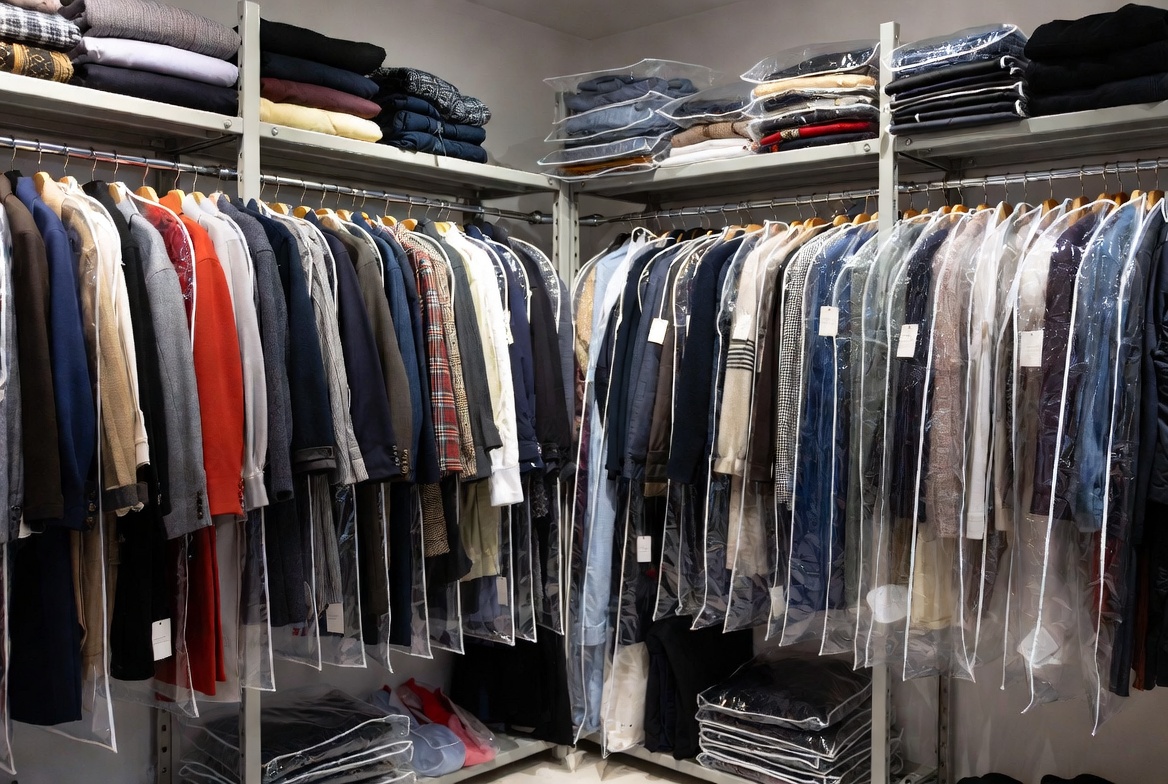
Inside The Sample Vault
A sample storage room is not just a closet. It can be the design archive, sales library, press library, production reference room, buyer showroom reserve, and high-value seasonal record all at once. That is why the values are difficult: material cost may understate the business impact, while retail value may not reflect replacement reality.
The cleanest insurance submission describes what the sample is used for. A sample needed for production reference creates a different issue than a sample loaned to a stylist. An archive piece needed for brand history is different from a showroom duplicate. An imported commercial sample is different from a final sellable unit.
Where Sample Garments Leave The Safe Zone
The highest-risk moment is often the handoff. A sample can be perfectly tracked inside the storage room and become poorly documented the second it leaves with a messenger, intern, stylist, showroom rep, model, photographer, or contractor.
MOVE 01
Showroom Appointment
Buyer meetings, market week, rack presentations, swatch review, and wholesale pull requests.
PremisesSamplesBuyer TrafficMOVE 02
Stylist Pull
Celebrity, editorial, campaign, influencer, or red-carpet wardrobe requests with return-condition risk.
Pull SheetReturn DateConditionMOVE 03
Photoshoot / Set
Studio, location, model fitting, backstage rack, props, hair and makeup, and multiple handlers.
ProductionWardrobeProperty Of OthersMOVE 04
Contractor Transfer
Cut-and-sew shop, alteration room, pattern correction, sample remake, trim replacement, or repair.
ContractorWorkers CompBaileeMOVE 05
Trade Show / Trunk Show
Temporary displays, booth property, venue certificates, shipment, hotel storage, and off-premises stock.
EventTransitCertificateWhat A Strong Sample Garment Submission Includes
A sample garment account should not be submitted as ordinary clothing inventory. The packet should show how samples are created, valued, stored, signed out, moved, returned, and retired.
Sample Categories
- Prototype, fit, showroom, press, runway, trunk show, buyer, archive, imported, and damaged samples.
- Season, collection, size, colorway, style number, and garment status.
- Whether the sample is sellable, non-sellable, development-only, or production reference.
Values & Ownership
- Owned samples, borrowed samples, consigned samples, designer-owned pieces, and customer garments.
- Material cost, development cost, replacement cost, declared value, and agreed value where applicable.
- Peak value in storage, offsite, in transit, and out on loan.
Storage Controls
- Storage room access, locked areas, rack system, garment bags, climate concerns, alarm, and camera details.
- Sample ID tags, check-in/check-out logs, loan forms, and condition photo process.
- After-hours storage and who can authorize sample movement.
Movement & Custody
- Courier, hand-carry, parcel shipment, stylist pickup, buyer pickup, contractor delivery, and event transport.
- Pull sheets, return dates, signatures, chain-of-custody notes, and tracking records.
- Goods sent to showrooms, stylists, shoots, events, contractors, or trade shows.
Operations
- Design room, sample room, showroom, sales office, warehouse, atelier, or contractor relationship.
- In-house sewing, cutting, alterations, pressing, fitting, or sample remake activity.
- Employees, temporary workers, interns, contractors, stylists, and production partners.
Loss History
- Prior lost samples, damaged press loans, courier losses, theft, water damage, event losses, or return disputes.
- Current policies, renewal date, loss runs, non-renewals, declinations, and known underwriting concerns.
- Corrective actions taken after prior sample losses or documentation problems.
Related KIG Pages For Sample Garments
These internal links connect the sample garment page to the broader Kelly Insurance Group fashion, apparel, showroom, production, event, inventory, and business insurance library. Static links remain crawlable even if the live sitemap module does not load.
Sample, Showroom & Fashion Operations
Movement, Production & Events
Supporting Commercial Coverage Lines
Live Sitemap Search
Search the Kelly Insurance Group sitemap by sample, fashion, showroom, garment, inventory, production, event, certificate, cyber, crime, or hard-to-place risk. Static links above remain crawlable for SEO and AI-platform retrieval.
What The Brokerage Needs For Sample Garment Coverage
A sample garment submission should start with the sample system, not just the business name. KIG needs to know what types of samples exist, who owns them, how they are valued, where they are stored, how they are signed out, who can remove them, how they travel, and what loss history exists.
The best accounts have a simple paper trail: sample ID, owner, holder, value basis, condition photos, destination, purpose, expected return date, and return-condition notes. That is the difference between a clean claim narrative and a disputed custody story.
Use the insurance intake forms portal, book through book an appointment, or start through the contact page. Direct line: (412) 212-2800.
Sample Garment Insurance FAQ
What does sample garment insurance cover?
Are sample garments considered inventory?
Does a standard business policy cover samples out with stylists?
What if the sample has no retail value?
Does sample garment insurance cover press loans?
Does imported sample apparel require separate review?
What documentation helps a sample garment claim?
What if the sample belongs to another designer or client?
Can one policy cover prototypes, press samples, trade show samples, and archive pieces?
What makes a sample garment account hard to place?
Does cyber insurance matter for sample rooms?
Is this page legal, customs, product safety, or coverage advice?
Start The Sample Garment Submission
Send the sample inventory story: sample categories, values, owners, locations, custody process, movement records, stylist pulls, imported samples, contractor handling, and prior losses. KIG can help organize the request around the actual sample lifecycle instead of treating prototypes as ordinary stock.