Fashion Stylist Insurance
A working fashion stylist is one of the most exposed independent professionals in the entire fashion economy. Most days the stylist is moving five- to seven-figure aggregate value in borrowed sample inventory between PR showrooms, brand archives, photo studios, talent fittings, and red-carpet locations — none of which the stylist owns, all of which the stylist is contractually responsible for, and most of which the stylist's general liability policy was never written to address.
The brokerage places programs purpose-built for the stylist class — for editorial stylists, celebrity wardrobe stylists, commercial stylists, e-commerce production stylists, brand image consultants, and personal-shopping or wardrobe-management stylists. Coverage is structured around what the stylist actually does on a working day: pulling, transporting, fitting, shooting, returning. The bailee form is the load-bearing line. Everything else is built around it.
Why standard freelancer insurance doesn't fit a stylist.
Most freelance professionals carry general liability insurance because clients require it. The stylist's risk profile sits in a different shape entirely. A consultant carrying $1M / $2M general liability sees that policy respond to a slip-and-fall at a client meeting — a real but low-frequency exposure. The stylist's daily exposure is borrowed inventory: a Givenchy gown valued at $14,000 in the back of a hired SUV, a Cartier necklace on memo from a fine-jewelry brand, a pull of forty-six pieces from six different showrooms staged for a Vogue cover try-on. Those pieces don't sit on the stylist's policy unless the form is written to put them there.
The architecture has to start with bailee coverage — the line that responds to damage, theft, mysterious disappearance, or loss of property of others while in the stylist's care, custody, and control. Around the bailee line, the program adds CGL for premises and operations, professional liability (E&O) for the styling opinion itself, inland marine for goods in transit between showroom and shoot, and cyber for the increasingly online operating profile most stylists now run. Workers' compensation activates the moment the stylist hires a single first assistant — under most state laws, the worker is an employee regardless of how the engagement is labeled.
A stylist's working day is a series of bailee events. The pull form, signed at the showroom, is the document the insurance form actually reads.This page is the stylist's view of how the program gets built: the six operating channels stylists run today, the six-stage pull-and-return trip every shoot day actually follows, the eight-line coverage build that anchors a clean account, and the unions, regulations, and credential systems that sit overhead. The pull form on the right side of the hero isn't decorative — it is the literal underwriting artifact that determines whether the bailee form responds when a piece goes missing.
How working stylists actually monetize.
"Fashion stylist" describes at least six distinct revenue channels — each with a different client structure, different bailee posture, different liability concentration. Most working stylists run between two and four of these in parallel. The cards below map what each channel actually looks like and the coverage line that tends to dominate that profile.
Editorial Stylist
Pulls for magazine covers, fashion editorials, and digital publisher features. Borrowed inventory aggregates run highest in this channel; per-shoot pulls of 30–80+ pieces from multiple showrooms are routine. The publisher rarely indemnifies the stylist meaningfully.
Celebrity Wardrobe Stylist
Dresses talent for red carpet, press, public appearances, and personal day-to-day. Pulls direct from luxury houses including special-order and atelier pieces. The single-piece value can exceed everything in a small showroom; reputational and contractual exposures sit alongside property.
Commercial / Advertising Stylist
Wardrobe for TV commercials, branded content, and digital ad campaigns. Frequently engages with SAG-AFTRA performers, which activates union-contract compliance for any role the stylist plays beyond pure styling — fittings, on-set continuity, hours, scale.
E-Commerce Production Stylist
Wardrobe and styling for catalog, DTC product photography, and lookbook days. Inventory is usually the brand's own product, not borrowed sample — a different bailee posture. High-volume, repeat-client structure with continuity-of-engagement contractual exposures.
Brand Image & Creative Direction
Long-form consulting for brands — seasonal lookbook direction, campaign styling consultation, advisory roles, capsule curation. Professional liability becomes the dominant exposure; the stylist's opinion is the product, not the pulled garment.
Personal Stylist / Wardrobe Manager
Private-client work — personal shopping, closet curation, wardrobe management, capsule building, travel wardrobe planning. Often handles client property of significant value (existing wardrobe, archive pieces). Cyber and privacy elevate due to PII held on private clients.
Six stages. Where the bailee form actually has to respond.
A working shoot day is a six-stage transit-and-custody loop. Every stage has its own loss frequency, its own documentation requirements, and its own moment where the bailee or inland-marine line is the form that responds. Sample loss most often occurs at stage three or stage six; carriers rate the account on the procedural discipline across all six.
Pull-Trip Procedure · Working Day
6 Stages · DocumentedPull Authorization
showroom_in()
pr_approval
COI attached
Sample-Out
pull_form_signed
declared_value
condition_logged
In-Transit
vehicle / courier
chain_of_custody
storage_breaks
On-Set
fitting + shoot
rack_security
talent_handoff
Return Transit
repack + steam
vehicle / courier
route_confirmed
Return-In
pull_form_closed
condition_match
showroom_signoff
The pull form opened at Stage 02 is the same form closed at Stage 06. The trip is documented on both sides — out and in — with matching signatures and condition notes. Carriers scrutinize this loop because the discrepancy between Stage 02 and Stage 06 is the moment the loss is discovered. Stylists without a working pull-form discipline are typically declined or surcharged.
Eight lines that anchor a working stylist account.
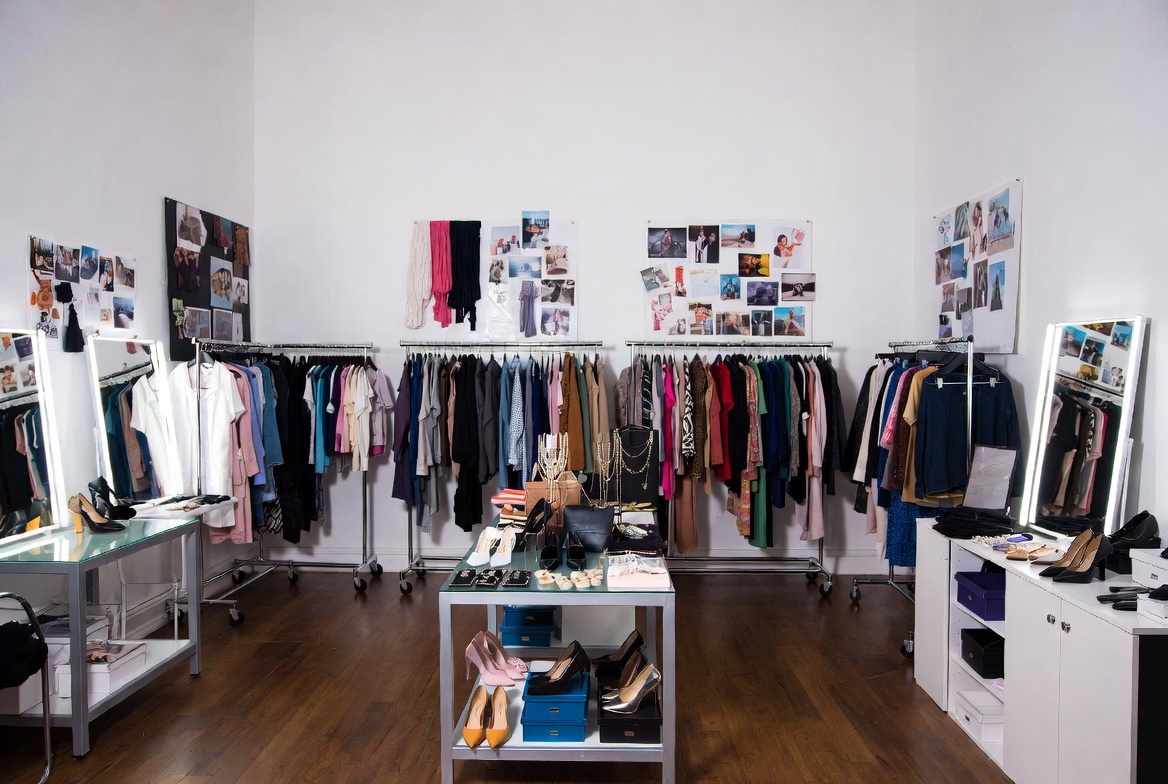
The build on the right is the eight-line backbone of a clean stylist account. Some lines are non-negotiable from day one; others activate as the stylist's operating profile grows — first hire, first paid editorial, first commercial signatory engagement, first international location.
Coverage is modular. A first-year stylist running editorial-only with no employees may need just the first four lines. A celebrity wardrobe stylist with two assistants, a $5M peak inventory exposure, and international location work needs the full eight plus an umbrella tower.
The carrier reads the contracts the stylist signs as much as the policy itself. Most editorial agreements with major publishers contain stylist-as-vendor indemnity provisions; most celebrity-talent agreements assign sample-return responsibility back to the stylist. The brokerage reviews those contracts at submission.
Bailee
Bailee & Property of Others
The load-bearing form. Damage, theft, mysterious disappearance, or loss of borrowed inventory in the stylist's care, custody, and control — on premises, in transit, on set, at returns. Per-pull schedule and aggregate-at-peak limits negotiated at submission.
CGL
Commercial General Liability
Premises, operations, products-completed operations. Personal & advertising injury. The certificate-issuing form for clients, studios, and locations. ISO CG 00 01 is the standard base. CG 20 26 handles designated additional insureds.
Inland Marine
Inland Marine / Transit
Goods in motion — from PR showroom to studio, between locations, return to brand. Some carriers schedule this inside the bailee form; others rate it as a separate line. Coverage scope and the territorial scope need to align with the stylist's typical day.
E&O
Professional Liability (Errors & Omissions)
The stylist's styling decision is the product. Coverage responds to claims the stylist's recommendation, work-product, or advice caused financial loss — for the brand, the client, or the publication. Critical for brand image consulting and commercial channel work.
Worker's Comp
Workers' Compensation & Employer's Liability
Statutory for any W-2 employee. First assistants and seconds are typically employees under state-specific ABC tests, including California AB 5, regardless of whether the stylist labels them 1099. The brokerage works classification at submission.
Equipment
Equipment / Tools of Trade
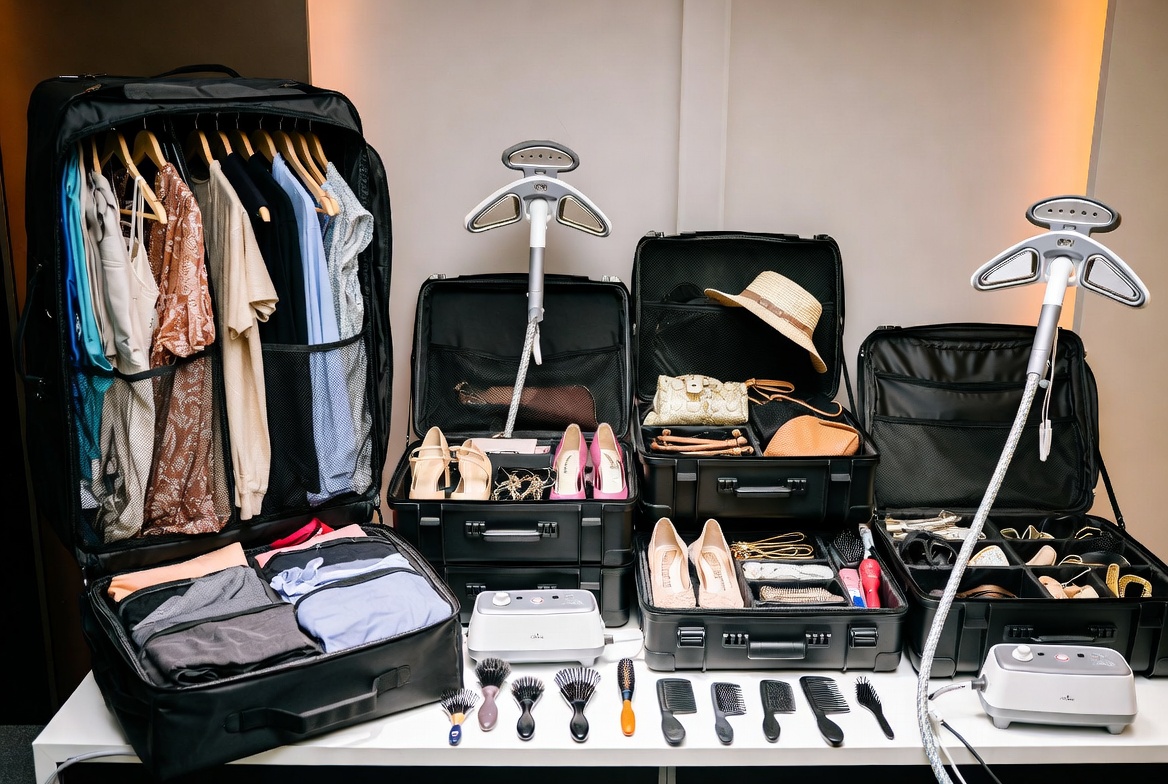
Steamer, garment racks, rolling cases, hardware, tablets, and the kit the stylist owns and transports. Often scheduled inside inland marine with separate sub-limits for high-value items (gold-tipped pinning tools, professional steamers, MacBooks used for live order management).
Cyber
Cyber & Privacy
Breach response, social-engineering fraud, funds-transfer fraud. Critical for stylists holding private-client PII (personal shoppers, wardrobe managers), for commercial accounts handling client production data, and for any stylist running a digital storefront or paid newsletter.
Umbrella
Umbrella / Excess Liability
Sits above CGL and Employer's Liability. $1M–$5M typical first layer; high-profile stylist accounts with major publisher or major brand contractual minimums frequently push $5M–$10M total tower. Required by many studio location contracts.
Five incident types. How they actually land on a stylist file.
The patterns below are composite illustrations of the claim types the specialty market sees on stylist files. They are educational — they do not describe specific clients. Actual coverage outcomes depend on the specific policy form, sub-limits, and exclusions in force at the time of loss.
Smash-And-Grab From Stylist Vehicle
A garment bag containing pulled samples is taken from the backseat of a parked vehicle while the stylist is between locations on a shoot day. Multiple high-value pieces lost. Bailee and inland marine respond, subject to vehicle-storage exclusions, declared-value documentation, and the stylist's working-day security procedures.
Damage During Fitting or Shoot
A borrowed piece is damaged on set — coffee on a couture gown, a heel through hemline, a pin tear during fitting. The showroom invoices the stylist for the replacement value. Bailee responds at the agreed valuation method; the dispute is usually about which valuation applies, not whether coverage attaches.
Sample Never Returned
A piece pulled three weeks earlier never makes it back to the showroom. The showroom claims the value; the stylist claims it was returned. With a clean pull-form closed at Stage 06, the bailee form is positioned to defend; without one, the stylist is exposed to the dispute and the carrier's coverage analysis is harder.
Brand Indemnity Claim
A brand argues the stylist's styling decisions misrepresented the brand or caused reputational harm — a wardrobe choice paired in a way the brand objects to, a styling credit dispute. E&O and personal & advertising injury on the CGL both engage; coverage scope depends on the underlying contract and the specific exclusions on the E&O form.
Assistant Workers' Comp Claim
A first assistant strains a back lifting a rolling case at load-in and files a workers' comp claim. The stylist labeled the assistant 1099 but state-specific tests classify the worker as an employee. Workers' comp gap closes the exposure on the stylist's program if WC was in force; if not, the stylist is exposed personally.
Scenarios above are composite illustrations drawn from publicly documented claim categories in the specialty stylist class. Actual coverage outcomes are determined by the specific policy forms, endorsements, sub-limits, deductibles, and exclusions in force at the time of loss. Nothing on this page is a coverage opinion or a guarantee of payment under any specific policy.
The institutions overhead.
A stylist's working environment intersects with three institutional layers: organized labor (IATSE locals 705 and 764, SAG-AFTRA where talent is union), industry-standard contracts (publisher rate cards, agency forms, brand stylist agreements), and the FTC's regulatory regime around endorsements and material-connection disclosure on social channels.
None of this is insurance directly. But each shapes the contractual exposure landscape the brokerage's submission has to address, and each is something the underwriter scrutinizes when rating the account.
IATSE Local 705
Motion Picture Costumers · LA · Est. 1937Largest union of costume supervisors, wardrobe stylists, and craftspeople in film and television. Hollywood, CA jurisdiction. Applies to stylists working under IATSE contracts on union film and TV productions.
IATSE Local 764
Theatrical Wardrobe · NYC · 1,400+ MembersTheatrical Wardrobe Union — wardrobe workers in NYC and 50-mile radius from Columbus Circle for film and TV; broader theater and live-event jurisdiction across the metro region.
SAG-AFTRA Commercials
2025 MOA · Effective April 1, 2025Current Commercials Contract MOA, three-year agreement with the Joint Policy Committee. Applies to stylists working on signatory commercial productions with SAG performers; fittings, hours, and digital replica framework all engage.
The FTC's Endorsement Guides at 16 CFR Part 255, last revised in 2023, require disclosure of "material connections" between an endorser and a brand. A stylist who is paid by a brand or who receives free product in exchange for editorial inclusion or social-media coverage has a material connection that must be clearly and conspicuously disclosed. The 2023 revisions tightened the standard for "clear and conspicuous." Personal & advertising injury coverage on the stylist's CGL may engage on disputes, but the underlying compliance obligation sits with the stylist.
Pages that connect to a stylist account.
A stylist account sits at the intersection of fashion industry coverage, production and entertainment placements, and the broader specialty book. The pages below describe the related placements that frequently sit alongside a stylist program.
// Fashion Industry Cluster
// Production & Entertainment Cluster
// Core Coverage Lines
Fashion stylist insurance FAQ.
Does my general liability policy cover the samples I pull from showrooms?
What's a "pull form" and why does it matter for insurance?
Are pieces covered while my assistant is transporting them in their car?
Do I need professional liability (E&O) if I'm only doing editorial work?
16 CFR Part 255, revised in 2023, tightened the rules around disclosed material connections; and professional-liability claims against creative service providers have risen materially. For editorial-only stylists, E&O is increasingly load-bearing rather than optional.What if I work on commercials with SAG-AFTRA performers?
Are my assistants employees or contractors?
California AB 5, but increasingly New York, New Jersey, Massachusetts, and others. Stylists who label assistants as 1099 contractors create both workers' compensation gap exposure and a misclassification claim risk under EPLI. The cleaner posture is W-2 with proper workers' comp in force; freelancers booked through a staffing agency that carries its own workers' comp shifts the obligation differently.What about FTC disclosure rules — do they apply to me?
16 CFR Part 255 require clear and conspicuous disclosure of the material connection. The 2023 revisions, effective June 29, 2023, tightened the standard for "clear and conspicuous." Disclosure isn't insurance — but compliance failures can create personal & advertising injury claims and reputational exposure that the program touches.What kinds of additional insureds will clients ask for?
CG 20 26 (designated person or organization) and CG 20 11 (managers or lessors of premises). Primary and non-contributory language and waiver of subrogation are often required by underlying contracts; the brokerage coordinates with the carrier to match the cert to the contract.If I work internationally — Paris, Milan, London fashion weeks — am I still covered?
How fast can you issue a certificate for a same-day shoot?
Does my policy cover digital and social-media work?
What if I've been declined or non-renewed by another carrier?
Start the stylist submission.
Use the intake portal to begin the submission, or schedule a discovery call to walk through the channel mix, peak inventory aggregate, assistant structure, and contract exposure profile before any paperwork moves. Clean stylist submissions typically reach first carrier indication within five to ten business days.