Excess Liability for Tree Contractors
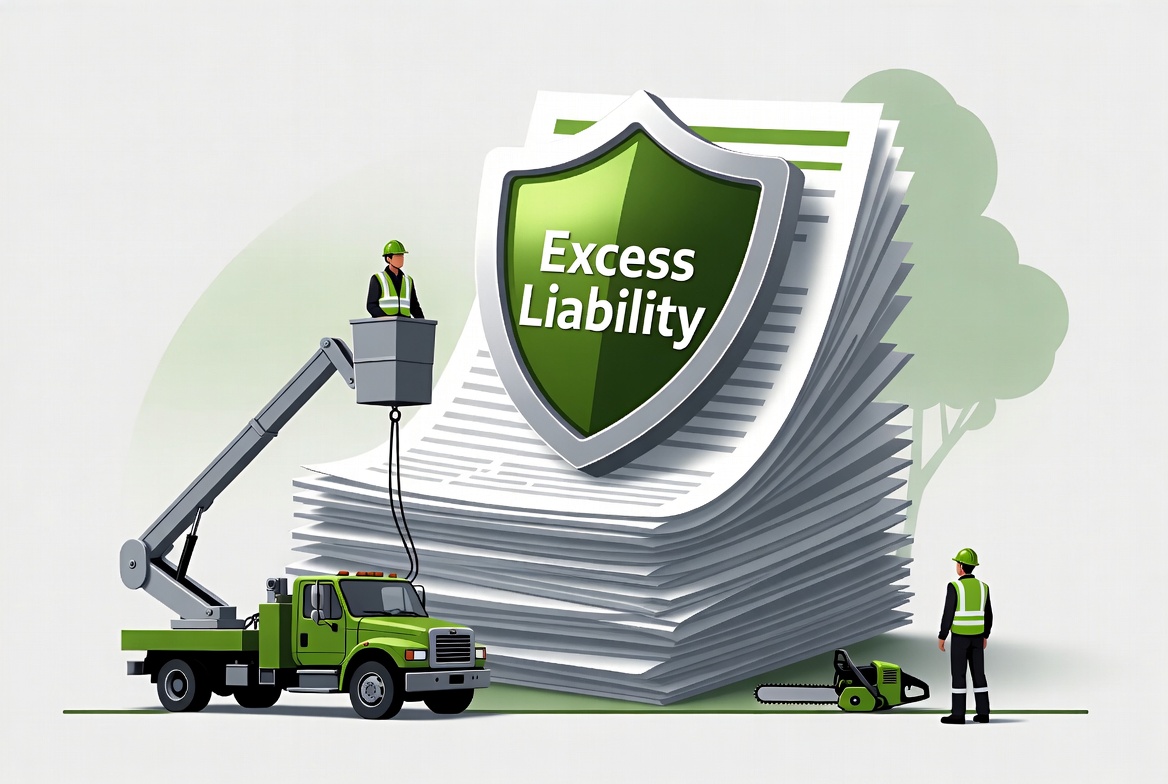
Excess Liability is the policy that sits on top of your General Liability, Auto Liability, and Employers Liability — extending the limits the underlying policies start with. For tree contractors, where a single incident can produce a claim that exceeds primary limits in a hurry, excess coverage is what stands between a paid claim and a closed business.
Coverage That Begins Where Your Primary Ends
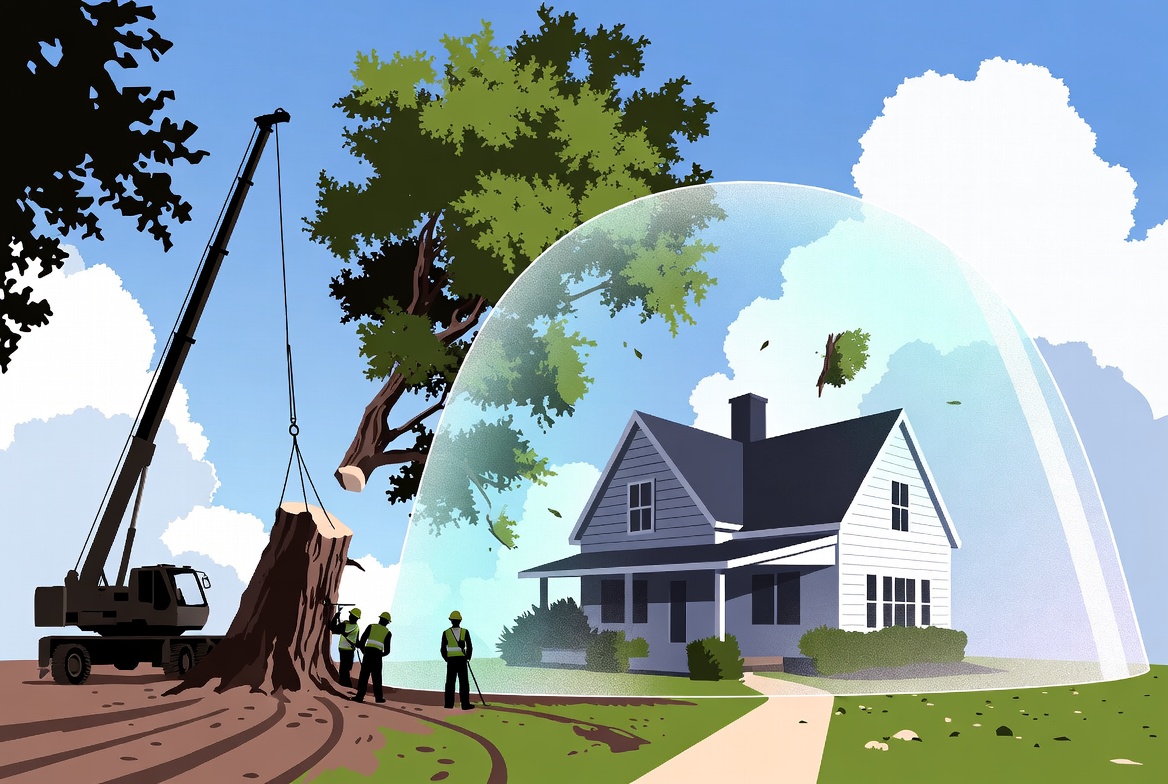
Tree work produces some of the highest-severity claims in the contracting world. A single removal that strikes a roof, a falling limb that hits a vehicle, a crane drop, a climbing fall, or a utility line incident can generate a loss that quickly exceeds the standard $1M / $2M limits on a primary General Liability policy. When that happens, the excess policy steps in.
Excess Liability does not replace your primary coverage. It sits on top of it. The primary pays first, up to its limit. The excess responds for amounts above that, up to the excess limit. This stacked structure is how tree contractors build limits that meet contract requirements, satisfy property managers and municipalities, and provide protection against a worst-case loss.
How Layered Limits Are Built
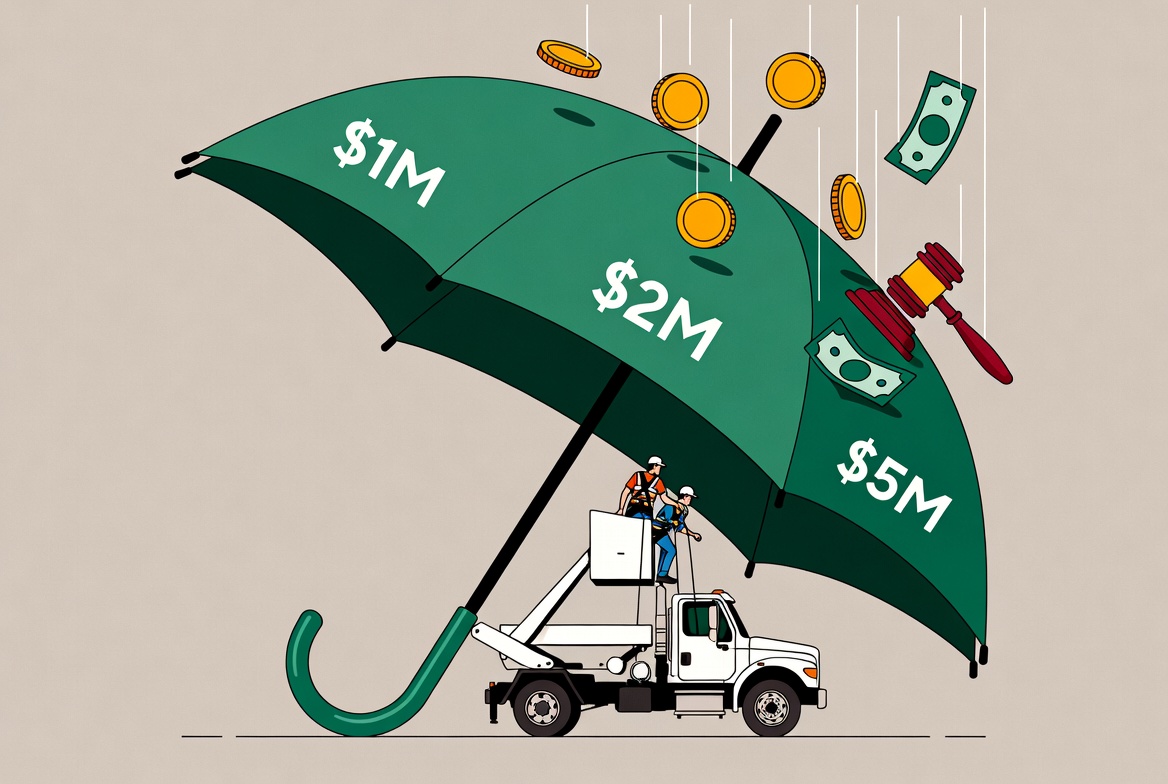
Excess Liability is built in layers. Each layer is a separate policy that sits above the one below it, with each layer responding only after the layer beneath it is exhausted. The visual below shows a typical tower for a tree contractor scaling from a primary base into excess limits.
Underlying GL / Auto / Employers Liability
Pays first. Defines the limits the excess sits above.
First Excess Layer
Sits above the primary. Triggered when underlying limits are exhausted by a covered loss.
Second Excess Layer
Responds only after Layer 1 is exhausted. Used when contracts require very high total limits.
Reading the Tower
The bottom layer is your primary insurance — your General Liability, your Commercial Auto Liability, and your Employers Liability under your Workers Compensation policy. The excess layer or layers above respond only after the layer below has been exhausted by a covered claim.
Tree contractors often carry one excess layer to satisfy a typical property manager or municipal contract. Larger operations and crane-heavy crews stack multiple excess layers to reach the higher total limits required by utility, government, and large commercial work.
The total limit available for any one occurrence is the primary limit plus the excess limits stacked on top. The excess does not "double" the primary — it extends it.
Excess Liability vs. Commercial Umbrella
Excess Liability and Commercial Umbrella are often used interchangeably in conversation — but they are not the same policy. Both extend limits, but they extend them in different ways. Knowing the difference matters when you are stacking limits or trying to satisfy a contract requirement.
Excess Liability
A pure follow-form policy. It typically follows the terms, conditions, and exclusions of the underlying policy directly. Triggered only after underlying limits are exhausted by a covered loss.
- Generally narrower than umbrella — follows underlying terms strictly
- Will not respond if the primary policy excludes the loss
- Used to stack on top of an umbrella to reach higher totals
- Often used in layered "towers" with multiple excess carriers
- Premium typically lower than umbrella for the same limit
- Contract-driven — common in high-limit municipal & utility work
Commercial Umbrella
A standalone policy that can be broader than the underlying. May cover some claims the primary excludes, subject to a self-insured retention. More common for small-to-mid-size tree contractors.
- Broader than excess in some scenarios — own coverage form
- May "drop down" for some claims primary excludes (with retention)
- Often sits as the first layer above primary for smaller operations
- Common total limits suit residential and small commercial contracts
- Premium typically higher than excess for the same limit
- Does not always stack cleanly with multi-layer excess towers
For more depth, see our Umbrella vs. Excess Liability comparison and the broader Commercial Umbrella & Excess hub.
Follow-Form, Monoline & Self-Contained Excess
Excess policies are not all the same. The form language determines whether the excess truly mirrors your primary or has its own conditions and exclusions. Three structural types appear most often in tree contractor placements.
-
A
Follow Form
The excess policy adopts the terms, conditions, and exclusions of the underlying policy. If primary covers it, excess covers it. If primary excludes it, excess excludes it.
-
B
Self-Contained / Monoline
The excess has its own coverage language, separate from the underlying. Can include additional exclusions or narrower terms than primary — read carefully.
-
C
Modified Follow Form
Mostly follows underlying but includes specific carve-outs, exclusions, or sub-limits unique to the excess carrier. The most common form in specialty markets.
When stacking layers, every excess in the tower should ideally be reviewed for consistency with the layers below it. Mismatched language between layers can create coverage gaps that only surface during a claim.
Scenarios Where Excess Becomes Essential
Property Manager & HOA Contracts
Many community management contracts require limits above standard primary. Excess satisfies the contract without requiring the primary carrier to issue a higher limit.
Municipal & Government Work
Municipal contracts and government bid work typically specify high total liability limits. Excess is the standard tool for meeting these requirements.
Utility Line Clearance Operations
Right-of-way work for power, gas, and rail utilities frequently demands excess limits well above primary. Required by master service agreements with utility owners.
Crane-Assisted Removals
Crane operations are high-severity by nature. A single crane drop on a residential roof can exhaust primary fast, making excess a practical necessity.
Storm Response & Multi-State Work
Out-of-state storm response work creates multiple-jurisdiction exposure. Higher stacked limits help respond to claims that may invoke multiple coverage triggers.
Large Commercial Properties
Office parks, industrial sites, healthcare campuses, and large retail properties often demand excess as a baseline contract requirement before any tree contractor sets foot on site.
What Contract Language Typically Asks For
When reviewing a property management agreement, municipal bid document, or utility master service agreement, the insurance section is where excess liability requirements live. The list below describes language tree contractors most commonly run into. Always have insurance contract requirements reviewed before signing.
- Specific minimum primary General Liability and Auto limits — stated per occurrence and aggregate
- Required total limits including excess — typically a "combined single limit" or stacked total
- Additional Insured status for the property owner, manager, lender, and related parties
- "Primary & non-contributory" language requiring your policy to pay first before any policy held by the owner
- Waiver of subrogation against the property owner and named entities
- 30-day notice of cancellation or material change
- Hold-harmless and indemnification provisions tied to coverage requirements
- Specific exclusions that cannot be present on the policy (often pollution, asbestos, abuse)
Underwriting Factors for Excess
Underlying Limits
Higher primary limits typically result in lower excess premium per dollar of limit, since the excess attaches at a higher attachment point.
Claims History
Loss runs from the prior 3–5 years are required. Excess underwriters scrutinize severity history more than frequency.
Operations Mix
Crane usage, utility line clearance, and storm response shift pricing materially compared to ground-only or trimming-only work.
Subcontractor Use
Subcontractor management practices, hold-harmless agreements, and additional insured documentation affect placement.
Geographic Footprint
Multi-state operations, storm-response travel, and high-severity tort jurisdictions all influence excess pricing.
Safety Program & ANSI Compliance
Documented safety training, ANSI Z133 adherence, and incident review programs are credibility signals to excess markets.
Build Your Excess Tower the Right Way
Send us your underlying GL, Auto, and WC limits, current contracts and required limits, claims history, and operations mix. We structure the excess tower to meet your contract demands — not just hit a generic number.
Start the Intake Form →Search the Kelly Insurance Group Site
Other Tree Service Coverages We Place
By Operation Type
Cost, Quotes & Buyer Resources
Hard-to-Place & Problem Risk Pages
Other Excess & Umbrella KIG Resources
Excess Liability for Tree Contractors Questions
What is the difference between Excess Liability and Commercial Umbrella?
Both extend limits, but they extend them differently. Excess Liability is typically a follow-form policy that mirrors the underlying coverage and triggers only after primary is exhausted. Commercial Umbrella can be broader than the underlying and may "drop down" for some claims primary excludes, subject to a self-insured retention. See our Umbrella vs. Excess comparison.
Can I have both an Umbrella and Excess on the same operation?
Yes — and it is common for tree contractors with high contract limit requirements. The umbrella often sits as the first layer above primary, with one or more excess layers stacked above the umbrella to reach the total required limit. See Layered Excess Towers.
What does "follow form" mean?
Follow form means the excess policy adopts the terms, conditions, and exclusions of the underlying policy. If primary covers it, excess covers it; if primary excludes it, excess excludes it. Most excess policies are at least partially follow-form, though many include their own additional exclusions. See Follow Form vs. Monoline.
Does excess cover claims my primary GL excludes?
Generally no — pure follow-form excess will not respond to a claim the primary excludes. This is why reviewing primary policy exclusions is critical before binding excess. Common gaps for tree contractors include pollution, abuse/molestation, professional liability, and aircraft/watercraft.
Why do property managers and HOAs require excess?
To protect their residents, owners, and the management company itself from a tree-work-related claim that exceeds standard primary limits. Many master service agreements simply will not allow a tree contractor on the property without a specified total limit on a stacked basis.
What documentation do excess underwriters want?
Loss runs (typically 3–5 years), copies of underlying policy declarations, descriptions of operations, subcontractor practices, claims-handling controls, safety program documentation, and any contracts driving the limit requirement. Larger placements may also require an in-person underwriting meeting.
I had a claim — can I still get excess coverage?
Yes — specialty excess markets place tree contractor accounts with prior claims regularly. Severity, mitigation steps post-loss, and current safety practices all affect placement. See our Declined or Non-Renewed Umbrella page.
Does excess cover the cost of legal defense?
Defense cost treatment varies by form. Some excess policies pay defense in addition to limits; some have defense within limits; some do not provide defense until the underlying is exhausted and primary defense ends. Always confirm the defense provision before binding.
Place Your Tree Contractor Excess Tower
Send us your underlying limits, contract requirements, claims history, operations, and target total limit. We build the excess tower with the right carriers, the right form language, and the right attachment points.
Start the Intake Form → Contact Kelly Insurance Group →