Pollution Liability for Tree Service
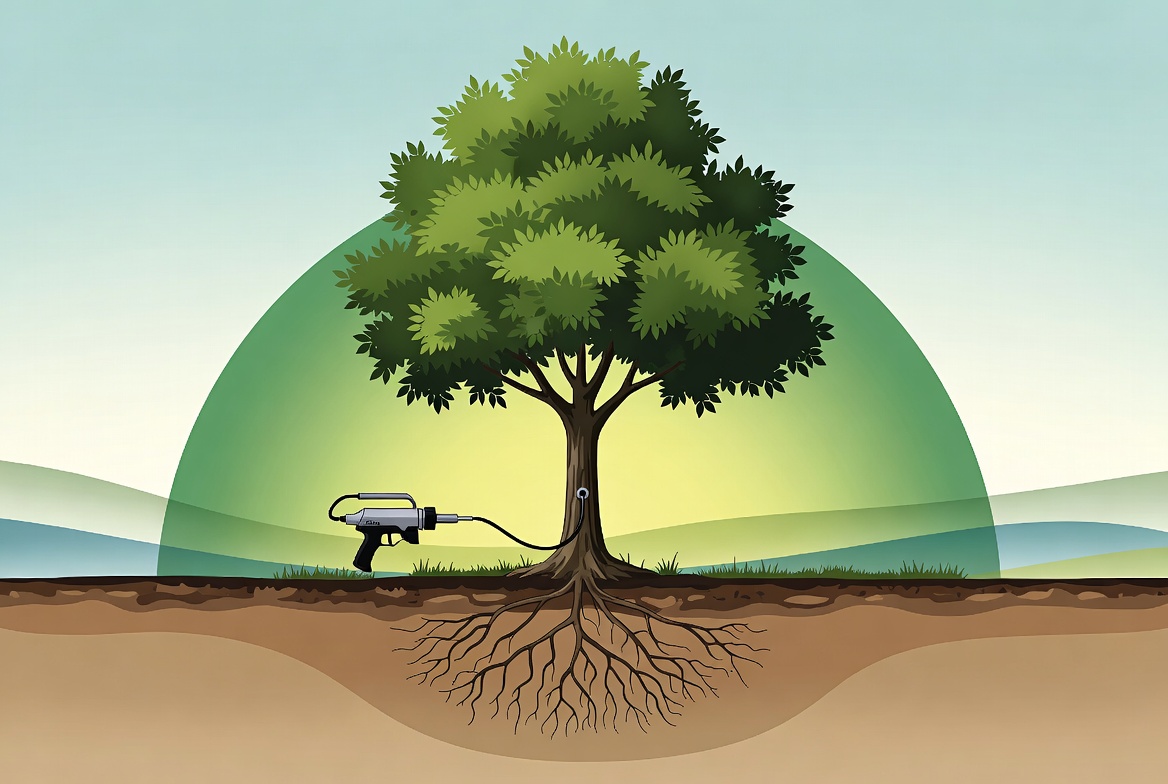
Tree contractors handle chemicals, store fuel, run hydraulic equipment, and apply treatments around homes, lawns, water sources, and protected ecosystems. When something leaks, drifts, runs off, or is misapplied, the loss is a pollution claim — and standard General Liability has a pollution exclusion that quietly removes coverage on most of them. Pollution Liability is the policy that fills that gap.
Coverage for the Exposure Your GL Quietly Excludes
Most tree contractors assume that since they have a General Liability policy, they're covered when something goes wrong with a chemical application or a fuel spill on a job site. They aren't. Standard CGL forms include a broad pollution exclusion that removes coverage for bodily injury or property damage arising from the discharge, dispersal, seepage, migration, release, or escape of pollutants. Pesticides, herbicides, fuel, hydraulic fluid, and even certain treated-wood debris fall inside that exclusion.
Pollution Liability — sometimes written as Contractors Pollution Liability (CPL) for tree contractors specifically, or as a Site Pollution Legal Liability (PLL) policy for fixed-location exposures — is the form built to respond when the exclusion triggers. It pays for cleanup, third-party bodily injury, third-party property damage, and defense costs from a covered pollution event.
Why General Liability Goes Silent on Pollution
The pollution exclusion has been part of standard CGL forms for decades. It was added by the insurance industry specifically to remove environmental losses from the basic GL contract — and to push them into a separate, purpose-built policy. The two cards below show what that means in practice.
Pollution Exclusion in CGL
The standard form removes coverage for losses arising from pollutants — broadly defined to include solid, liquid, gaseous, or thermal irritants and contaminants.
- Pesticide and herbicide drift onto neighboring property
- Fuel spills from chainsaws, chippers, or trucks
- Hydraulic fluid leaks from bucket trucks or skid steers
- Deep-root fertilizer or PHC injection runoff
- Soil and groundwater contamination from chemical handling
- Bodily injury or property damage caused by chemical exposure
Coverage Built for the Exclusion
Contractors Pollution Liability is purpose-built to respond to the exposures the GL exclusion removes — bringing cleanup and third-party loss back inside the program.
- Third-party bodily injury from chemical exposure or drift
- Third-party property damage from spills, runoff, or contamination
- On-site and off-site cleanup costs from a covered pollution event
- Defense costs and adjustment expenses
- Sudden & accidental releases — and often gradual ones depending on form
- Transportation pollution exposure during chemical or fuel transit
The Four Pollution Exposures Tree Contractors Actually Face
Tree services are not a single homogenous pollution risk. Different operations create different exposures, and a well-built Pollution Liability program addresses all four sources — not just the one most prominent on a given operation.
Chemical Application — Pesticides & Herbicides
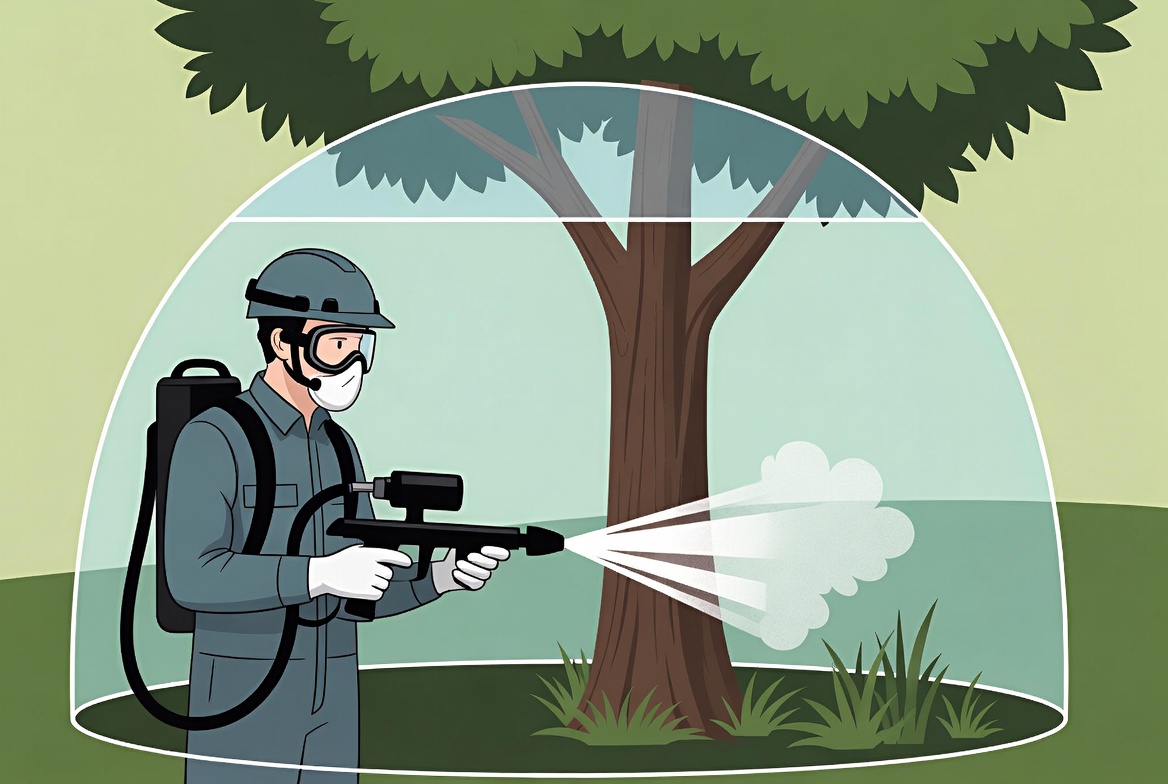
Spray applications, soil drenches, foliar treatments, and stump-cut herbicide work. The most visible pollution exposure for any tree service that runs a Plant Health Care division or applies any kind of chemical for pest, fungal, or invasive control.
Example loss: pesticide drift onto a neighbor's vegetable garden, killing landscape plantings; herbicide misapplication damaging customer turf or non-target trees.Petroleum & Hydraulic Spills
Fuel for chainsaws, mix gas for two-stroke equipment, diesel in trucks and chippers, hydraulic fluid in bucket trucks, knuckle-boom lifts, and skid steers. Every tree service operation handles these fluids, often near sensitive surfaces, customer landscaping, or storm drains.
Example loss: hydraulic line burst on a bucket truck contaminating a customer driveway and entering a storm drain; chainsaw fuel can spill saturating a customer flower bed.Plant Health Care & Soil Injection
Deep-root feeding, micro-injection of pesticides or fungicides into the trunk, soil amendments, and growth-regulator treatments. These services involve pressurized chemical delivery into soil or living tree tissue and create runoff and groundwater exposures.
Example loss: deep-root fertilizer leaching into adjacent water feature; injection chemical migrating into customer well water.Debris & Contaminated Materials
Wood treated with copper-arsenic preservatives, soil contaminated by an underground tank or pre-existing condition, decayed organic material, and storm debris that includes mixed waste. Disposal and handling of these materials carry a quiet but real exposure.
Example loss: chipped, contaminated landscape mulch spread on a job site and later traced back to your operation.CPL vs. Site Pollution Liability
Pollution Liability comes in two main forms. They are not interchangeable. Understanding which one applies to which exposure is the difference between a clean placement and a coverage gap.
Contractors Pollution Liability
Built for contractors performing operations away from a fixed location. Responds to pollution events arising from the contractor's operations — at customer sites, in transit, and during ongoing work. The right primary form for almost every tree service.
Site Pollution Legal Liability
Built for owned or leased fixed locations — your yard, shop, fuel storage area, or chemical storage location. Responds to pollution conditions at the insured premises rather than mobile operations.
Environmental Package
Some tree services need both — CPL for operations and PLL for the yard, fuel tanks, and chemical storage building. Combined environmental packages bundle the two together with shared limits and a single carrier.
Sudden & Accidental vs. Gradual Pollution
Pollution Liability forms differ on how they treat the timing of a release. Some respond only to identifiable, specific events; others extend coverage to gradual conditions that develop over weeks, months, or years. Knowing which trigger your form uses is critical.
Sudden & Accidental
Coverage triggered by a discrete, identifiable event with a known start and end. The discharge is unintended, unexpected, and reportable as a specific incident.
- Hydraulic line burst on a bucket truck
- Pesticide tank rupture during transport
- Equipment fire releasing combustion contaminants
- Accidental herbicide overspray during a single application
- Fuel can spill while refueling a chainsaw
Gradual Conditions
Coverage that responds to pollution conditions developing over time — small ongoing leaks, slow seepage, accumulated runoff. Not all forms include this; coverage is form-dependent.
- Slow leak from an underground fuel tank at the yard
- Repeated micro-injection treatments accumulating in groundwater
- Long-term hydraulic seep from aging equipment
- Gradual herbicide buildup in soil from repeat applications
- Migrating contamination from an old chemical storage area
Always confirm the trigger language on the specific form before binding. Many specialty markets offer both — but at different premiums and with different reporting requirements.
What Carriers Look At for Pesticide & Chemical Applicators
When an account includes any meaningful chemical application, underwriters look for specific evidence that the operation handles chemicals professionally. The list below describes the practices that distinguish a clean placement from a high-risk one.
- State pesticide applicator license — current, in-good-standing, in every operating state
- Certified applicator on staff or under contract for restricted-use products
- Documented training program — initial certification, continuing education, recertification
- Written application records — product, rate, target, weather conditions, applicator name
- Equipment calibration program — sprayers, injection systems, soil drench equipment
- Spill kit on every truck — absorbent, containment, PPE, neutralizers
- Drift mitigation protocols — wind-speed limits, buffer zones, neighbor notifications
- Storage and security procedures for chemical inventory at the yard
- Disposal records for empty containers, unused product, and rinse water
- Customer notification, sign-posting, and re-entry interval discipline
Pollution Event First-Response Steps
A clean response to a pollution event protects people, property, the environment — and the insurance claim. The steps below describe the response sequence most carriers expect to see, and most state environmental agencies require.
-
Stop the Source
Shut off the spill at its origin. Stop the equipment, close the valve, contain the release at the leak point.
-
Contain Migration
Use absorbent socks, pads, or berms to prevent the release from reaching storm drains, waterways, or off-site property.
-
Protect People
Move workers, customers, and bystanders out of the affected area. Provide PPE if anyone is exposed. Seek medical attention if needed.
-
Document Everything
Photos, time, location, materials, weather, witnesses. Save SDS sheets for any chemical involved.
-
Notify Required Authorities
State environmental agency, EPA hotline (for releases above reportable quantities), and local fire/HAZMAT as required by jurisdiction.
-
Notify Your Carrier & Broker
Report the claim. Provide the documentation gathered. Allow the carrier to assign a qualified environmental adjuster and remediation contractor.
-
Cooperate With Remediation
Allow the assigned environmental contractor to complete cleanup. Do not attempt full remediation independently — claim acceptance can hinge on proper handling.
Search the Kelly Insurance Group Site
Other Tree Service Coverages We Place
By Operation Type
Cost, Quotes & Buyer Resources
Hard-to-Place & Problem Risk Pages
Pollution & Environmental KIG Resources
Pollution Liability for Tree Service Questions
Doesn't my General Liability policy already cover pollution?
No — and this surprises a lot of tree contractors. Standard CGL forms include a broad pollution exclusion that removes coverage for bodily injury or property damage arising from the discharge of pollutants. Pesticides, fuel, hydraulic fluid, and similar materials fall inside that exclusion. See our Pollution vs. General Liability page.
What's the difference between CPL and PLL?
CPL (Contractors Pollution Liability) is built for contractors performing operations away from a fixed location — at customer sites and in transit. PLL (Site Pollution Legal Liability) is built for owned or leased fixed locations — your yard, fuel storage, or chemical storage area. Most tree services need CPL primarily, with PLL added if they own a yard with significant chemical or fuel storage. See our CPL vs. PLL page.
Do I need pollution liability if I don't apply pesticides?
Often yes. Even tree services that do no chemical application have petroleum and hydraulic fluid exposures from chainsaws, chippers, bucket trucks, and skid steers. Fuel cans tip over. Hydraulic lines burst. Those losses fall inside the GL pollution exclusion just as much as a pesticide drift loss does.
What is "sudden and accidental" vs. "gradual" pollution coverage?
Sudden and accidental coverage responds to discrete, identifiable events with a known beginning and end — a hydraulic line burst, a fuel can spill. Gradual coverage responds to pollution conditions that develop over time — a slow tank leak, accumulated runoff. Not every form includes gradual coverage; always confirm the trigger language.
Are pesticide applicator licenses required for coverage?
Underwriters look for them on any account that performs chemical applications. State pesticide applicator licensing is also a regulatory requirement, not just an insurance one. Operating without proper licensing is both a coverage problem and a compliance problem. See our Pesticide Applicators page.
What about Plant Health Care or deep-root injection work?
PHC and deep-root injection work fall squarely inside Pollution Liability exposure. Pressurized chemical delivery into soil or living tissue creates runoff and groundwater contamination potential. Carriers will want to see your application records, equipment calibration program, and training documentation.
Does pollution liability cover cleanup costs?
Yes — that's one of the core coverage parts. Cleanup, remediation, and restoration costs from a covered pollution event are typically covered, alongside third-party bodily injury and property damage. Confirm the specific form for limits and sub-limits on cleanup expense.
Where do I start?
Reach out via the Contact page or call (412) 212-2800. Bring an operations description, list of any chemical applications performed, fuel/hydraulic fluid storage practices, and copies of any current licensing.
Place Your Tree Service Pollution Coverage
Send us your operations description, chemical applications performed, fuel and hydraulic storage practices, applicator licensing, and existing GL policy declarations. We close the pollution exclusion gap with the right CPL or environmental package.
Contact Kelly Insurance Group → Call / Text (412) 212-2800 →