Tree Service Inland Marine Insurance
Inland Marine is the policy form built around mobile property — equipment, tools, materials, and gear that move from your yard to job sites and back. For tree services, it is the foundation of how chainsaws, chippers, climbing systems, rented gear, and in-transit assets are protected. This page explains what Inland Marine actually is, what it covers, where it ends, and how to structure it for an arborist operation.
The Coverage Form Built For Property That Moves
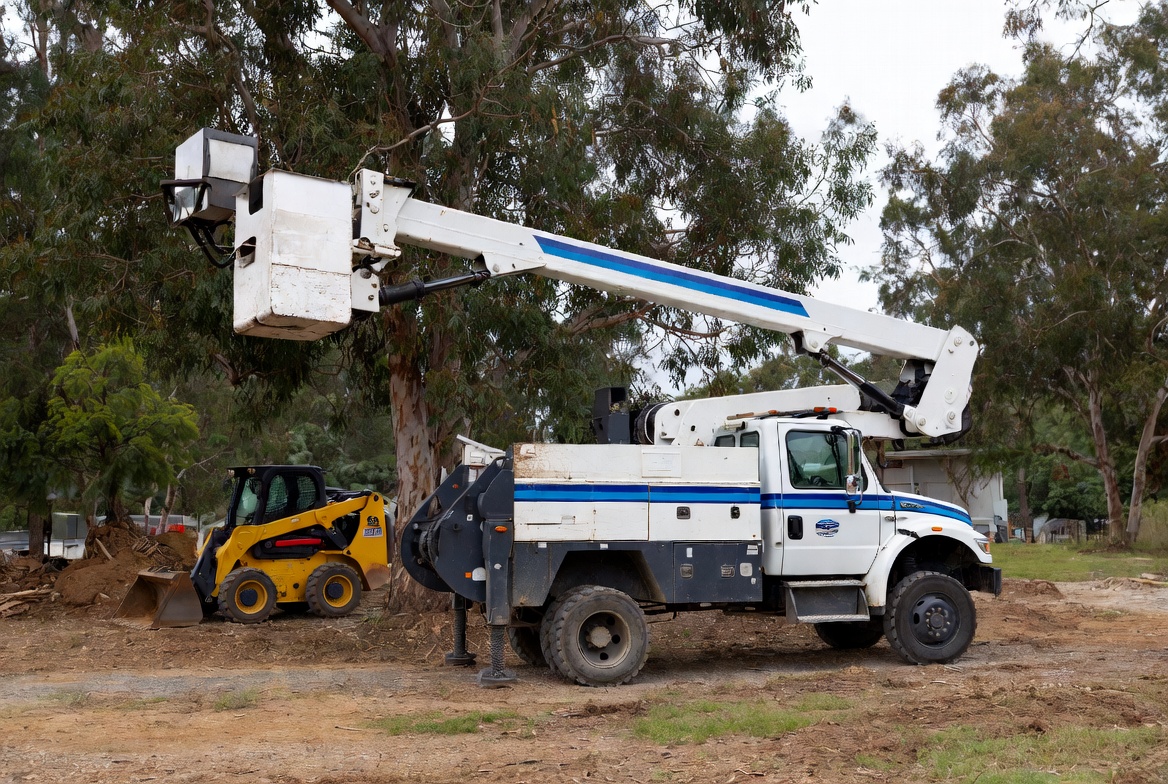
Inland Marine is a category of commercial property insurance — distinct from your General Liability, Commercial Auto, and traditional building/contents property policy. It exists because standard property forms were designed around property at a fixed location, and tree work is, by definition, mobile. Crews leave the yard, equipment ride trucks and trailers, and gear sits at job sites, on roadsides, and in storage between jobs. Inland Marine follows that movement.
Specifically for tree services, an Inland Marine policy can be structured to address scheduled equipment, blanket-covered small tools and PPE, transit and over-the-road exposures, leased and rented equipment, contractor's tools, employee tools, equipment at job sites, and even property of others in your care, custody, and control.
The name "Inland Marine" is a holdover from when insurance for cargo expanded inland from the docks. Underwriters who insured ocean-going cargo started writing policies for goods being shipped overland, and the name carried over. Today, Inland Marine has grown well beyond cargo to cover almost any kind of mobile, off-premises, or specialty property — including tree service equipment.
The Five Coverage Parts Inside a Tree Service IM Policy
An Inland Marine policy for a tree service is rarely a single line item. It is a stack of coverage parts assembled together — each addressing a specific exposure. The five parts below are the most common, and any tree service policy should be reviewed against this list to make sure none are missing.
01
Scheduled Contractors Equipment
Specific items listed by year, make, model, serial number, and value. Used for high-value units where the policy needs certainty about what will be paid in a claim.
Example items: bucket trucks, knuckle-boom trucks, chippers, stump grinders, mini skid steers.02
Blanket Small Tools & Equipment
One pooled limit covers all small unscheduled items under a per-item cap. Designed for the constantly turning over inventory of saws, hand tools, and PPE.
Example items: chainsaws, climbing rope, saddles, helmets, chaps, wedges, hand tools.03
Equipment Leased or Rented From Others
Coverage for equipment you do not own but are responsible for under a rental or lease agreement. Often required by the rental company in writing.
Example items: a rented stump grinder for an oversized job, a leased crane for a single removal, a borrowed chip truck.04
Property in Transit / Over-the-Road
Coverage while equipment, tools, and gear are being transported between locations. Includes loaded on trucks, in trailers, on roof racks, and during loading/unloading.
Example loss: a stump grinder strapped to a trailer destroyed in a highway collision; saws thrown from a truck bed in an accident.05
Property of Others in Your Care
Limited coverage for items in your possession that belong to a customer or third party, where you have responsibility under contract.
Example: customer-owned firewood being hauled; a borrowed homeowner ladder damaged on a job; a rented item in your care.Coverage Follows Wherever the Equipment Is
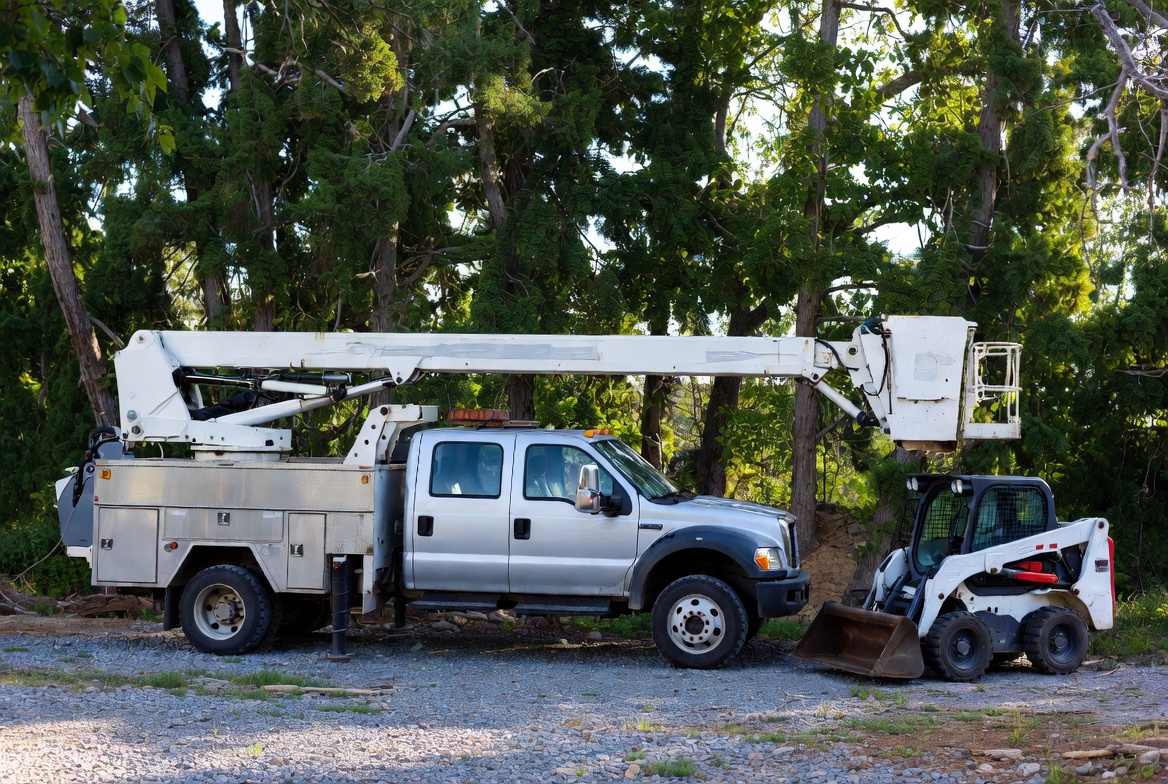
A common misconception is that a tree service Inland Marine policy only covers gear "on the job." The form is broader than that. Coverage typically follows equipment across these five operational zones — though specific limits and conditions can vary by zone and by carrier.
-
Zone A
At Your Yard
Equipment stored overnight in your fenced yard, garage, shed, or shop. Theft from the yard is a frequent claim and a key underwriting question.
-
Zone B
At an Active Job Site
Gear actively being used or staged on a customer property. Falling-object and accidental-damage exposures are highest in this zone.
-
Zone C
In Transit
Loaded on trucks, in trailers, in transit between sites. Vehicle collisions and securement failures drive the loss exposure here.
-
Zone D
Left Overnight Off-Site
Equipment staged on a multi-day job, parked at a roadside cleanup, or stored at a remote site. Often subject to specific overnight conditions.
-
Zone E
Borrowed, Rented & Leased Locations
Items at a rental yard pickup, leased equipment in your possession, and gear in temporary care. Contract language often dictates coverage triggers.
What Inland Marine Typically Will Not Cover
Inland Marine policies are written on broad "all-risk" or "special form" language — but every form has exclusions. The list below is not exhaustive, but it covers the exclusions tree service operators most often run into during claims. Always review the full policy form with your broker before binding.
Wear & Tear / Gradual Deterioration
Normal aging, rope retirement, chain wear, hydraulic seal failure from use.
Mechanical & Electrical Breakdown
Engine failure, transmission failure, electrical system failure absent a covered cause.
Mysterious Disappearance
Items "missing" with no evidence of theft, no police report, no forced entry.
Employee Theft / Dishonesty
Internal theft is typically excluded under IM and addressed by separate Crime coverage.
War, Nuclear, & Government Action
Standard catastrophic exclusions present on virtually every property form.
Contraband / Illegal Use
Equipment used in unlawful operations or seized in connection with illegal activity.
Pollution & Contamination
Fuel spill cleanup, hydraulic leak remediation — addressed by Pollution Liability instead.
Owned Auto / Licensed Vehicles
Trucks themselves are covered under Commercial Auto; IM covers the gear, not the truck.
How an Inland Marine Claim Moves
A clean claim file moves faster and pays cleaner than a disorganized one. The steps below describe how a typical tree service Inland Marine claim is processed — from the moment of loss to the payment.
-
Secure the Scene & Preserve Evidence
Stop work. Photograph the loss. Note time, location, witnesses. Do not move damaged equipment if it is part of an injury claim.
-
File a Police Report (When Applicable)
Theft, vandalism, or vehicle-related losses require a police report. Get a case number — claims adjusters will ask for it.
-
Notify Your Broker / Carrier
Report the claim. Provide the policy number, date of loss, brief description, and contact information.
-
Provide Documentation
Photos, serial numbers, year/make/model, original receipts where available, and a list of damaged or stolen items with descriptions.
-
Adjuster Review & Inspection
The carrier assigns an adjuster who may request inspection of damaged property, additional photos, or independent appraisals.
-
Settlement & Payment
Settlement is calculated based on the valuation method on file (Replacement Cost, ACV, or Agreed Value), minus deductible.
A clean inventory list — kept current with serial numbers, photos, purchase receipts, and current values — is the single biggest predictor of a fast, full-value claim. Build it before you need it.
Tree Operations That Almost Always Need IM
Climbing & Bucket Operations
Saws, ropes, saddles, hardware, and aerial gear traveling daily between yard and job sites.
Stump & Cleanup Specialists
Self-propelled grinders, mini skid steers, and trailers staged or transported between residential and commercial jobs.
Storm & Emergency Crews
Multi-state storm response with equipment in transit, staged in temporary yards, and operating in unfamiliar territory.
Crane-Assisted Removal Crews
Operations using owned or rented cranes, boom trucks, and grapple saws — with significant capital exposure on each job.
Utility Line Clearance Contractors
Right-of-way crews working on energized circuits with specialized aerial and bucket equipment.
Forestry & Land-Clearing Operators
Skidders, masticators, feller-bunchers, and forestry-grade equipment exposed to heavy off-road conditions.
Build Your Inland Marine Policy the Right Way
Send your equipment list, year/make/model, current values, storage details, and any leased or rented gear. We assemble the IM policy with the right scheduled, blanket, transit, and rental components built in.
Start the Intake Form →Search the Kelly Insurance Group Site
Other Tree Service Coverages We Place
By Operation Type
Cost, Quotes & Buyer Resources
Hard-to-Place & Problem Risk Pages
Other Inland Marine & Property KIG Resources
Tree Service Inland Marine Questions Answered
What is the difference between Tree Equipment Insurance and Tree Service Inland Marine Insurance?
They are closely related — Inland Marine is the broader policy form, and equipment coverage is one of the parts that goes inside it. Many tree services use the terms interchangeably, but a full Inland Marine policy can include scheduled equipment, blanket tools, transit, leased/rented gear, and property of others. See the Tree Equipment Insurance page for the asset-focused view.
Does Inland Marine cover gear in transit between job sites?
Yes — transit and over-the-road exposure is one of the core coverage parts in a tree service IM policy. Equipment loaded on trucks, in trailers, on roof racks, and during loading/unloading is typically covered. Confirm the territory and radius limits on your specific form.
Are leased and rented items covered?
Yes — Inland Marine policies typically include a leased/rented-from-others coverage part, which is often required by the rental company in the contract. We can structure this as scheduled, blanket, or both depending on how often you rent and what you typically rent.
What is excluded from a typical Inland Marine policy?
The most common exclusions are wear and tear, mechanical and electrical breakdown, mysterious disappearance (without theft evidence), employee theft (covered under Crime instead), pollution, war/nuclear, and the licensed vehicles themselves (covered under Commercial Auto).
Do I need a separate policy for property of others?
Often no — a coverage part for property in your care, custody, and control can be built into the Inland Marine policy. Limits are typically modest and intended for incidental items like customer-owned firewood or temporary care items, not large-value scheduled property.
How does Inland Marine interact with my Commercial Auto policy?
They cover different things. Commercial Auto covers the licensed vehicle (the truck itself, the trailer with a tag) for liability and physical damage. Inland Marine covers what's loaded on or pulled behind it — saws, chippers, stump grinders, climbing gear. Both are typically needed.
What about employee theft?
Employee theft is typically excluded from Inland Marine and is addressed under a separate Crime / Employee Dishonesty coverage. If you have crew turnover, multiple employees with key access, or off-site overnight equipment, ask about a Crime policy alongside IM.
Where do I start?
Send us your current equipment list with year/make/model, serial numbers, current values, and storage details. The intake form walks through the relevant questions, or reach out via the contact page.
Place Your Inland Marine Coverage Right
Send your equipment list, current values, year/make/model, storage details, and rental practices. We assemble the Inland Marine policy with the right parts built in — scheduled, blanket, transit, leased, and care/custody.
Start the Intake Form → Contact Kelly Insurance Group →