Tree Equipment Insurance
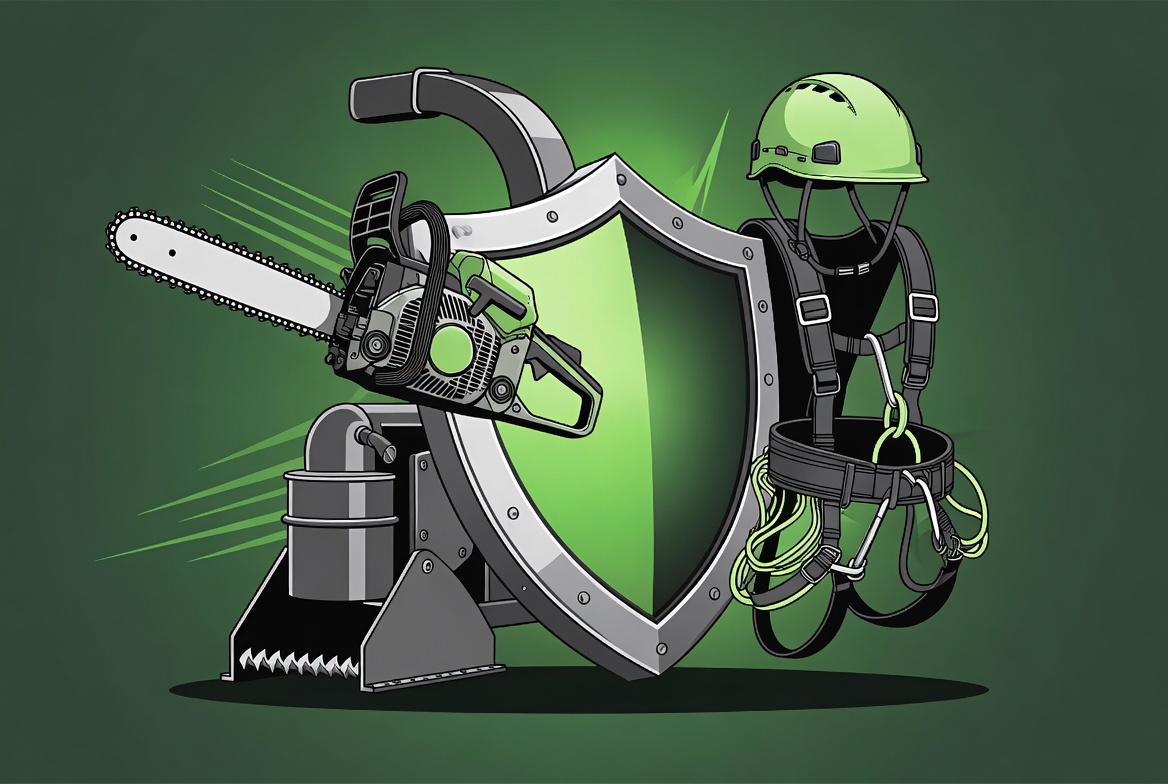
Chainsaws, chippers, stump grinders, climbing systems, bucket trucks, and saddle gear are not "tools" — they are revenue-producing capital assets. Tree Equipment Insurance (placed under Inland Marine) protects every scheduled and blanket-covered piece of gear against theft, fire, accident, transit, and on-job loss.
Inland Marine Coverage Built Around Mobile Assets
Tree Equipment Insurance — also called Contractors Equipment or Inland Marine — is the policy form built specifically for mobile, off-premises property. Standard commercial property forms cover assets at a fixed location. Tree work, by definition, happens everywhere except your shop: customer driveways, road shoulders, utility right-of-ways, storm sites. Inland Marine follows the gear.
The policy responds to direct physical loss — theft from a job site, fire on a chip truck, a stump grinder crushed by a falling limb, a chainsaw destroyed in a vehicle accident, a climbing system damaged in transit. It can be written on a scheduled basis (specific items listed with values) or a blanket basis (one limit covering everything under a unit value), or both layered together for maximum protection.
What a Tree Service Schedule Looks Like
Insurance carriers underwrite equipment policies from a list. The cleaner the schedule, the better the placement. Below is a representative tree service equipment list — your actual policy will reflect serial numbers, year/make/model, and current values you provide.
This is illustrative — not an exhaustive list. Actual scheduled limits should reflect current replacement cost, year/make/model, and serial numbers you provide at submission.
What Triggers a Claim
Most tree equipment policies are written on a "special form" basis — covering all direct physical loss except what is specifically excluded. The most common loss triggers are below.
Theft
Overnight job-site theft, yard break-ins, attached-trailer thefts.
Fire & Explosion
Engine fires, hot saw fires, electrical fires on chip trucks.
Vandalism
Cut hoses, broken windows, intentional equipment damage.
Vehicle Collision
Equipment loaded on trucks/trailers struck or damaged in transit.
Falling Objects
Limbs and debris hitting parked equipment during operations.
Windstorm & Hail
Storm damage to gear in yards, on trucks, or staged on jobs.
Flood & Water Damage
Storm surge, river crossings, equipment caught in flood zones.
Accidental Damage
Drops, crush damage, rigging accidents, foreign-object strikes.
Scheduled vs. Blanket Equipment Coverage
Scheduled Coverage
Each item is listed individually with a specific limit. Best for high-value, single-item exposures where you need certainty about what will be paid in a claim.
- Bucket trucks, knuckle-boom trucks, large vehicles
- Stump grinders, large chippers, mini skid steers
- Specialty climbing kits and rigging systems
- Limit per item is the maximum payout for that asset
- Requires year, make, model, serial, and value
- Coverage updates require endorsement when items change
Blanket Coverage
One limit covers all unscheduled small tools and gear under a per-item maximum. Best for high-frequency, low-individual-value items that turn over constantly.
- Chainsaws, hand tools, hydraulic gear
- PPE — helmets, chaps, gloves, eye protection
- Rope, ladders, wedges, hooks, tarps, cones
- Per-item cap set by the carrier and policy form
- No need to schedule each saw or piece of PPE
- Best paired with a separate scheduled list above the cap
Equipment Theft — A Top Tree Service Claim
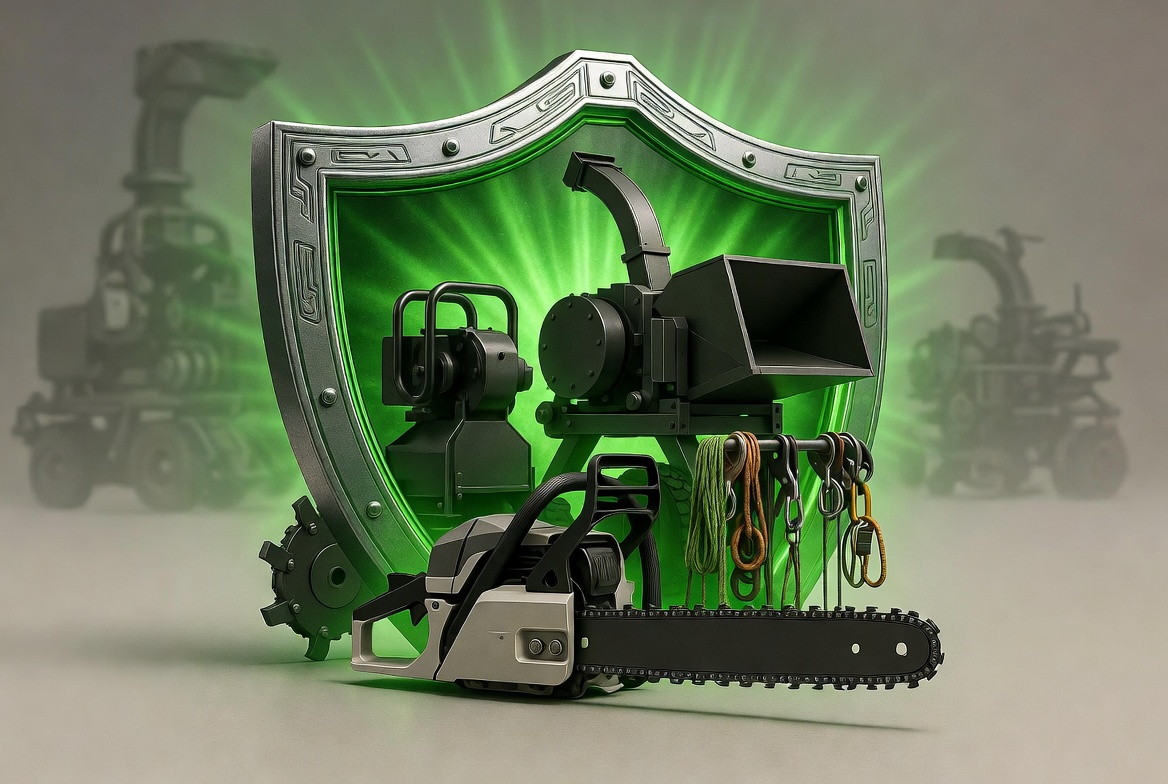
Equipment theft is one of the most common loss categories carriers cite when underwriting tree services. Gear gets left overnight at job sites, in trailers, in unsecured yards, and inside trucks. Underwriters specifically look at how you store equipment when pricing the policy — and what controls reduce exposure.
- Locked, gated yard with surveillance reduces premium
- Trailer-mounted GPS & immobilizers improve placement
- Serial number records and photo inventories speed claims
- Receipts and purchase orders prove valuation at loss
- Off-the-truck tools should never be left in unattended vehicles
- Mysterious-disappearance exclusions exist — file a police report immediately
Three Valuation Methods — Pick the Right One
Replacement Cost
Pays the cost to replace the lost item with a new equivalent at today's prices, with no depreciation deducted. Best for newer fleets and frequently used gear. Higher premium, simpler claim outcomes.
Actual Cash Value (ACV)
Pays replacement cost minus depreciation. Older equipment may settle for materially less than replacement. Lower premium, but a worn chipper claim could leave a coverage gap.
Agreed Value
Owner and carrier agree on a fixed payout amount for the scheduled item. Best for specialty or rare equipment where ACV/RC values are debatable. Usually requires appraisal or strong documentation.
How Deductibles Move Premium
Choosing the right deductible is one of the biggest single levers for premium cost on equipment policies. Higher deductibles cut premium materially — but only make sense if your operation can absorb the loss without disrupting cash flow.
Low Deductible
Smallest out-of-pocket per claim, highest premium. A fit for newer operations with tight cash flow that need claims paid out cleanly without retention.
Standard Deductible
The most commonly written deductible across small to mid-size tree services. Balances reasonable premium with manageable retention on a claim-by-claim basis.
Higher Deductible
Larger fleets and operations comfortable self-insuring small losses. Premium savings can be meaningful, but every claim retains more of the loss before the policy pays.
Tip: Many policies allow separate deductibles by category — a higher deductible on owned trucks, a lower deductible on small tools and PPE. Ask about category-level deductible structuring at submission.
Schedule Your Tree Equipment With Us
Send us your equipment list with serial numbers, year/make/model, and current values. We build the schedule, place it with specialty Inland Marine markets, and structure the deductibles to match your operation.
Start the Intake Form →Search the Kelly Insurance Group Site
Other Tree Service Coverages We Place
By Operation Type
Cost, Quotes & Buyer Resources
Hard-to-Place & Problem Risk Pages
Other Equipment-Related KIG Resources
Tree Equipment Insurance Questions Answered
Isn't equipment already covered under my General Liability or Commercial Auto policy?
No. General Liability covers third-party injury and damage to other people's property — not your own equipment. Commercial Auto covers the licensed vehicle itself, but the chainsaws, chippers, ropes, and tools loaded on or pulled behind the vehicle need their own Inland Marine policy. See the GL page and Commercial Auto page.
Should I schedule items individually or write a blanket policy?
Both. The standard structure is to schedule high-value items (trucks, chippers, stump grinders, climbing systems) and add a blanket limit for small tools, PPE, and accessories under a per-item cap. This gives you certainty on the big assets and flexibility on the constantly turning over small gear.
Does the policy cover gear stolen from a job site overnight?
Yes — if theft is a covered peril and you can document the loss with a police report, photos, and serial numbers. "Mysterious disappearance" without evidence of theft (no signs of forced entry, no police report, no witnesses) can be excluded under some forms. Always file a police report immediately.
What's the difference between Replacement Cost and Actual Cash Value?
Replacement Cost pays what it takes to buy a new equivalent today. Actual Cash Value pays replacement cost minus depreciation — meaning older equipment may settle for materially less than its replacement value. RC costs more in premium but pays better in claims. Always confirm valuation method on each scheduled item.
Are climbing systems and rigging gear covered?
Yes — climbing rope, saddles, hardware, friction devices, lanyards, and rigging blocks can be scheduled or covered under a blanket limit. Some carriers exclude wear and tear or contamination, so document gear retirement schedules and inspection logs.
Does the policy cover equipment in transit between job sites?
Yes — transit coverage is a core feature of Inland Marine. Equipment loaded on trucks, in trailers, or being moved between job sites is covered against accidental damage, fire, theft, and collision. Confirm radius and territory limits at issuance.
What about leased or rented equipment?
Leased and rented equipment can be scheduled — and often the rental contract requires you to carry coverage. We can add specific endorsements for short-term rentals, leased units, and rented-from-others equipment. Read the rental contract before you bind.
Can I add equipment mid-policy?
Yes — most policies allow mid-term additions through endorsement. New scheduled items typically need year/make/model, serial number, value, and date acquired. Blanket items under the per-item cap are usually covered automatically subject to year-end reporting.
Place Your Tree Equipment Schedule the Right Way
Send your equipment list, current values, year/make/model, and storage details. We market it to specialty Inland Marine carriers, structure scheduled and blanket layers, and tune deductibles to match your operation.
Start the Intake Form → Contact Kelly Insurance Group →