Arborist Workers Compensation Insurance
Tree work is one of the highest-rated workers compensation classes in the entire economy. Climbing falls, struck-by incidents, chainsaw injuries, and chipper accidents drive the loss costs — and standard markets routinely decline to write it. We place arborist and tree service workers comp through specialty programs built for the exposure.
The Statutory Policy Behind Every Climbing Crew
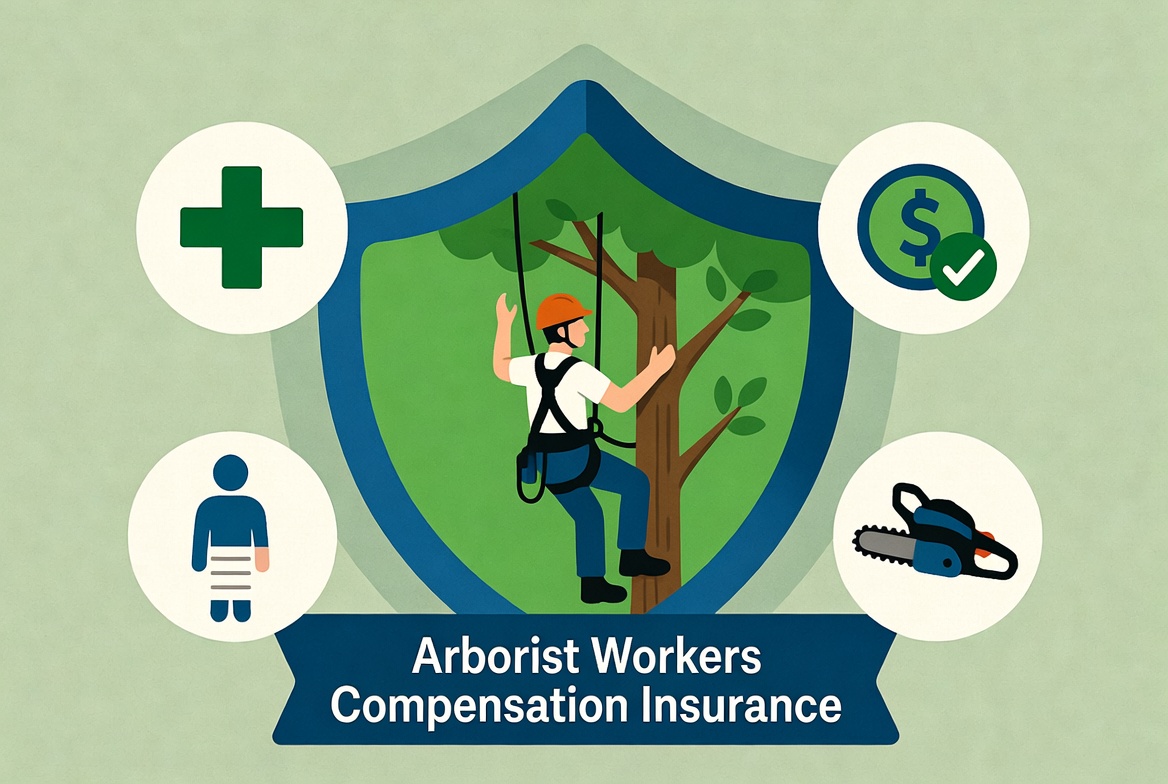
Workers Compensation is the policy that pays your employees when they are injured on the job. It is statutory in nearly every state — meaning the law, not the contract, dictates the benefits owed: medical care, indemnity (lost wages), rehabilitation, permanent partial or total disability, and death benefits to surviving dependents.
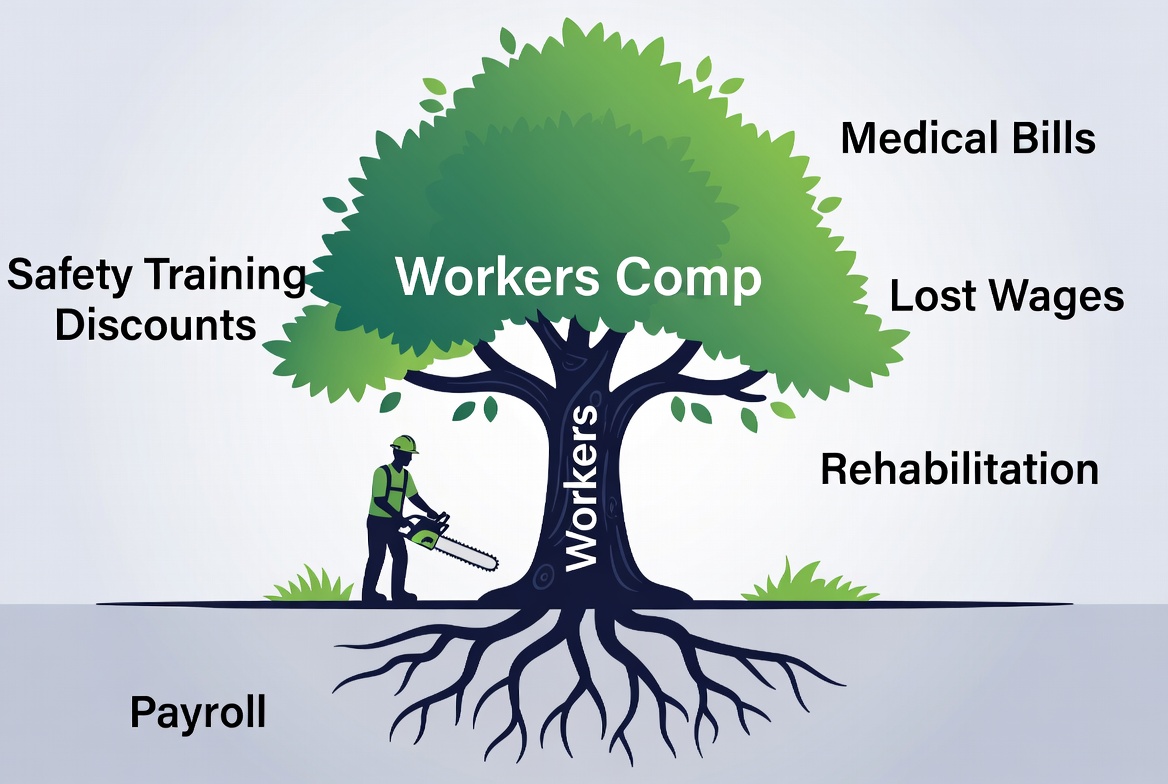
For arborists and tree contractors, WC is also the policy that responds first to almost every serious injury that happens on the job site. A climbing fall, a chainsaw kickback, a struck-by from rigging, a hand caught in a chipper — these go through workers comp, not through your General Liability.
It is also the policy that prevents an employee lawsuit against the business. Workers comp is the "exclusive remedy" — properly maintained, it bars an injured employee from suing you in tort court for the same incident in most circumstances.
What Workers Comp Pays For — and What It Doesn't
Covered Under Workers Comp
- Medical care for a covered work injury — emergency, surgical, follow-up, rehabilitation
- Indemnity benefits replacing roughly two-thirds of average weekly wage during disability
- Permanent partial & permanent total disability benefits
- Vocational rehabilitation when an injured worker cannot return to the same role
- Death benefits to surviving spouse and dependents
- Funeral and burial expenses up to statutory limits
- Defense and "exclusive remedy" protection against employee lawsuits
- Coverage for occupational disease attributable to job exposure
Not Covered Under Workers Comp
- Injuries to non-employee third parties — that's General Liability
- Damage to property, vehicles, or homes — that's GL or Auto
- Independent contractors (1099) — separate analysis required
- Injuries occurring off-duty, intoxicated, or in horseplay
- Self-inflicted injuries or willful misconduct
- Pain & suffering / non-economic damages typical of tort lawsuits
- Punitive damages
- Owners or partners excluded from coverage by election
The Five Loss Zones Underwriters Watch
-
1
Falls From Height
Climbing falls, lanyard/positioning failures, bucket truck tip-overs, ladder slips. Highest-severity injury category in tree work.
-
2
Struck-By Incidents
Limbs, leaders, butts, branches that swing, kick, or drop unexpectedly. The most frequent cause of fatal arborist injuries.
-
3
Cutting & Chainsaw Injuries
Kickbacks, hand and leg lacerations, chain breaks. Severity is high; PPE compliance directly affects loss outcomes.
-
4
Chipper & Equipment Injuries
Catastrophic exposure. Pull-in incidents, amputations, and contact with feed wheels — frequently fatal when they occur.
-
5
Electrical Contact
Power line strikes during line clearance and proximity work. Triggered separately for utility line clearance class codes.
Common Tree Service WC Class Codes
Workers comp pricing is class-code driven. Underwriters assign your payroll to specific classifications based on operations. Tree work classifications are among the highest-rated codes in the system — and misclassification is a frequent audit issue.
Class codes vary by state — monopolistic and independent rating bureaus (such as PA, NY, CA, MI, NJ, DE, WI) use their own systems. The codes above are NCCI-system illustrations.
Underwriting Factors That Move Premium
Payroll by Class Code
The single biggest premium driver. Payroll is multiplied by the class rate per $100.
Experience Modification (EMod)
Loss history-based multiplier. A 1.20 mod is 20% more expensive; a 0.85 mod is 15% cheaper.
Claims History & Loss Runs
Three to five years of loss runs is standard at submission. Severity matters more than frequency.
Crew Size & Operations Mix
Climber-heavy crews price differently than ground-only or stump-grind-only operations.
Safety Program & PPE
Documented training, ANSI Z133 compliance, daily safety briefings, and PPE policy reduce credit-eligibility friction.
Subcontractor Use
Uninsured subs roll into your payroll at audit. COIs and hold-harmless agreements are non-negotiable.
State of Operations
Each state files its own rates. Multi-state employers need filings and proper allocation in every state worked.
Crane & Utility Exposure
Crane-assisted removals and energized-line work shift class codes and trigger additional underwriting.
Who's Included — and Who Can Be Excluded
State law decides which owners, officers, and family members are automatically covered, optionally covered, or required to elect coverage. Misunderstanding this rule is one of the most common audit findings on tree service WC policies — and one of the easiest premium adjustments to get wrong.
Sole Proprietors
Typically excluded by default in most states; optional opt-in available in many.
Partners & LLC Members
Can frequently elect in or out — strictly state-specific, with form filing required.
Corporate Officers
Often have automatic coverage with optional exclusion through proper election.
Family Members
Spouses, children, and parents working in the business have specific election rules.
Climbers & Ground Crew
Always included by default — no carve-out possible regardless of pay structure.
Casual & 1099 Labor
Day labor, helpers, and 1099 climbers need careful review — frequent audit pickup.
Search the Kelly Insurance Group Site
Other Tree Service Coverages We Place
By Operation Type
Cost, Quotes & Buyer Resources
Hard-to-Place & Problem Risk Pages
Other Workers Compensation Resources at KIG
Arborist Workers Comp Questions Answered
Do I have to carry workers compensation as a tree contractor?
In nearly every state, yes — once you have any non-owner employees. Statutory thresholds vary (some states require it at 1 employee, some at 3, some at 5), and rules differ for sole proprietors, LLC members, and corporate officers. Operating without required coverage exposes the business to fines, stop-work orders, and personal liability.
What are the main tree service workers comp class codes?
The most common are 0106 (Tree Pruning, Spraying, Repairing), 7113 (Line Clearance Tree Trimming), and 0050 (Forestry/Lumbering). Misclassification under 0042 (Landscape Gardening) is one of the most frequent audit corrections — and one of the most expensive to true up retroactively.
What is an Experience Modification (EMod) and why does it matter?
EMod is a multiplier the rating bureau calculates from your loss history. A 1.00 mod is average. Above 1.00 increases premium; below reduces it. A 1.20 mod adds 20% to base rate; a 0.85 mod cuts 15%. Tree contractors with a credit mod typically have a documented safety program and a recent claims history that beats the industry average.
What does workers comp pay if a climber falls?
Statutory benefits: medical care (no dollar cap), indemnity benefits (typically two-thirds of average weekly wage), permanent partial or total disability if the injury results in long-term impairment, vocational rehabilitation if return to climbing is impossible, and death benefits if the injury is fatal. Non-economic damages (pain & suffering) are not paid by WC.
Are 1099 climbers covered under my workers comp policy?
Generally no — 1099 contractors carry their own workers comp. But state law and audit practice control. If a 1099 climber is uninsured and gets hurt, payroll is frequently rolled into your audit and you become responsible for the loss. COIs from every sub and proper hold-harmless language are essential.
Why is tree work workers comp so expensive?
Severity. A climbing fall can be a six-figure medical claim plus lifetime indemnity. A chipper pull-in is potentially fatal. The rating bureaus build loss costs from industry-wide claims data, and tree work consistently produces some of the highest severity numbers in the system. That's why specialty markets matter.
Can I be excluded from coverage as the owner?
Often yes — sole proprietors, LLC members, partners, and corporate officers can frequently elect out (or are excluded by default), depending on state law. The election form has to be filed correctly. Wrongly assuming you are excluded when state law includes you is a common audit problem.
I had a prior claim — can you still place me?
Yes. Specialty markets write tree workers comp with prior claims every day. Send loss runs, current EMod worksheet, and a description of post-loss safety improvements. We also work with assigned-risk pools and competitive carriers as appropriate. See the Insurance With Claims page and the High-Risk Arborist page.
Quote Your Tree Service Workers Comp
Send loss runs, current EMod worksheet, payroll by class code, crew size, operations description, and any subcontractor agreements. We market the file to specialty WC carriers built for arborist and tree service exposure.
Contact Kelly Insurance Group → Call / Text (412) 212-2800 →