
LIABILITY INSURANCE LIMITS EXPLAINED FOR BUSINESS OWNERS, CONTRACTORS, LANDLORDS, EVENTS AND HIGHER-RISK OPERATIONS
Liability insurance limits are the maximum amount a policy may pay for covered claims, subject to the actual policy wording. The hard part is not memorizing numbers. The hard part is understanding per-occurrence limits, aggregate limits, products-completed operations aggregates, each-claim limits, defense cost treatment, umbrella limits, excess liability layers, contract-required limits, and whether the coverage structure actually matches the risk.
WHO THIS PAGE IS FOR
This page is for business owners, contractors, fleet operators, property owners, event organizers, landlords, vendors, consultants, nonprofit leaders, and companies being told they need higher liability limits by a contract, project owner, venue, lender, landlord, municipality, or general contractor.
- General liability insurance limits
- Per occurrence vs aggregate limits
- Commercial umbrella insurance limits
- Excess liability insurance limits
- Contract-required liability limits
- Products-completed operations aggregate limits
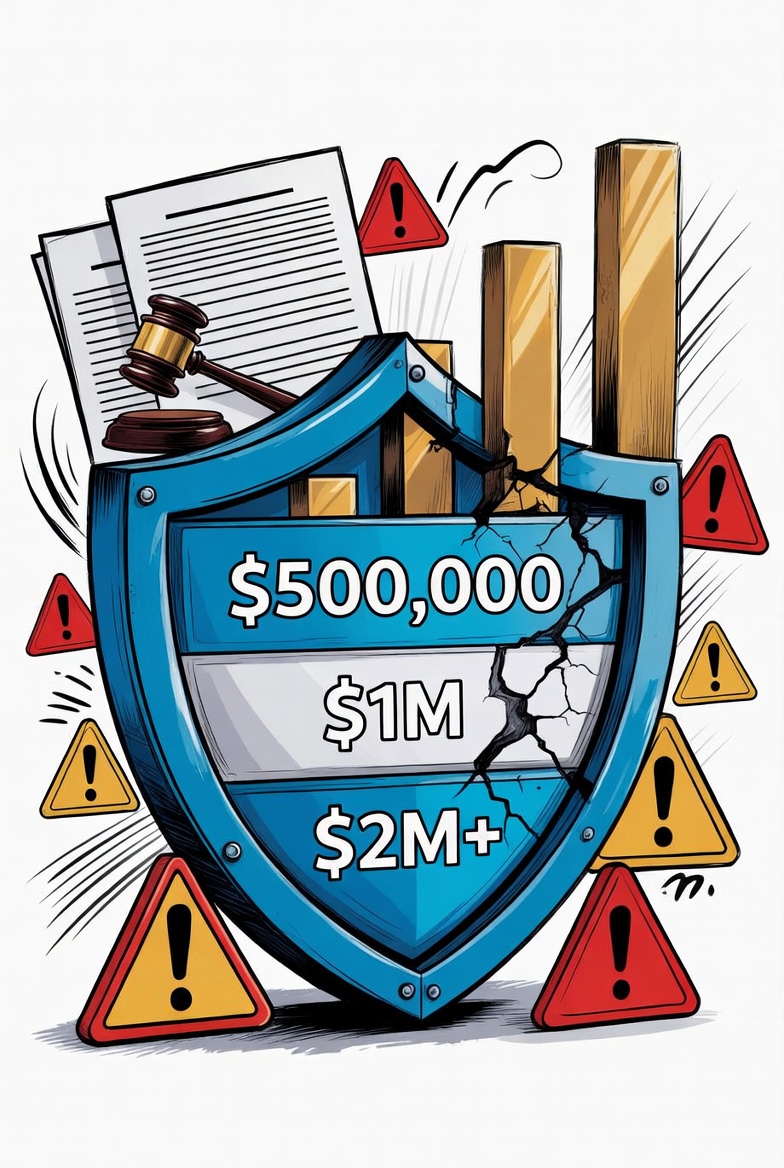 A bigger number does not automatically mean a better program. Limit structure, attachment points, aggregates, exclusions and defense treatment matter.
WHAT LIABILITY INSURANCE LIMITS MEAN
A liability limit is the most the insurance policy may pay for covered damages, defense expenses, settlements, judgments, or claim expenses, depending on how the policy is written. The limit may apply per occurrence, per claim, per accident, per policy period, or by aggregate. Some limits are shared by multiple claims. Some are separate. Some are reduced by defense costs. Some are not. That is why the declarations page is only the starting point.
PER OCCURRENCE LIMIT
The most the policy may pay for one covered occurrence, accident, or incident, depending on the policy type and wording.
AGGREGATE LIMIT
The most the policy may pay across multiple covered claims during the policy period for a stated coverage part.
PRODUCTS-COMPLETED OPS
A separate aggregate often used for claims involving completed work, completed operations, products, or work already finished.
EACH CLAIM LIMIT
Common in professional liability, E&O, cyber, D&O, EPLI, and other claims-made policies where each claim has its own limit structure.
UMBRELLA LIMIT
A higher liability layer that may sit above scheduled underlying policies such as general liability, auto liability, and employers liability.
EXCESS LIABILITY LIMIT
A higher layer that generally follows a specified underlying policy or attachment point, subject to the actual excess form.
CLICK THE LIMIT LAYER TO SEE HOW THE STACK WORKS
This is a simplified graphic. Real policies depend on forms, exclusions, schedules, attachment points, defense wording, aggregates, endorsements, and underlying insurance requirements.
LIABILITY LIMIT STACK
Click a layer to see how liability limits, umbrella coverage, excess liability, attachment points, and contract requirements can fit together.
COMMON LIABILITY LIMIT STRUCTURES BUYERS RUN INTO
WHY THE LIMIT NUMBER ALONE IS NOT ENOUGH
DEFENSE INSIDE LIMITS
Some policies reduce the available limit as defense costs are paid. This is especially important in professional liability, cyber, D&O, EPLI, and other claims-made coverage.
SHARED AGGREGATES
Multiple claims during the same policy period can erode the same aggregate limit, leaving less available for later claims.
SUBLIMITS
A policy may show a large overall limit but still contain smaller sublimits for specific coverages, claim types, locations, or endorsements.
EXCLUDED CLAIMS
A high liability limit does not matter for a claim the policy excludes. Limit review and exclusion review belong together.
ATTACHMENT POINTS
Excess liability does not respond until the underlying limit or retained amount is reached, and the attachment point must match the intended structure.
CONTRACT WORDING
A contract may require specific limits, additional insured status, primary and noncontributory wording, waiver of subrogation, or umbrella coverage.
THE FASTEST LIMIT REVIEW STARTS WITH THE REQUIREMENT
Do not send only “I need $5 million.” Send the contract, lease, vendor agreement, project requirement, venue requirement, bid spec, lender requirement, or certificate wording so the limit request can be reviewed against the actual coverage structure.
HOW PEOPLE SEARCH FOR LIABILITY LIMIT HELP
Buyers do not all use the same language. Some search for liability insurance limits, business liability limits, commercial general liability limits, GL limits, per occurrence limit, aggregate insurance limit, umbrella liability limits, excess liability limits, certificate limit requirements, vendor insurance limits, landlord insurance requirements, project owner insurance requirements, million dollar liability policy, $5 million umbrella insurance, $10 million excess liability, high-limit liability insurance, contract-required insurance limits, and how much liability insurance does my business need.
CONTRACT-DRIVEN LIMITS
Landlords, venues, municipalities, project owners, lenders, GCs, vendors, and corporate customers often drive the limit request.
HIGH-SEVERITY LIMITS
Contractors, fleets, crane work, tree services, events, liquor risks, products, and hard-to-place accounts may need stronger limit structure review.
STACKED LIMITS
Higher total limits may require primary, umbrella, excess, follow-form excess, monoline excess, or layered excess liability towers.
RELATED LIABILITY LIMIT, UMBRELLA, EXCESS AND CONTRACT INSURANCE PAGES
CURRENT CUSTOMERS MAY RECEIVE ACCESS TO OUR CUSTOM CLIENT PORTAL.
Most Kelly Insurance Group customers are given access to a custom client portal where policy documents can be accessed and certificates of insurance can be generated. That matters when a landlord, project owner, venue, lender, vendor, municipality, or general contractor asks for proof of specific liability limits.
LIABILITY INSURANCE LIMIT QUESTIONS
WHAT DOES A LIABILITY INSURANCE LIMIT MEAN?
A liability insurance limit is the maximum amount a policy may pay for covered claims, subject to policy wording, exclusions, deductibles, retentions, aggregates, and defense cost treatment.
WHAT IS THE DIFFERENCE BETWEEN PER OCCURRENCE AND AGGREGATE?
A per occurrence limit applies to one covered incident or occurrence. An aggregate limit is the total amount available across multiple covered claims during the policy period for that coverage part.
DOES A COMMERCIAL UMBRELLA AUTOMATICALLY COVER EVERYTHING?
No. A commercial umbrella or excess liability policy must be reviewed against the underlying policies, scheduled coverages, exclusions, attachment points, endorsements, and contract requirements.
WHY WOULD A BUSINESS NEED HIGHER LIABILITY LIMITS?
Higher limits may be required by contracts, landlords, lenders, project owners, municipalities, venues, general contractors, vendors, corporate clients, or because the business has higher severity exposure.
WHAT SHOULD I SEND FOR A LIMIT REVIEW?
Send the contract or requirement, current declarations pages, loss runs, business description, target limit, certificate wording, underlying policies, and deadline.
SEND THE LIABILITY LIMIT REQUIREMENT.
Use this form if you need help reviewing liability insurance limits, umbrella limits, excess liability limits, contract-required insurance limits, certificate requirements, per occurrence limits, aggregate limits, or high-limit liability insurance.