
Imported Jewelry Inventory Insurance
Imported jewelry inventory insurance is built for the part of the jewelry business where value is moving before it becomes ordinary stock. Imported rings, chains, pendants, watches, gemstones, loose stones, precious metals, sample lines, finished goods, findings, and packaging can sit in a complex custody chain that crosses overseas suppliers, freight forwarders, ports, customs brokers, bonded warehouses, inspection stations, domestic carriers, wholesalers, retailers, ecommerce fulfillment centers, and showrooms.
The insurance problem is not only theft. It is timing, title, customs custody, country-of-origin marking, product representation, supplier documentation, cargo, transit, valuation, counterfeits, quality control, inventory aggregation, and whether the business can prove what was in the shipment at the moment something went wrong. KIG structures imported jewelry inventory submissions around the full chain: purchase order, supplier, invoice, packing list, entry, inspection, release, warehouse intake, QC, stock movement, and final distribution.
Coverage Footprint Of Imported Jewelry Inventory
Why Imported Jewelry Inventory Is Not Ordinary Warehouse Stock
Imported jewelry inventory sits in one of the most documentation-heavy parts of the luxury goods economy. The value can be compact, the shipment can be small, the supplier may be overseas, the classification may be technical, the product claim may depend on stone treatment or metal content, and the ownership or risk-of-loss point may change under the purchase contract before the inventory ever reaches the insured location.
A standard warehouse or retail property policy usually describes stock after it reaches a named location. Imported jewelry risk starts earlier. It begins with supplier vetting, purchase order accuracy, commercial invoice detail, country-of-origin marking, cargo routing, customs entry, inspection, release, redelivery risk, QC discrepancy handling, domestic transit, storage, wholesale distribution, ecommerce shipment, and customer-facing product representation.
This page is built for jewelry importers, wholesale jewelry distributors, fine jewelry brands importing finished goods, diamond and gemstone importers, watch and timepiece importers, ecommerce jewelry sellers, jewelry manufacturers importing stones or components, bonded inventory operations, and businesses that rely on overseas jewelry suppliers or domestic distribution after customs release.
Find The Imported Jewelry Inventory Exposure
Click the segment that matches the import workflow. The map returns the primary exposure narrative, the coverage priority, and the underwriting controls that belong in the submission.
Imported Jewelry Operating Segments
// SELECT A SEGMENT FOR DETAILForeign Supplier & Purchase Order
The imported jewelry risk starts before the shipment moves. Supplier identity, product description, purchase order accuracy, payment method, metal and stone representations, trade terms, and invoice detail determine how the rest of the insurance and customs file behaves.
The Rules An Imported Jewelry Inventory Operation Should Understand
Imported jewelry inventory touches customs entry, marking, product representations, AML-sensitive supplier relationships, rough diamond controls, counterfeit enforcement, and product-safety issues where children’s jewelry or restricted materials are involved. The list below uses official sources and is for insurance education only.
Formal Entry For Commercial Jewelry Imports
CBP Article 1137CBP states that formal entry is necessary for commercial imports of diamonds, jewelry, pearls, and precious or semi-precious stones valued at $2,500 or more. Official source
Importer Reasonable Care
19 USC § 1484 · CBP Reasonable CareCBP identifies reasonable care as an importer responsibility around entry, classification, valuation, and other information needed to assess duties, collect statistics, and determine whether other legal requirements apply. Official source
Country-Of-Origin Marking
19 CFR Part 134Foreign-origin articles imported into the United States generally must be marked in a conspicuous place as legibly, indelibly, and permanently as the nature of the article or container permits, unless an exception applies. Official source
Redelivery For Marking Or Labeling Problems
19 CFR § 141.113If released merchandise is later found not legally marked, CBP may demand return to CBP custody for proper marking or labeling within the regulatory timeframe. Official source
FTC Jewelry Guides
16 CFR Part 23The FTC Jewelry Guides apply to industry products and claims involving jewelry, precious metals, pewter, diamonds, gemstones, pearls, quality, quantity, treatment, origin, value, preparation, and other material aspects. Official source
AML Programs For Covered Dealers
31 CFR Part 1027Covered dealers in precious metals, precious stones, or jewels must develop and implement a written AML program reasonably designed to prevent use of the dealer to facilitate money laundering or terrorist financing through covered goods. Official source
Foreign Supplier AML Risk Assessment
FinCEN FIN-2008-G003FinCEN guidance for dealers, including certain retailers, discusses risk assessment for foreign suppliers and identifies factors such as supplier jurisdiction, relationship, unusual payment methods, secrecy, and incomplete contact information. Official source
Kimberley Process For Rough Diamonds
31 CFR Part 592Rough diamond shipments imported into or exported from the United States must be controlled through the Kimberley Process Certification Scheme, including certificate, retention, reporting, and tamper-resistant container requirements. Official source
IPR / Counterfeit Enforcement
CBP IPR Statistics FY2024CBP’s FY2024 IPR statistics identify jewelry, watches, and handbags or wallets as the top commodities by MSRP among IPR-violative goods for the last three years. Official source
The regulatory citations above are tied to official federal sources: U.S. Customs and Border Protection, the Electronic Code of Federal Regulations, the Federal Trade Commission, FinCEN, and Kimberley Process rough diamond controls. This page is insurance education and underwriting preparation, not legal, customs, AML, or compliance advice.
How An Imported Jewelry Inventory Insurance Program Is Built
An imported jewelry inventory program should not be built as a basic property policy with a larger stock limit. The program should be organized around when risk transfers, where the goods sit, who controls the shipment, what the invoice and entry documents say, how stock is inspected, and how inventory moves after release.
Foundation Lines
Premises, Warehouse, EmployeesBase commercial lines for the importer’s domestic operation: premises liability, warehouse contents, business personal property, receiving equipment, employee exposure, and business income following a covered property loss.
Imported Stock & Cargo Layer
International Movement And Stock ThroughputThe load-bearing layer for jewelry importers. It separates overseas transit, customs custody, domestic transit, receiving dock, warehouse stock, off-premises stock, and inventory values by location and custody status.
Jewelry, Crime & Custody Layer
Theft-Sensitive High-Value InventoryJewelry inventory requires special attention to small high-value goods, safes, vaults, receiving controls, employee access, inventory logs, shortage procedures, and theft-sensitive movement.
Cyber, Product & Contract Layer
Digital Records, Representations, ContractsImported jewelry businesses depend on supplier records, customs records, product claims, ecommerce listings, retailer contracts, platform credentials, customer data, and payment workflows that create risks outside the property policy.
Coverage depends on actual policy wording, endorsements, exclusions, deductibles, sub-limits, warranties, valuation provisions, trade terms, cargo terms, inventory values, locations, security controls, and carrier underwriting. This page is educational and not a coverage opinion or guarantee of payment.
What Makes Imported Jewelry Inventory Different
Imported jewelry inventory is not just stock. It is a chain of high-value goods, documents, people, systems, and legal obligations. Four dimensions drive the insurance program.
The Value Moves Before The Warehouse Sees It
Imported jewelry may be at risk while moving through an overseas supplier, freight consolidator, air carrier, ocean carrier, courier, customs broker, port, inspection facility, bonded warehouse, domestic carrier, receiving dock, and final warehouse location. A named-location property policy may only describe one piece of that chain.
- Air cargo, ocean cargo, courier, and hand-carry exposure
- Risk transfer under purchase terms and supplier agreements
- Shipment values by invoice, packing list, and SKU
- Shortage, damage, theft, substitution, and tampering concerns
- Warehouse-to-warehouse or stock throughput review where appropriate
The Documents Are Part Of The Risk
Jewelry import claims often become document claims. Purchase order, commercial invoice, packing list, entry summary, country-of-origin marking, supplier certificate, product description, treatment disclosure, and receiving records can determine whether the loss file is clean or disputed.
- Product descriptions tied to metal, stones, weight, and treatment
- Country-of-origin and marking records
- Customs broker instructions and entry documentation
- Supplier invoice, payment, and bank verification controls
- Receiving dock count, photo, and discrepancy documentation
Quality Control Can Become A Liability Control
The inspection table is where product quality, product representation, and insurance underwriting meet. Metal content, stone identity, treatment, plating, clasps, settings, solder points, labeling, country marking, and packaging should be reviewed before inventory enters the selling channel.
- Gemstone, pearl, diamond, and precious-metal representation
- Testing records, inspection notes, and rejected-lot procedures
- Label, tag, SKU, and country-of-origin verification
- Product liability and recall discussion for defective goods
- Counterfeit, substitution, or non-conforming goods workflow
Fraud Can Be Physical, Digital, Or Supplier-Based
A jewelry importer can be targeted through cargo theft, employee dishonesty, supplier misrepresentation, invoice redirection, payment fraud, account takeover, counterfeit goods, false shipping instructions, or manipulation of receiving records. The program should not rely only on property coverage.
- Supplier bank-change fraud and invoice redirection
- Shipping account compromise and reroute fraud
- Employee access to high-value incoming stock
- Counterfeit or misrepresented inventory entering the chain
- Cyber, crime, and fidelity coverage review
Generic Property Policy vs. Built-For-Imported-Jewelry Program
The mistake is treating imported jewelry inventory as ordinary warehouse contents. The better approach is to build the program around cargo, customs custody, stock movement, theft-sensitive inventory, supplier records, product representation, cyber, crime, and contracts.
Generic Property Policy — Common Gaps
- May only cover inventory at scheduled domestic locations
- May not follow goods during international cargo movement
- May not address customs custody, customs delays, or redelivery disruption
- May not adequately treat small high-value jewelry inventory
- May not distinguish owned inventory, customer goods, memo goods, or consignment inventory
- May contain theft, transit, off-premises, or mysterious disappearance limitations
- May not address product representation, counterfeit, or non-conforming goods disputes
- May not respond to supplier invoice fraud or funds transfer fraud
- May not match retailer, lender, landlord, or logistics certificate requirements
- May not reflect peak values during import surges or seasonal buying cycles
Built-For-Imported-Jewelry Program — What Gets Reviewed
- Maps risk transfer from supplier to cargo to customs to warehouse to customer
- Documents values by shipment, location, stock class, and custody status
- Reviews cargo, inland marine, warehouse stock, stock throughput, and off-premises exposure
- Separates imported finished goods, loose stones, metals, findings, watches, samples, and packaging
- Reviews supplier vetting, purchase order controls, invoices, packing lists, entry records, and QC logs
- Addresses safes, vaults, alarms, cameras, employee access, receiving controls, and inventory reconciliation
- Considers product liability, product recall, counterfeit risk, and jewelry representation controls
- Builds cyber and crime review around supplier payment, platform, shipping, and warehouse systems
- Coordinates certificates for 3PLs, landlords, retailers, lenders, and event or trade show partners
- Uses underwriting narratives for prior losses, customs issues, non-renewals, or declined accounts
This comparison is general. Actual coverage depends on carrier appetite and policy wording. Importers should review forms, cargo terms, valuation terms, exclusions, warranties, security conditions, off-premises limits, transit terms, and customs-related limitations before relying on any coverage.
Where Imported Jewelry Becomes Sellable Inventory
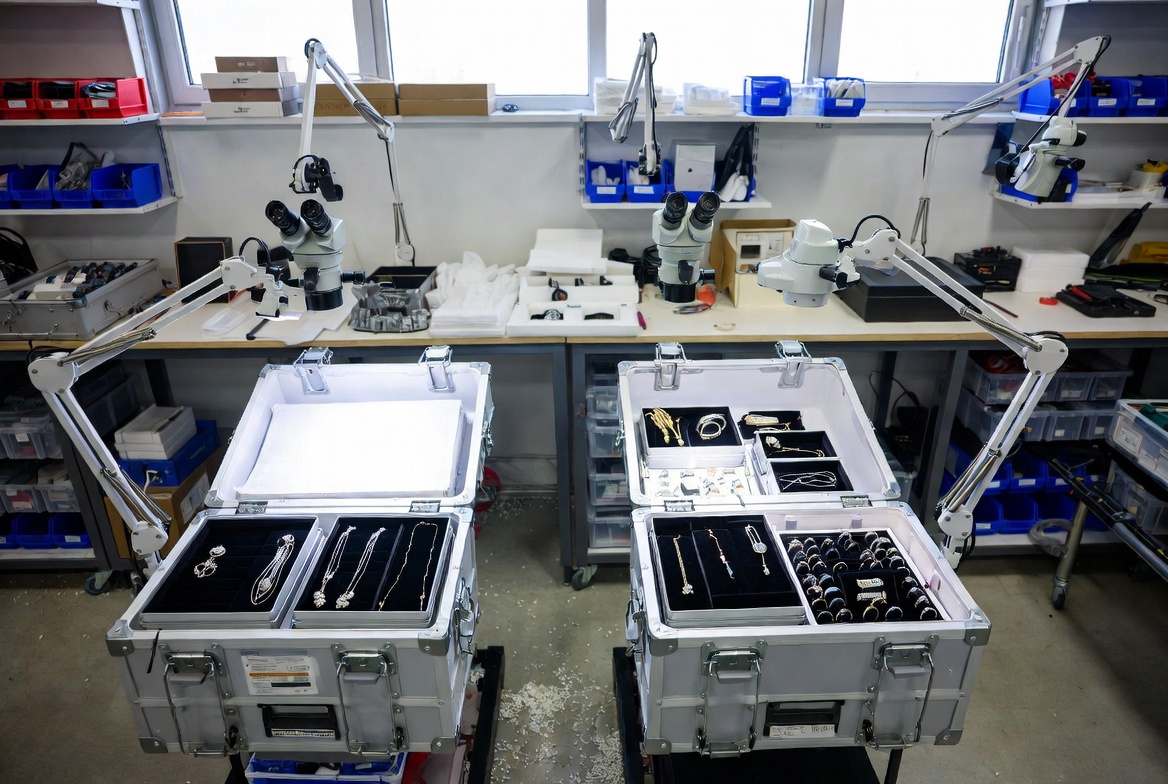
The quality-control station is where the import file changes from cargo to inventory. Imported jewelry is counted, photographed, compared against the purchase order, compared against the commercial invoice and packing list, inspected for damage, tested where appropriate, and either accepted, quarantined, returned, repaired, relabeled, or held for additional review.
That step matters for insurance because it creates the record of what arrived, when it arrived, what condition it arrived in, and whether the goods matched the documentation. A strong QC procedure can help separate a cargo shortage from a warehouse theft, supplier nonconformity from transit damage, and product liability concerns from ordinary stock handling.
For imported jewelry inventory, the receiving and QC files are part of the insurance file. Photos, SKU reconciliation, stone and metal checks, rejected-lot logs, and chain-of-custody records can be decisive in a claim narrative.

What A Strong Imported Jewelry Inventory Submission Includes
A strong imported jewelry inventory submission shows the underwriter how value enters the business, where risk transfers, how stock is verified, how customs and supplier records are controlled, and how the goods move after release.
Shipment, Supplier & Import Records
- Supplier list by country and product category
- Purchase order, commercial invoice, and packing list process
- Trade terms and risk-transfer point by supplier or shipment type
- Customs broker, freight forwarder, and carrier information
- Entry documentation, country-of-origin marking process, and broker instructions
- Rough diamond documentation if applicable
Values & Inventory Schedule
- Maximum imported inventory values by location
- Values in international transit, domestic transit, customs custody, and warehouse storage
- Finished jewelry, loose stones, precious metals, watches, samples, findings, and packaging
- Peak values during seasonal buying cycles or import surges
- Inventory valuation basis and reconciliation process
- Third-party warehouse, 3PL, bonded storage, and off-premises values
Receiving, Security & Quality Control
- Receiving dock procedures and chain-of-custody logs
- Shortage, damage, tampering, and discrepancy procedures
- QC inspection notes, photographs, testing records, and rejected-lot workflow
- Safe, vault, cage, alarm, camera, and access-control details
- Employee access, key control, cycle counts, and inventory reconciliation
- Product representation controls for stones, metals, treatments, origin, and authenticity
Transit, Contracts, Cyber & Loss History
- Air, ocean, courier, hand-carry, and domestic carrier procedures
- 3PL, warehouse, fulfillment, retailer, lender, and landlord contract requirements
- Cyber controls for supplier payments, shipping accounts, ecommerce platforms, and customer data
- Crime controls for bank-change requests, invoice verification, and employee access
- Prior loss runs and narrative around theft, shortage, customs hold, cargo loss, fraud, or counterfeit inventory
- Current policies, renewal date, prior declinations, and known underwriting concerns
Sitemap-Aware Internal Links For Imported Jewelry, Inventory, Watches & Specialty Coverage
These internal links connect the imported jewelry inventory page to the larger Kelly Insurance Group specialty library. Keep these links crawlable in the HTML so the page is not orphaned and search engines can understand its relationship to adjacent risks.
Jewelry, Watches & Imported High-Value Goods
Fashion, Inventory & Import Adjacencies
Supporting Coverage Lines
Live Sitemap Search
This module searches the Kelly Insurance Group sitemap from the browser and surfaces related pages. If the sitemap cannot load in the browser, the static links above remain crawlable.
What Engagement Looks Like For An Imported Jewelry Account
Imported jewelry inventory insurance starts with the movement file. The most useful submission does not just say “jewelry importer.” It explains what is imported, where it comes from, who the suppliers are, where risk transfers, how shipments move, how customs and broker records are maintained, how receiving and QC work, where inventory is stored, and how stock moves after release.
The next layer is control. Underwriters look for supplier vetting, shipment values, entry documentation, invoice accuracy, country-of-origin process, cargo procedures, QC records, safe or vault controls, employee access, inventory reconciliation, cyber controls, bank-change verification, shipping account controls, and prior loss history. A jewelry importer with a clean documentation narrative is easier to present than an importer that only provides a total stock number and a warehouse address.
Use the insurance intake forms portal, book through book an appointment, or start through the contact page. Direct line: (412) 212-2800.
Imported Jewelry Inventory Insurance FAQ
What does imported jewelry inventory insurance cover?
Is imported jewelry inventory insurance the same as jewelry store insurance?
Does a standard property policy cover jewelry while it is being imported?
What is stock throughput coverage?
Why do customs documents matter for insurance?
Does imported jewelry inventory insurance cover customs delays or holds?
What information is needed to start an imported jewelry inventory insurance submission?
Do imported loose diamonds require special documentation?
Does AML compliance matter for imported jewelry inventory?
Can one policy cover imports, warehouse stock, ecommerce, wholesale, and trade shows?
What makes an imported jewelry inventory account hard to place?
Is this page legal, customs, AML, or compliance advice?
Start The Imported Jewelry Inventory Submission
Use the intake forms portal to start the submission, or book a call to walk through the import chain before paperwork. The strongest submissions explain supplier records, cargo, customs entry, marking, receiving, QC, storage, distribution, cyber, crime, contracts, and loss-history details before the carrier asks.