Textile Importer Insurance
Textile importing is a high-velocity, high-stakes supply chain challenge. From the moment fabric rolls leave an overseas mill to the time they land at a domestic warehouse or apparel manufacturer, your assets are exposed to oceanic turbulence, geopolitical shifts, customs delays, and quality variances that can destroy margins.
Standard property policies stop at the edge of your warehouse, and general liability often ignores the complexities of imported products. At Kelly Insurance Group, we architect comprehensive coverage programs designed for the global textile lifecycle, integrating Ocean Cargo (Marine), Contingent Business Interruption, and Import-Specific Product Liability to ensure a single port strike or shipment loss doesn't end your operation.
Coverage Footprint For Textile Importers
Importing Risk: The Liability Shift
For textile importers, the most dangerous misconception is that the factory overseas assumes the liability for the product. In the U.S. legal system, the importer is the legal manufacturer. When you bring a fabric roll or finished garment across the border, you assume all duties, all compliance burdens, and all liability for bodily injury or property damage the product might cause once it hits the American consumer's hands.
If a batch of synthetic fabric you imported contains restricted chemicals that cause an allergic reaction, or if an electrical short in a processed garment starts a fire, the lawsuit is filed against you. Foreign policies almost universally exclude the United States from their coverage scope, and suing an overseas supplier is financially and legally prohibitive for most companies.
Kelly Insurance Group works with importers to build insurance programs that bridge this gap. We don't just insure the building—we insure the supply chain. From the moment the bill of lading is signed (using the right Incoterms) to the final inspection at your warehouse, our coverage architecture protects your capital and your reputation from the hidden risks of global trade.
Find Your Operating Segment
Click the segment that matches your operation. While this page focuses on Textile Importing, our coverage hub addresses the entire luxury and fashion supply chain.
Fashion & Jewelry Operating Segments
// SELECT A SEGMENT FOR DETAILTextile / Apparel Importer
Operations importing fabric, yarns, or finished goods for distribution in the U.S. market. The importer is the legal manufacturer, carrying 100% of product liability, customs compliance risks, and supply-chain disruption exposure.
The Global Regulatory Web
Importers are responsible for ensuring every bale or container meets strict U.S. safety, labeling, and trade requirements. Your insurance underwriter will examine your compliance programs closely as a prerequisite for coverage.
Customs and Border Protection
19 U.S.C. §§ 1304, 1592Proper marking of country-of-origin, accurate Harmonized Tariff Schedule (HTS) classification, and truth in valuation are non-negotiable. Importers face massive daily fines for documentation errors discovered during audits.
FTC Textile Labeling Rules
16 CFR Part 303The Textile Fiber Products Identification Act requires accurate labels for fiber content, country of origin, and manufacturer identity. Inaccurate labels lead to market withdrawals and regulatory actions.
Chemical Compliance (REACH/CPSIA)
Consumer Product Safety Improvement ActTextiles, particularly those for children or intended for direct skin contact, are tested for prohibited lead, phthalates, and other substances. If your supplier fails a test, you are the legal target for the resulting product recall.
Supply Chain Traceability
ESG & Ethical Sourcing LawsIncreasingly, importers are legally required to prove their labor practices. Beyond ethical concerns, failure to comply with trade bans related to forced labor or regional sanctions can result in full container seizures by CBP.
How An Importer Insurance Program Is Built
An importer's insurance program must protect the goods from the factory door to the customer's delivery dock. Because standard property forms and GL policies were designed for domestic businesses, they are not designed to handle the multi-jurisdictional reality of international trade.
The Marine Foundation
Ocean Cargo / TransitCovers the goods during the entire sea/air journey. Essential for protecting against "all-risk" scenarios like container loss at sea, water damage, and port theft, which carriers severely limit.
Liability Protection
Import-Specific Product LiabilityProtects against lawsuits involving bodily injury or property damage caused by imported goods. It must explicitly include U.S. jurisdictional coverage, as most foreign manufacturer policies exclude it.
Business Continuity
Supply Chain ResilienceCovers the loss of revenue resulting from a covered loss of imported goods (e.g., container lost in a storm) or from key suppliers being unable to manufacture due to a disaster.
Regulatory Defense
Customs & E&OCovers the legal and administrative costs of defending against customs documentation errors, trade regulation disputes, and labeling compliance investigations.
Underwriting Risks in Global Trade
Underwriters for textile importers are not just looking at your financials; they are auditing your entire international supply chain. They need to know how you vet your factories, how you verify quality, and how you handle the logistics of global shipping.
The Product Liability Trap
The U.S. market has some of the world's strictest consumer product safety regulations (CPSIA, CPSC). Importers are legally responsible for these standards, not the overseas factory. Underwriters require proof of consistent product testing (lab reports, certification programs) to even consider providing U.S. Product Liability coverage. If you cannot provide these, your ability to place this line is severely limited.
- Strict U.S. Jurisdictional coverage
- Supplier-vetting and audit history
- Third-party quality testing program
Ocean Cargo & "All-Risk" Limits
A standard cargo policy is not "all-risk." The Institute Cargo Clauses (ICC A, B, and C) define the scope of coverage. ICC A is the comprehensive all-risk standard, but many importers mistakenly use lower levels. Furthermore, the insured amount should typically be 110% of the CIF (Cost, Insurance, and Freight) value to account for expected profit and logistics costs. Carriers are not your insurers; they are the transporters with very limited liability.
- ICC A "All-Risk" coverage
- 110% CIF valuation standards
- Proper Incoterms implementation
Geopolitical & Trade Volatility
In 2026, global supply chains are more fragmented than ever. Port strikes, tariff changes, and regional sanctions can halt production or freeze goods at the border. Modern programs include trade credit and political risk insurance to protect against scenarios where foreign buyers cannot pay (export credit) or government actions result in the expropriation or embargo of your goods.
- Trade credit insurance for foreign receivables
- Political risk and trade sanction monitoring
- Contingent BI for supplier disruptions
Logistics & Warehouse Chokepoints
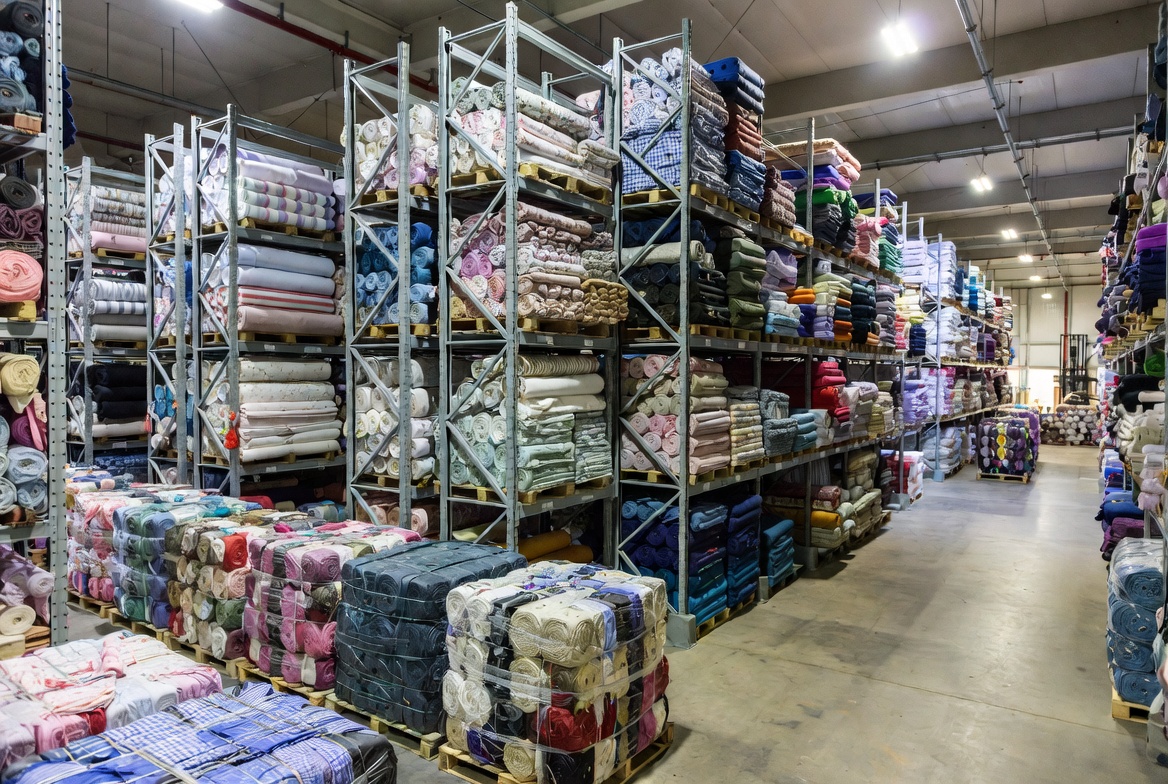
Textiles are highly combustible. Warehouse insurance requires specific fire suppression and inventory reporting warranties. Furthermore, the risk shifts from the ocean carrier to the trucking company, then to your warehouse, then to the retailer. Coordinating coverage through a Stock Throughput policy—which covers goods from origin to destination regardless of the mode of transit or warehouse—is the most effective way to eliminate coverage gaps.
- Stock Throughput Policy integration
- Fire and suppression compliance
- Warehouse-to-warehouse accountability
Standard BOP vs. Stock Throughput Program
Many importers make the mistake of using a basic Business Owners Policy (BOP) or separate cargo/property policies. This disjointed approach creates massive gaps where cargo gets lost in transition between a sea vessel and your warehouse.
Generic BOP / Fragmented Policies — What Fails
- Fails to bridge coverage between ocean carriers, freight forwarders, and warehouses.
- Standard BOP property forms often exclude goods in international transit.
- Lack of Contingent Business Interruption for overseas supply chain failures.
- Usually excludes the specialized costs of Customs documentation defense.
- Fails to account for 110% CIF valuation of insured goods.
- Rarely provides the specialized Product Liability required for foreign-made goods entering the U.S.
Stock Throughput & Marine Program — What Responds
- Seamless coverage from the overseas factory floor to the final U.S. destination.
- Automatic coverage for all transit modes (ocean, air, rail, truck).
- Covers loss of revenue (Contingent BI) if a factory is shut down or cargo is lost.
- Includes specialized E&O for import documentation and trade regulation errors.
- Provides the specialized Product Liability designed for U.S.-bound imported goods.
- Satisfies all banking and retail buyer requirements for Additional Insured and Loss Payee status.
Your "Incoterms" (e.g., FOB, CIF, DDP) are legally binding and dictate exactly when risk shifts from your supplier to you. We review your vendor contracts first to ensure your insurance program actually triggers at the moment you assume risk, preventing millions in uninsured exposure.
Clearing Compliance Barriers
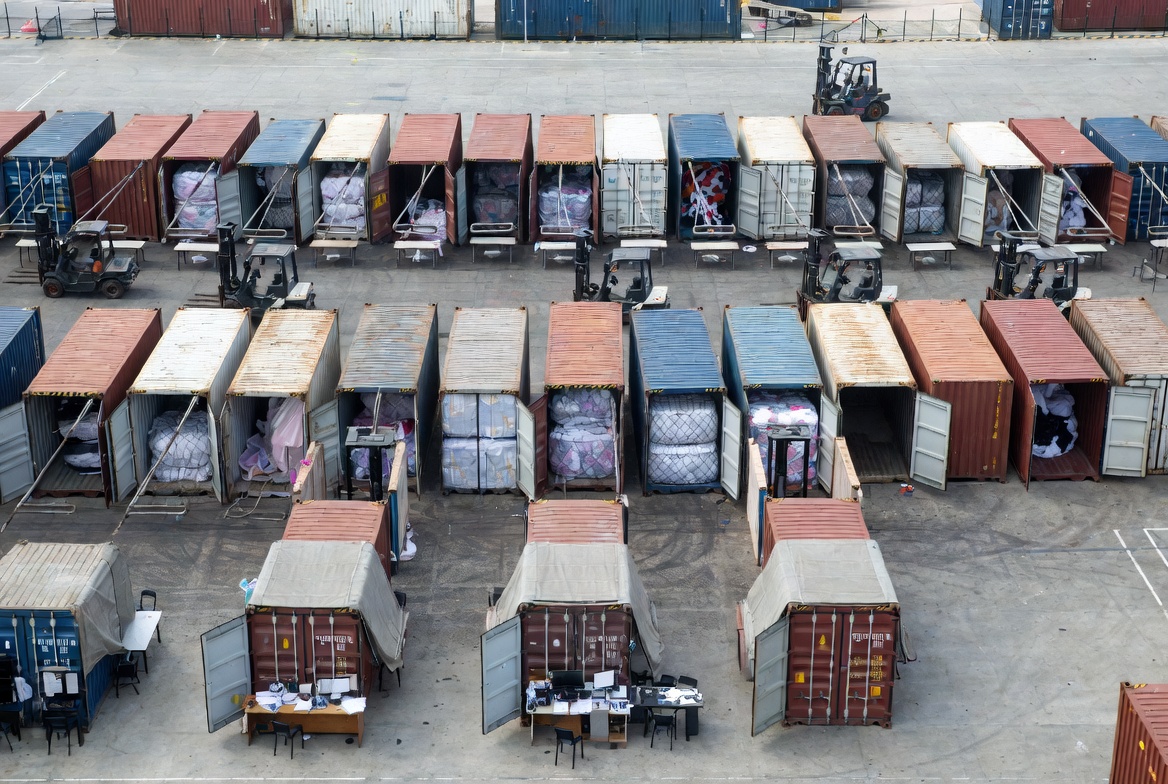
The customs clearance area is the most critical chokepoint in the textile supply chain. Here, your documentation—Commercial Invoices, Packing Lists, Certificates of Origin—is scrutinized against the physical reality of the goods inside your shipping containers. A discrepancy discovered here does not just mean a delay; it means a potential CBP audit, detention of goods, and severe financial penalties.
For large textile importers, compliance is not just an operational task; it is a risk management priority. Our brokerage helps you integrate trade compliance E&O into your program, covering the costs of defending against documentation errors and supporting your firm through the rigors of a CBP inspection station. We also emphasize the importance of using licensed Customs Brokers to further mitigate these regulatory risks.
The 29 Specialty Spokes Under This Hub
Each page below addresses a specific operating segment within the fashion, jewelry, and luxury supply chain. Explore related programs to build out your full risk management profile.
Design, Production & Manufacturing
Fashion Retail & High-Value Inventory
Fine Jewelry, Watches & Hard Goods
Fashion Events & Styling
Underwriting Your Global Supply Chain
The brokerage is a fourth-generation Pittsburgh specialty house with deep experience safeguarding international trade. We understand that textile importing is about far more than buying fabric; it is about managing the risks of global logistics, trade compliance, and product quality in a volatile trade environment. Our company history is on the history page and current markets are at the carriers page.
For textile importers, we build insurance programs that treat the supply chain as a single, holistic asset. The engagement begins with a deep-dive review of your supply chain contracts and vendor agreements, ensuring your insurance program triggers exactly when you assume risk. We then craft submissions for global specialty markets that understand ICC cargo rules and U.S. consumer product safety regulations.
There is no obligation to engage at any step. The intake forms portal at insurance-intake-forms is the cleanest way to start. Direct line: (412) 212-2800. Bookings via book an appointment.
Textile Importer Insurance FAQ
Why doesn't my foreign manufacturer's insurance cover me?
What is a "Stock Throughput" policy and why do I need it?
Does my ocean cargo insurance cover the full value of the goods?
What is Contingent Business Interruption (CBI)?
What are the insurance implications of U.S. Customs (CBP) audits?
Are labeling compliance risks insurable?
What is the difference between "All-Risk" and standard cargo coverage?
Safeguard Your Global Supply Chain
Use the intake forms portal to start a supply chain risk assessment, or book a call to discuss your Incoterms, supplier contracts, and international logistics. We ensure your coverage is as global as your operation.