THE PRODUCTION ITSELF
Third-party claims arising from the shoot — bodily injury, property damage, personal injury exposures.
FILM PRODUCTION LIABILITY
INSURANCE
The foundation every film production policy is built on. Third-party bodily injury, property damage, and personal injury coverage that satisfies permits, locations, equipment houses, financiers, and union signatory requirements.
EVERY THIRD PARTY
Permit offices, locations, rental houses, financiers, unions, and brand clients all require it on their COIs.
PRODUCTION LIABILITY IS THE FOUNDATION
If a film production policy were a building, general liability would be the load-bearing wall. Almost every other coverage line either depends on it or coordinates with it.
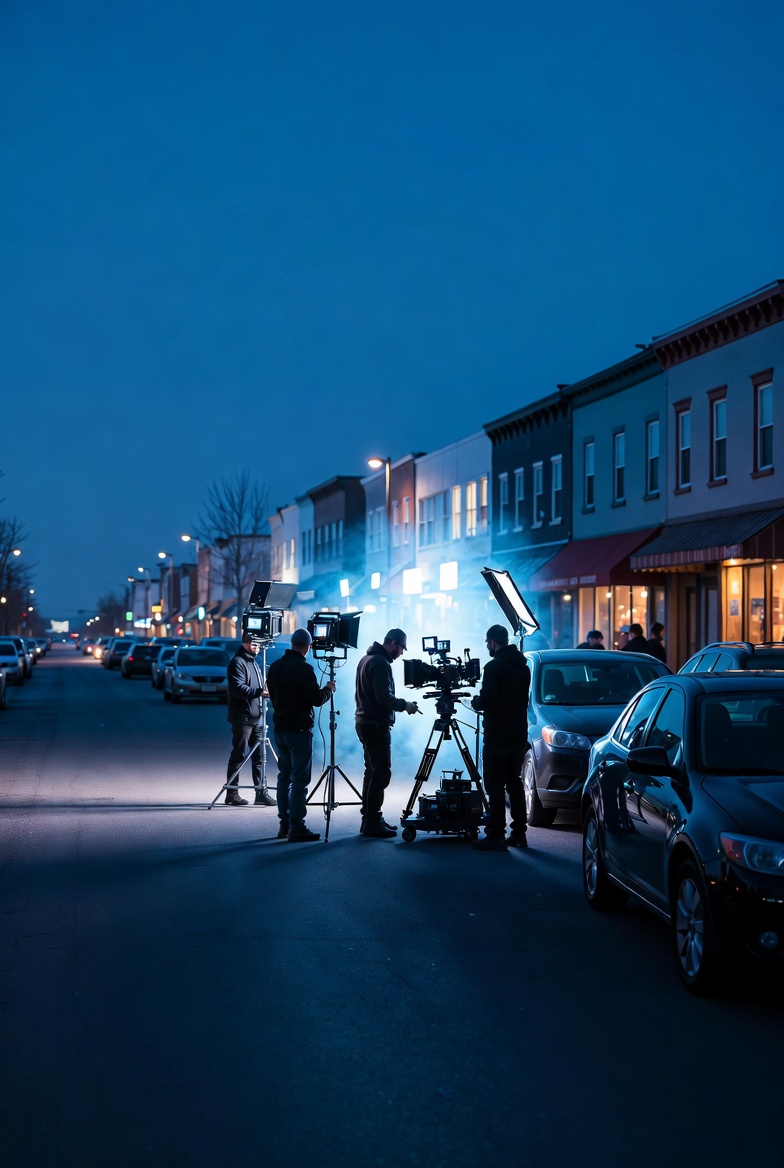
Production liability insurance — usually written as commercial general liability — is what answers when a third party gets hurt or has property damaged because of the shoot. A grip stand falls and damages a wood floor at the location. A passerby trips over a cable run on a public-street shoot. A neighbor's parked car gets dinged by a dolly track.
These aren't dramatic claims. They're the everyday kind that come up on real productions, and they're exactly what GL is structured to handle. The production package typically combines GL with equipment, props/sets/wardrobe, third-party property damage, and cast coverage — but the GL portion is what permit offices, location owners, equipment houses, and brand clients are actually looking for on the COI.
For productions across every budget tier — from short film shoots through indie features — production liability is almost always the first line bound and the most universally required.
FOUR BUILDING BLOCKS OF PRODUCTION GL
A general liability policy isn't a single coverage — it's four coordinated parts that together cover the most common third-party risks on a film shoot.
BODILY INJURY (BI)
Third-party physical injury arising from the production — bystander injuries, location guest injuries, and other on-set or near-set injury claims from non-employees.
PROPERTY DAMAGE (PD)
Damage to third-party property at locations — floors, walls, fixtures, neighboring vehicles, or any property the production interacts with that doesn't belong to it.
PERSONAL & ADVERTISING INJURY
Non-physical injuries — false arrest, malicious prosecution, libel, slander, copyright issues in advertising, and similar tort claims arising from production activities.
MEDICAL EXPENSE / FIRST AID
No-fault medical payments for minor injuries to non-employees on set or at locations — designed to handle small first-aid and medical situations without triggering full liability claims.
Production GL is third-party coverage — it covers people who aren't part of the production. Crew injuries are handled by workers compensation, not GL. The two coverages are coordinated but legally distinct.
WHO ACTUALLY GETS PROTECTED
A production GL policy protects the production company itself plus a constellation of additional insureds named on the policy or its certificates. Here's the typical relationship structure.
THE PRODUCTION COMPANY
LOCATION OWNERS
Restaurants, homes, businesses, and private locations named as additional insured on the COI.
EQUIPMENT RENTAL HOUSES
Camera, lighting, grip suppliers named as AI and often as loss payee.
CITY / PERMIT OFFICES
Municipal film offices typically required as AI for permitted public shoots.
UNION SIGNATORIES
SAG-AFTRA, IATSE, and DGA signatory requirements often layer in AI language.
FINANCIERS / INVESTORS
Production companies, completion bond providers, and investors with contractual AI rights.
BRAND / SPONSOR CLIENTS
Branded productions where the brand client requires AI status before approving the shoot.
CO-PRODUCTION PARTNERS
Co-producers, joint-venture partners, and affiliated production entities named on the policy.
VENDORS & SUBCONTRACTORS
Specialty vendors who require AI on the production company's GL as a condition of working.
PUBLIC LOCATIONS = HIGHER AI COMPLEXITY
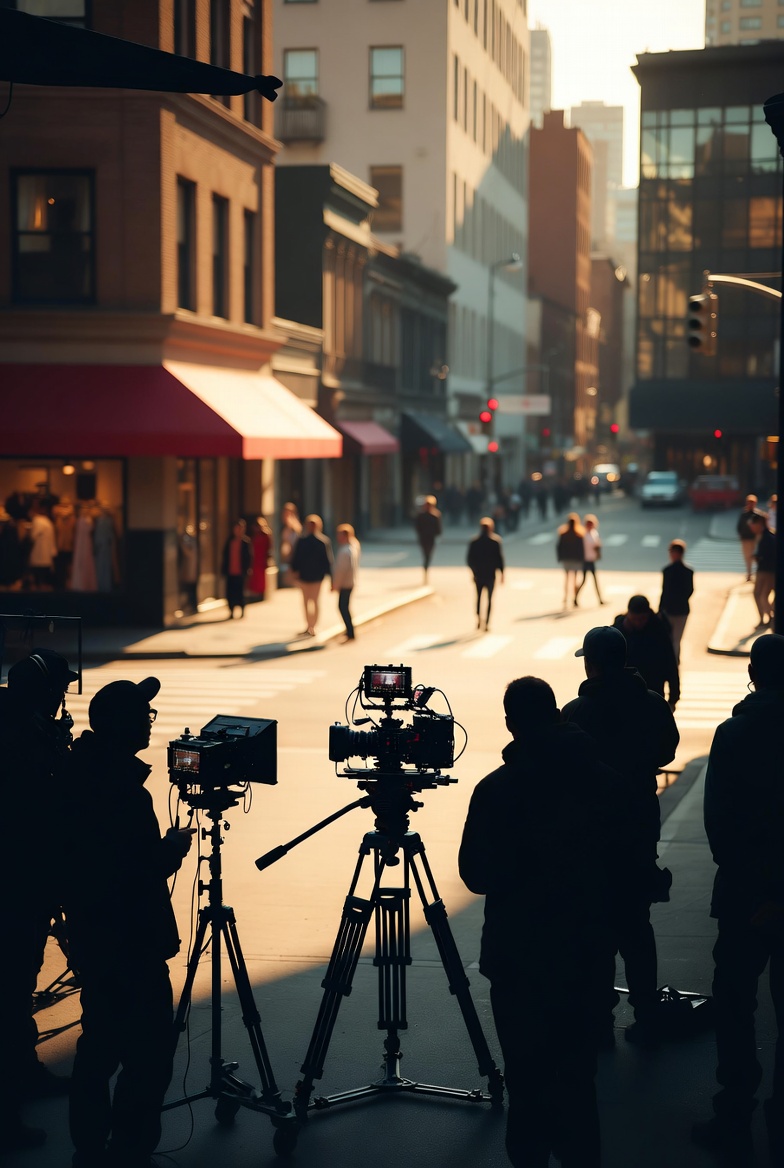
Public-street shoots typically generate the longest list of additional insureds — city film office, transportation department, business district associations, and adjacent property owners. Coordinating these AIs in advance prevents same-day certificate scrambles.
WHAT GL ACTUALLY GETS USED FOR
These are the categories of third-party claims that production GL responds to in real life — color-coded by typical severity. The point: most GL claims aren't catastrophic. The volume comes from common, everyday production exposures.
FLOOR DAMAGE AT A LOCATION
Crew drags a stand across a hardwood floor at a residential location. Cleanup, refinishing, or replacement covered under property damage.
DAMAGED FIXTURES OR FURNITURE
Practical light overheats and damages a lampshade. Set work damages a piece of location furniture. Routine third-party property damage scenarios.
PASSERBY TRIPS ON A CABLE RUN
Pedestrian on a public-street shoot trips on poorly secured cables and sustains a sprain or fall injury. Bodily injury claim with medical and possible legal exposure.
VEHICLE DAMAGE FROM PRODUCTION
Production truck or rental vehicle backs into a neighbor's parked car at a location. Property damage claim with body-shop and rental coverage.
STRUCTURAL DAMAGE TO LOCATION
Heavy rigging or set construction damages a load-bearing element of a residential or commercial location. Significant repair and lost-use claim.
EXTRA OR BYSTANDER INJURY
Background performer or bystander on a complex shoot day suffers a meaningful injury — fall, equipment-related, or location-related.
FIRE OR SIGNIFICANT PROPERTY LOSS
Practical fire effect, lighting equipment, or pyro mishap causes significant property damage at a location. Claims of this magnitude often involve excess limits.
CATASTROPHIC THIRD-PARTY INJURY
Rare but real — a third-party catastrophic injury arising from production activity. The kind of exposure that drives the conversation about higher excess limits.
PRIMARY → EXCESS → UMBRELLA
Production liability is rarely just one policy with one limit. For larger productions or higher contractual requirements, multiple policy lines stack on top of each other to build a "tower" of coverage.
UMBRELLA / EXCESS LIABILITY
Sits above the primary GL — adds substantial additional limits when contractual requirements, location agreements, or financier requirements call for higher limits.
EXCESS LIABILITY (OPTIONAL)
An optional layer between primary GL and the umbrella — provides additional limits without the broader umbrella coverage scope, depending on what's needed.
PRIMARY GENERAL LIABILITY
The foundation policy. Standard production GL with per-occurrence and aggregate limits. The line that responds first when a claim is made.
Limit choices are usually driven by what the production's contracts actually require — locations, financiers, distributors, brand clients, and unions all set their own minimums. We work from the actual contracts to size the tower correctly. See our liability limits guide for context.
WHAT GL DOES AND DOESN'T RESPOND TO
Understanding what GL is structured for matters as much as understanding what's covered. Here's the simple side-by-side.
THIRD-PARTY EXPOSURES FROM THE SHOOT
- Bodily injury to non-employees on or near set
- Property damage to locations and third-party property
- Personal injury claims (libel, false arrest, similar torts)
- Advertising injury arising from production materials
- Defense costs for covered claims
- Medical payments for minor non-employee injuries
- Damage from production operations on premises
FIRST-PARTY OR SPECIFIC EXCLUDED RISKS
- Crew injuries — that's workers compensation
- Damage to your own equipment — that's equipment coverage
- Errors and omissions (script, clearance) — that's film E&O
- Aircraft and watercraft operations (typically excluded)
- Pollution and environmental exposures (typically excluded)
- Auto liability — that's hired/non-owned auto coverage
- Intentional acts or contractual liability outside the policy
QUESTIONS PRODUCERS ASK
WHAT IS FILM PRODUCTION LIABILITY INSURANCE?
HOW IS GL DIFFERENT FROM WORKERS COMP?
WHAT LIMITS DO I NEED ON MY GL?
HOW MUCH DOES PRODUCTION GL COST?
IS GL ENOUGH BY ITSELF?
WHAT IS AN ADDITIONAL INSURED?
DOES GL COVER STUNT OR PYRO ACTIVITY?
CAN I GET GL FOR JUST ONE DAY?
EVERY OTHER COVERAGE LINE STARTS WITH THIS ONE.
Production liability is the foundation of the production insurance program — and the line every permit office, location owner, equipment house, and brand client will ask for first. Submit the intake form and we'll structure the right primary and excess limits for your specific contracts.
THE COMPLETE FEATURE FILM INSURANCE LIBRARY
FEATURE FILM INSURANCE
The complete overview of feature film coverage — every spoke, every policy type, every budget tier.