FILM PRODUCTION WORKERS
COMPENSATION INSURANCE
The one line of coverage state law actually requires. Crew injury coverage placed for productions of every size — feature shoots, short-term productions, episodic, commercials, and documentaries. State-by-state compliance, multi-state shoots, and union signatory requirements coordinated.
CREW INJURY INSURANCE WITH STATUTORY TEETH
Workers comp is the one film insurance line that's actually required by law. The legal framework, the carrier landscape, and the underwriting process are all different from every other policy in the production stack.
Workers compensation isn't optional and it isn't bundled with other coverages. Every U.S. state runs its own workers compensation system — most states require employers to carry coverage from the moment they hire their first paid employee. Productions shooting in multiple states often need multi-state policies or specifically endorsed coverage to satisfy each jurisdiction.
For film productions, that includes everyone on the call sheet who's being paid: actors, crew, stunt performers, drivers, PAs, set medics, and specialty department crew. Even short shoots fall into the requirement — state law generally doesn't exempt productions just because the shoot is brief or the budget is small. Short film productions and low-budget features face the same statutory requirements as larger productions.
Workers comp also coordinates with the rest of the program — production liability, equipment coverage, and specialty risk lines like stunt and pyro. When stunts, fight choreography, or hazardous activity is in the script, the WC class codes and underwriting expectations escalate accordingly.

WORKERS COMP IS NOT A FEDERAL PROGRAM
Each state runs its own workers compensation system — its own insurance fund, its own statutory requirements, its own benefits schedule, and its own enforcement structure. A production shooting across multiple states needs coverage that satisfies each state's specific framework.
-
STATE-RUN PROGRAMS Some states require coverage through a state-administered fund only.
-
COMPETITIVE STATES Most states allow private carriers to write WC alongside state options.
-
MONOPOLISTIC STATES A few states only allow the state fund — private WC isn't available there.
-
MULTI-STATE SHOOTS Productions crossing state lines typically need coverage endorsed for each jurisdiction.
-
PENNSYLVANIA-BASED We work directly with PA's competitive WC market — and coordinate with carriers nationwide.
-
UNION REQUIREMENTS SAG-AFTRA, IATSE, and DGA signatory agreements often layer on top of statutory minimums.
STATUTORY VS. VOLUNTARY COVERAGE
A workers compensation policy is structured in two parts — the statutory benefits required by state law, and the voluntary employer's liability portion that protects the production company itself.
STATUTORY COVERAGE
The benefits required by each state's workers compensation law for injured crew members. The amount of benefits, the categories covered, and the claims process are governed by state statute — not negotiable in the policy.
- Medical benefits for work-related injury or illness
- Lost-wage replacement during recovery
- Disability benefits per state schedule
- Vocational rehabilitation in qualifying cases
- Death benefits to surviving dependents
EMPLOYER'S LIABILITY
The "Part B" portion of the policy that protects the production company itself from lawsuits arising out of work-related injuries — claims that fall outside the statutory benefits structure or come from third parties.
- Third-party-over actions from injured crew
- Loss of consortium claims by family members
- Dual-capacity claims against the production
- Consequential bodily injury claims
- Defense costs for covered claims
EVERY CREW MEMBER FALLS INTO A TIER
Workers comp underwriting categorizes crew by role and risk class. Where each crew member falls determines the rate applied to their portion of the payroll.
ABOVE-THE-LINE
Creative leadership and on-camera talent. Generally lower-risk classifications because of office or on-camera (non-physical) roles.
- Producers & Executive Producers
- Director & Assistant Director
- Writers
- Principal Cast & Lead Talent
- Production Office Staff
BELOW-THE-LINE
Production crew working on set. Risk classification varies by department — camera, sound, and continuity vs. grip, electric, and construction.
- Camera & Lighting Crew
- Grip & Electric Departments
- Sound Department
- Hair, Makeup, Wardrobe
- Production Assistants & Drivers
SPECIALTY / HIGH-RISK
Specialty crew working in elevated-risk roles. Higher classification rates and additional underwriting documentation typical.
- Stunt Performers & Coordinators
- Pyrotechnicians & SFX Crew
- Weapons Handlers / Armorers
- Construction & Set Builders
- Aerial Crew & Drone Pilots
FROM INCIDENT TO RESOLUTION
When a crew injury occurs on set, here's the typical claim flow under a workers compensation policy. Each step has documentation requirements and timing expectations.
INCIDENT
Injury occurs on set during the course of production work.
REPORT
Production reports the injury to the supervisor and documents the incident.
MEDICAL
Injured crew member receives medical care under the policy's network.
CLAIM
Claim filed with the carrier per state statutory timeline requirements.
BENEFITS
Statutory benefits begin per state schedule for medical and lost wages.
RESOLUTION
Return to work, settlement, or long-term disability resolution per state law.
FILM PRODUCTION CLASS CODES EXIST IN MANY CATEGORIES
Workers comp underwriting uses class codes to apply rates to payroll. Film production touches many different class codes depending on the work being performed. The exact codes vary by state and rating bureau — here are the broad categories that come up.
Specific class codes and rates vary by state and rating bureau (NCCI, state-specific, or independent). We work directly from the applicable rating framework when placing the policy.
WHAT TO HAVE BEFORE THE SHOOT STARTS
SAFETY CLIPBOARD
-
WC POLICY BOUND BEFORE DAY 1 Coverage in force before the first paid crew member shows up on set.
-
STATE-BY-STATE COMPLIANCE Each shoot location's state requirements identified and satisfied.
-
CREW PAYROLL SCHEDULE Documented projection of crew payroll by class code for accurate quoting.
-
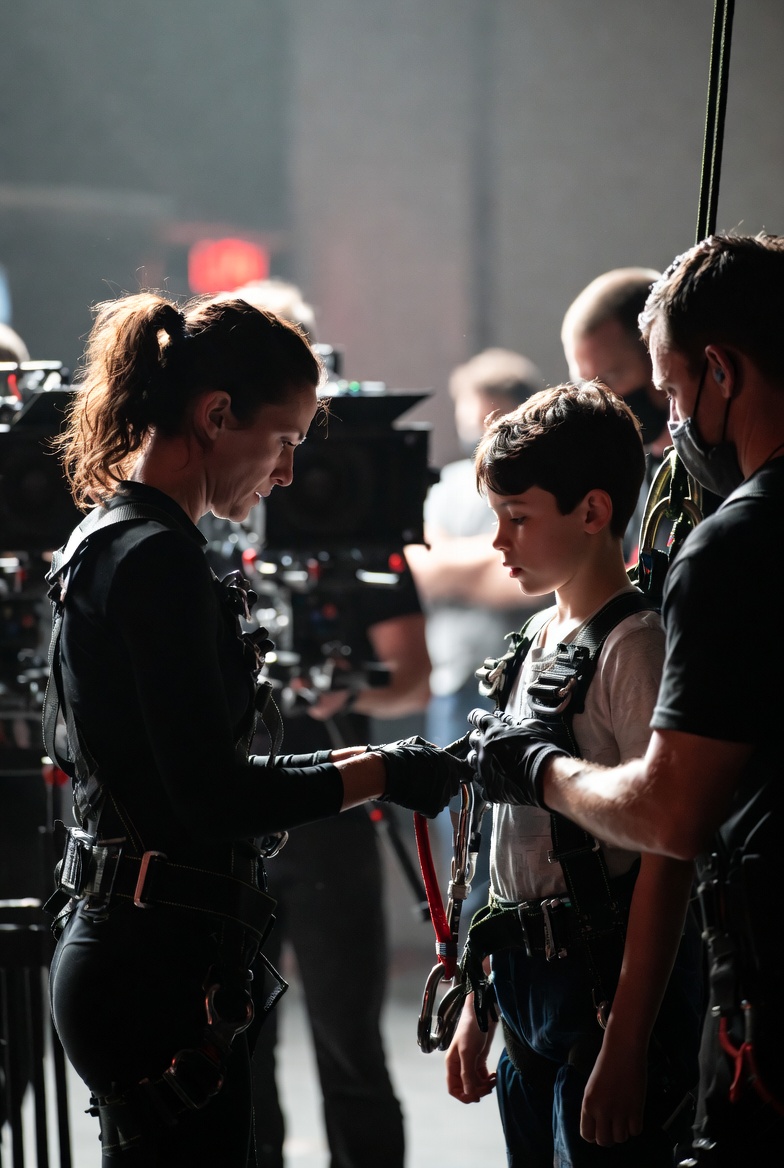
SAFETY PLANS DOCUMENTED Department safety plans, particularly for stunts, pyro, weapons, aerial, or hazardous activity.
-
SET MEDIC ON STANDBY On-set medical support arranged where the activity warrants — particularly for high-risk shoots.
-
UNION REQUIREMENTS CONFIRMED Union signatory requirements (SAG-AFTRA, IATSE, DGA) confirmed and addressed where applicable.
-
INCIDENT REPORTING PROCESS Production has documented incident reporting protocol so claims can be filed within state timelines.
COMMON WC MISTAKES PRODUCTIONS MAKE
These are the recurring compliance issues that cause coverage problems, premium audits, or statutory penalties for film productions. All of them are avoidable with the right structure.
TREATING CREW AS 1099 CONTRACTORS
Misclassifying paid crew as independent contractors to avoid WC isn't a workaround — most states will reclassify them as employees on audit, with retroactive premium and potentially statutory penalties.
SKIPPING WC ON SHORT SHOOTS
Assuming a one-day or weekend shoot doesn't trigger the requirement. State law generally doesn't carve out short-duration productions — the requirement is typically tied to having paid employees, not shoot length.
UNDERSTATING PAYROLL AT QUOTE
Quoting a policy on too-low payroll projections to lower the upfront premium. The audit at policy expiration reconciles to actual payroll — and the additional premium is owed regardless.
MISCLASSIFYING CREW BY CLASS CODE
Assigning crew to lower-rate class codes than their actual work warrants. Premium audits review actual job duties — not the title on the call sheet.
CROSSING STATE LINES UNCOVERED
Shooting in additional states without endorsing those states onto the policy. Claims that occur in unauthorized states often face coverage disputes and statutory penalties.
NO SET MEDIC ON HIGH-RISK DAYS
Failing to have medical support on standby during stunt, pyro, or hazardous-activity days — a documentation gap that can affect claims handling and future renewals.
DELAYED INCIDENT REPORTING
Reporting injuries to the carrier outside the state's statutory timeline. Late reporting can lead to claim denials, statutory fines, and damage to the production's loss history.
NO POLICY ON SUBCONTRACTED CREW
Assuming that subcontracted vendors carry their own WC. They might not — and if they don't, the production is generally on the hook for their crew. Always confirm certificates.
QUESTIONS PRODUCTIONS ASK
DO I NEED WORKERS COMP FOR A FILM PRODUCTION?
CAN I JUST USE 1099 CONTRACTORS TO AVOID WC?
HOW IS WORKERS COMP PRICED?
WHAT IF I'M SHOOTING IN MULTIPLE STATES?
DOES MY PRODUCTION PACKAGE INCLUDE WORKERS COMP?
ARE STUNT PERFORMERS COVERED UNDER NORMAL WC?
WHAT'S A WORKERS COMP AUDIT?
WHAT HAPPENS IF SOMEONE GETS HURT WITHOUT WC IN PLACE?
CREW SHOWS UP MONDAY. WC IS BOUND BY FRIDAY.
Whether you're shooting one day in one state or six weeks across three states, workers comp is the one piece of coverage that has to be in place before the first paid crew member shows up. Submit the intake form and we'll move on it.
THE COMPLETE FEATURE FILM INSURANCE LIBRARY
FEATURE FILM INSURANCE
The complete overview of feature film coverage — every spoke, every policy type, every budget tier.