
COUTURE DESIGNER INSURANCE
Couture designer insurance for bespoke fashion designers, couture ateliers, custom gown makers, eveningwear designers, bridal couture studios, handwork rooms, draping studios, archive collections, client fittings, high-value samples, runway looks, celebrity pulls, made-to-measure garments, and designer businesses handling one-of-one pieces that may be owned, commissioned, borrowed, altered, transported, photographed, preserved, or delivered under contract.
 ARCHIVE COLLECTION
START YOUR COUTURE DESIGNER QUOTE WITH THE INTAKE FORM
Couture designer insurance becomes complex when the account includes bespoke gowns, private client fittings, multiple alteration rounds, museum-quality archives, borrowed garments, celebrity pulls, custom embellishment, imported fabrics, hand-beaded pieces, one-of-one samples, trunk shows, runway looks, or high-value garments in transit. Start with the intake so the submission can be organized around value, custody, movement, contracts, and operations.
COMPLETE THE COUTURE DESIGNER INTAKECOVERAGE FOR THE ATELIER, THE FITTING ROOM, THE ARCHIVE, AND THE GARMENT IN MOTION
COUTURE DESIGNER INSURANCE is a commercial insurance program built around bespoke design work: sketching, draping, patternmaking, fabric sourcing, handwork, fittings, alterations, embroidery, beadwork, sample storage, archive preservation, showroom appointments, trunk shows, runway preparation, client delivery, and return-condition disputes. Depending on the operation, the program may include general liability, commercial property, inland marine, property of others, crime, cyber, workers compensation, product liability, professional/service review, hired and non-owned auto, special event coverage, and umbrella or excess liability.
WHAT IS COUTURE DESIGNER INSURANCE?
A specialty coverage stack for high-touch fashion designers whose value sits in original handwork, client appointments, bespoke garments, and irreplaceable archive pieces.
Couture design does not behave like ordinary apparel retail. A couture atelier may design one-of-one gowns, source specialty fabrics, maintain a pattern archive, host private fittings, store client garments, loan gowns to stylists, transport finished pieces to events, produce runway samples, and preserve master pieces that are more valuable as brand history than as inventory.
The underwriting question is not only whether the business “makes clothing.” The stronger question is: what is being made, who owns it, what is it worth, how many fittings occur, where is it stored, how does it travel, what contract controls the garment, who can handle it, and what happens if the piece is damaged, late, lost, stained, altered incorrectly, copied, or not accepted by the client?
Couture designer insurance should be coordinated with adjacent KIG pages such as Bridal Designer Insurance, Sample Garment Insurance, Fashion Stylist Insurance, Dress Rental & Wardrobe Insurance, Fashion Showroom Insurance, and Runway Show & Fashion Event Insurance.
COUTURE DESIGNER COVERAGE AREAS
Each coverage area solves a different part of the couture workflow. The right program depends on whether the atelier designs, builds, fits, alters, stores, ships, loans, archives, or displays high-value garments.
GENERAL LIABILITY FOR FITTING ROOM & ATELIER TRAFFIC
Premises and operations liability for clients, models, stylists, assistants, photographers, couriers, vendors, and private guests entering the studio, showroom, fitting room, or temporary event space.
COMMERCIAL PROPERTY FOR ATELIER TOOLS & CONTENTS
Coverage review for sewing machines, dress forms, cutting tables, draping stations, steamers, pressing tools, sketch tables, fabric stock, trims, embellishments, display fixtures, archive racks, and business personal property.
PROPERTY OF OTHERS / CLIENT GARMENT REVIEW
Important when the atelier handles client-owned garments, consigned pieces, borrowed gowns, stylist pull garments, estate pieces, museum-quality fashion, or pieces owned by designers, performers, brides, or collectors.
INLAND MARINE FOR GARMENTS IN TRANSIT
Couture pieces may move from atelier to client, hotel, venue, runway, photoshoot, stylist, storage, museum, showroom, or courier. Location-only property may not follow high-value garments through that movement.
WORKERS COMPENSATION & HANDWORK EXPOSURE
Employees and shop staff may sew, cut, bead, embroider, press, steam, dye, drape, fit garments, handle racks, or assist with events. Payroll, employee status, contractors, and temporary workers should be reviewed.
CYBER, CRIME & CLIENT PAYMENT EXPOSURE
Private client records, measurement files, celebrity appointments, invoices, deposits, vendor payments, design files, shipping accounts, and digital lookbooks can create cyber, crime, and funds-transfer exposure.
Have a private client contract, stylist loan, trunk show, or archive valuation issue? Send the garment custody details before the certificate or quote request is finalized.
Complete The Couture Designer Intake →ARCHIVE COLLECTIONS, MASTER PIECES & DOCUMENTATION
The couture archive is often the quietest part of the studio and one of the hardest parts to value correctly.
WHEN THE ARCHIVE IS NOT ORDINARY INVENTORY
A couture archive can hold preserved master pieces, one-of-one gowns, pattern references, runway looks, original samples, client-documented commissions, fabric records, handwork notes, sketches, repair files, lookbooks, fitting notes, and provenance documentation.
The insurance file should separate the archive by value category: sellable garments, reference-only pieces, client property, historical samples, retired runway looks, active press pieces, borrowed garments, and pieces that cannot realistically be replaced.
The strongest submissions include garment ID, owner, condition photos, location, use restrictions, replacement basis, archive catalog, and any documentation that explains why the piece has value beyond fabric and labor.
COUTURE DESIGNER POLICY STRUCTURE
A couture designer program works best when built in layers: atelier foundation, garment property, client custody, movement, contract requirements, and digital/payment protection.
ATELIER FOUNDATION
General liability, commercial property, business income, workers compensation, and auto review for the operating business, fitting room, studio, showroom, and employees.
GARMENT PROPERTY
Finished couture pieces, samples, works in progress, fabrics, trims, embellishments, archive garments, display gowns, client-owned pieces, and specialty materials.
MOTION & EVENTS
Inland marine, transit, off-premises property, trunk shows, fittings at client locations, runway movement, stylist pulls, photoshoots, delivery, and return-condition tracking.
CONTRACT & DIGITAL
Certificates, client contract review, cyber, crime, funds transfer fraud, professional/service exposure, product liability, and umbrella or excess liability where required.
THE HARD PART: THE SAME GOWN CAN CHANGE STATUS
A couture garment can begin as a sketch, become work in process, enter a fitting, leave for a shoot, return for alteration, become a client piece, and eventually join the archive.
THE STATUS OF THE GARMENT MATTERS. A muslin toile, first sample, client commission, bridal couture gown, celebrity loan, runway look, museum-worthy archive piece, and unfinished garment in the workroom each create different underwriting questions.
Couture designer insurance should document who owns the piece, who paid for it, whether a deposit or contract exists, whether it is finished or in process, who can handle it, how it is transported, whether it is worn or displayed, what fittings remain, and whether the garment can realistically be remade.
This is why property of others, inland marine, archive documentation, bailee-style review, contract review, certificate wording, cyber, and crime coverage can matter as much as the base general liability policy.
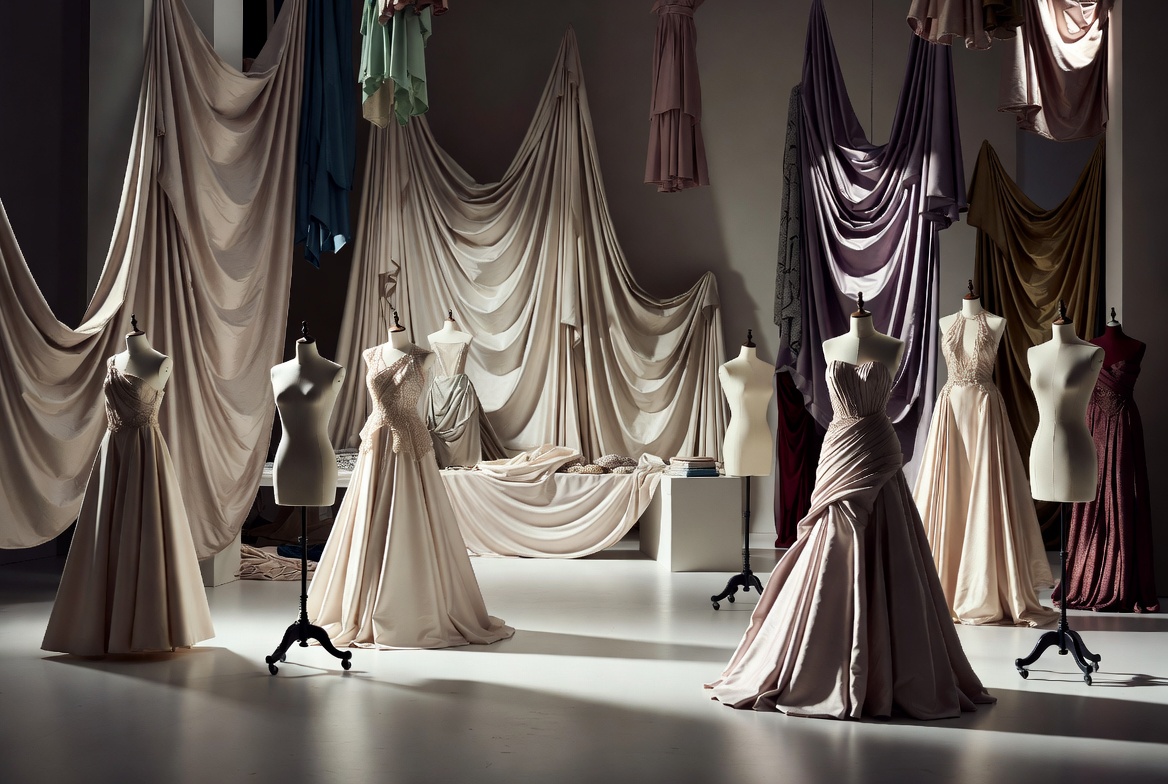
ATELIER WORKROOM, DRAPING STATIONS & BESPOKE GOWNS
The atelier is creative space, production space, fitting space, and client-facing space at the same time.
WHEN HANDWORK BECOMES AN OPERATIONAL EXPOSURE
A couture atelier can include draping stations, sketch tables, sewing machines, sergers, steamers, pressing tools, beadwork, embroidery, appliqué, trims, lace, imported silk, specialty fabrics, client gowns, private fittings, and finished pieces waiting for delivery.
OSHA identifies apparel and footwear exposures involving sewing, cutting, gluing, and stitching; OSHA’s sewing eTool also highlights musculoskeletal concerns tied to sewing stations, fine work, scissor work, and material handling. If the studio uses dyes, adhesives, sprays, solvents, or fabric treatments, hazard communication may also be part of the workplace review.
The insurance submission should explain whether the atelier only designs, or whether it also builds, alters, repairs, stores, ships, fits, rents, loans, imports, photographs, displays, or supervises couture pieces at events.
SOURCE-BACKED COUTURE DESIGNER RISK NOTES
These are not cost estimates or legal opinions. They are factual source anchors that explain why couture designer accounts are underwritten differently from ordinary clothing retail.
TEXTILE FIBER LABELING
The FTC Textile Fiber Rule requires certain textile products sold in the United States to disclose fiber names and percentages, manufacturer or marketer identity, and processing or manufacturing country. Official FTC source
CARE LABELING FOR WEARING APPAREL
The FTC Care Labeling Rule applies to manufacturers and importers of textile wearing apparel and certain goods and requires regular care instructions through labels or other permitted methods. Official FTC source
CLOTHING TEXTILE FLAMMABILITY
CPSC’s 16 CFR Part 1610 standard states that Class 3 textiles exhibit rapid and intense burning, are dangerously flammable, and shall not be used for clothing. Official eCFR source
SEWING STATION ERGONOMICS
OSHA’s sewing eTool notes that workers involved in sewing activities may face musculoskeletal disorder risks, including risks tied to sewing stations, fine work, scissor work, and material handling. Official OSHA source
HAZARD COMMUNICATION
OSHA’s Hazard Communication Standard addresses classification of chemical hazards and communication of hazard information and protective measures. This may matter if the atelier uses dyes, adhesives, solvents, sprays, or fabric treatments. Official OSHA source
DESIGN PATENT PROTECTION
USPTO guidance states that design patents stem from 35 U.S.C. 171 and can protect a new, original, and ornamental design for an article of manufacture, subject to statutory requirements. Official USPTO source
COUTURE CONTRACT & CERTIFICATE REQUIREMENTS — EXAMPLES
Couture designers may receive certificate or contract requests from venues, clients, stylists, galleries, trunk show hosts, showrooms, bridal salons, runway producers, museums, photographers, and luxury retailers. Exact wording should always be reviewed before issuing a certificate.
PRIVATE CLIENT FITTING AGREEMENT
Designer shall maintain commercial liability coverage for fitting-room operations, private client appointments, garment handling, and related atelier services. Client-owned garments, heirloom materials, or special components must be disclosed separately when held by the designer.
STYLIST OR CELEBRITY LOAN
Loan recipient may be required to acknowledge custody of couture garment, accessories, garment bag, and related items during transport, fitting, press, red-carpet, editorial, or photography use, with return-condition documentation and stated value basis.
TRUNK SHOW OR SHOWROOM EVENT
Venue, showroom, gallery, bridal salon, or luxury retailer may request evidence of liability insurance, additional insured wording, and off-premises property review before allowing couture garments, samples, racks, or displays on premises.
ARCHIVE OR MUSEUM-QUALITY PIECE
Owner of archive garment, historic sample, or preserved master piece may require item schedule, condition photographs, approved transport, storage controls, and proof of insurance before the piece is released, displayed, repaired, or photographed.
RELATED COUTURE, FASHION, WARDROBE & PRODUCTION COVERAGE
Sitemap-aware internal links that keep the couture designer page connected to the broader KIG specialty library.
COUTURE, BRIDAL, WARDROBE & DESIGN COVERAGE
FASHION HOUSE, SHOWROOM, INVENTORY & EVENT COVERAGE
COUTURE DESIGNER INSURANCE FAQ
Common questions from couture designers, bespoke gown makers, ateliers, bridal couture studios, and high-value fashion archive operators.
What does couture designer insurance cover?
Couture designer insurance is a commercial insurance program for bespoke design, garment construction, fittings, alterations, sample storage, archive preservation, client delivery, trunk shows, private appointments, and property custody. Depending on the business, it may include general liability, commercial property, inland marine, property of others, workers compensation, cyber, crime, hired and non-owned auto, product liability, special event coverage, and umbrella or excess liability.
Is couture designer insurance different from fashion designer insurance?
Yes. Fashion designer insurance may focus on design, wholesale, ecommerce, samples, product liability, and brand operations. Couture designer insurance usually adds private fittings, one-of-one garments, high-value fabrics, handwork, client commissions, archive pieces, garment custody, return-condition disputes, and higher replacement difficulty.
Does general liability cover damaged couture gowns?
General liability is generally designed for certain third-party bodily injury and property damage claims. Damage to owned couture pieces, client garments, borrowed gowns, archive garments, or property in transit usually requires property, inland marine, bailee-style, or property-of-others review. Actual policy wording controls the answer.
What if a client leaves fabric, heirloom material, or a partially finished gown with the atelier?
That should be disclosed before placement. Client-owned fabric, heirloom components, partially finished garments, or garments left for alteration may need property of others, bailee-style review, or contractual liability review depending on the agreement and policy form.
Does couture designer insurance cover garments in transit?
Transit must be reviewed specifically. Couture garments moving by courier, hand-carry, shipping carrier, employee vehicle, trunk show delivery, stylist pickup, or client delivery may be outside ordinary scheduled-location property coverage. Inland marine, off-premises property, or transit coverage may be needed.
What information is needed to quote couture designer insurance?
Useful information includes legal entity, locations, operations, annual revenue, payroll, employee count, owned garment values, client property values, archive values, sample values, equipment values, fitting procedures, contracts, delivery methods, storage controls, current policies, and prior loss history.
Do couture designers need workers compensation?
Workers compensation requirements depend on state law and employment structure. Employees, stitchers, cutters, drapers, patternmakers, hand-beading staff, fit assistants, interns, temporary workers, and contractors should be disclosed because injury exposure and legal requirements may differ by arrangement.
What if the atelier uses dyes, adhesives, sprays, or specialty fabric treatments?
Chemical use should be disclosed. Dyes, adhesives, sprays, paints, solvents, fabric treatments, cleaning chemicals, and specialty finishes may create hazard communication, employee safety, fire, property damage, and pollution-related questions depending on the materials and process.
Can one policy cover design, fittings, archive storage, trunk shows, and custom gowns?
Sometimes one coordinated program can address several activities, but the operations still need to be separated for underwriting. Design, fittings, alterations, archive storage, client garments, trunk shows, runway work, samples, and transit each create different coverage questions.
What makes a couture designer account hard to place?
Hard-to-place factors can include high-value archive garments, poor valuation records, frequent stylist loans, client-owned property, unclear contracts, prior damaged garments, prior theft, undocumented samples, high-value imported fabrics, event travel, uninsured contractors, and incomplete loss history.
Does cyber insurance matter for couture designers?
It can. Measurement files, private client records, celebrity appointment information, deposit invoices, design files, lookbooks, vendor payments, shipping accounts, and cloud-based archive records can create cyber and crime exposure. Cyber and crime coverage should be reviewed when the business relies on digital workflow or payment systems.
Is this page legal, product-safety, labor, or coverage advice?
No. This page is insurance education and underwriting preparation only. Legal, labor, product safety, textile labeling, chemical safety, client contract, and coverage questions should be reviewed with qualified counsel, compliance professionals, or a licensed insurance advisor reviewing the actual policy.
START THE COUTURE DESIGNER INSURANCE SUBMISSION
Send the atelier story first: what garments are owned, what belongs to clients, what is archived, what is in process, how fittings work, how finished gowns move, what contracts require, what tools and equipment are used, and what prior losses exist.
OPEN THE INSURANCE INTAKE FORMS PORTAL