NEGLIGENT SECURITY
LIABILITY INSURANCE
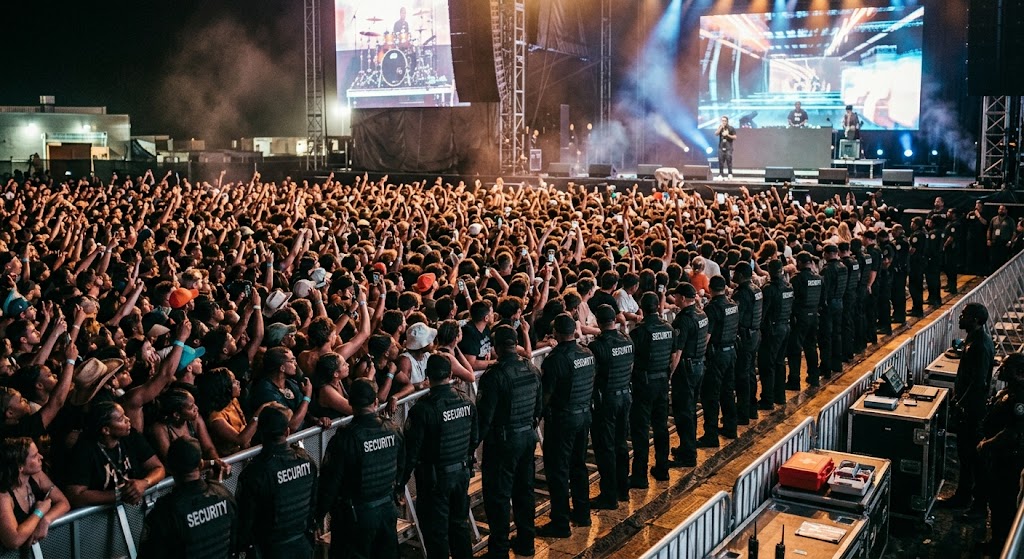
When something goes wrong in the crowd, the question that follows isn't only "who did it?" — it's "should the show have stopped it?" Negligent security is the claim that the staffing, screening, or response fell short of what was reasonable. It's the companion to assault & battery, and a defining exposure for high-energy hip hop and rap events. Kelly Insurance Group helps you address it head-on.
WHAT NEGLIGENT SECURITY ACTUALLY MEANS
It's not about who threw the punch — it's about whether the show should have prevented it. Negligent security targets the security plan itself, which makes it a distinct exposure from the physical act.
A negligent security claim alleges that the event organizer or venue failed to provide reasonable security, and that the failure allowed a foreseeable injury to happen. The heart of it is foreseeability: the argument that a reasonable promoter should have anticipated the risk and staffed, screened, or responded differently.
It almost always travels with assault & battery. When a fight injures someone, the injured party's attorney typically raises two theories at once — the physical act that caused the harm, and the claim that better security would have prevented it. Assault & battery answers the first; negligent security answers the second. Because base general liability commonly excludes assault & battery, the negligent security exposure usually has to be addressed deliberately too.
Here's the part promoters can actually control: the strength of your security plan shapes both your real-world risk and how underwriters view you. A documented, credible plan is one of the most powerful things you can bring to the table. Use the self-audit below to see how yours reads.
THE CLAIM: not "who did it," but "should the show have prevented it" — the security plan is on trial.
THE PAIRING: it rides alongside assault & battery in almost every crowd-incident suit.
THE LEVER: a documented security plan reduces real risk and strengthens how underwriters see your event.
HOW DOES YOUR SECURITY PLAN READ?
Check the controls you have in place for your event. The readiness indicator updates as you go — it's a self-reflection tool to help you see your plan the way an underwriter might, not a score that determines coverage. The more you can document, the stronger your position.
This self-audit is an educational tool only. It does not determine eligibility, pricing, or coverage, and it is not a security or legal assessment. Every event is evaluated on its own facts.
A SHARED CLAIM ACROSS THREE PARTIES
Negligent security responsibility is rarely one party's alone. After an incident, the claim commonly reaches all three — which is why the wording between them matters.
THE PROMOTER
Organized the event and set the security plan. Usually first named, and typically the party carrying the event program.
PROMOTER INSURANCE →THE VENUE
Controlled the premises — layout, lighting, exits. A frequent co-defendant, usually an additional insured on the promoter's policy.
VENUE INSURANCE →THE SECURITY VENDOR
Staffed and ran security. Should carry its own coverage with the promoter named as additional insured — verified, not assumed.
SEE THE BIG PICTURE →NEGLIGENT SECURITY QUESTIONS & ANSWERS
What promoters and venues ask most about this companion exposure at hip hop and rap events.
Negligent security liability addresses claims that an event organizer or venue failed to provide reasonable security, and that the failure allowed a foreseeable injury to happen. It responds to the allegation about the security plan itself, separate from the physical act that caused the injury, which is addressed by assault and battery coverage.
Assault and battery responds to the injury from the physical act — the fight or the use of force. Negligent security responds to the separate claim that the organizer or venue should have prevented it through adequate staffing, screening, or response. After a crowd incident, both are frequently alleged together, which is why they are usually arranged side by side.
A negligent security claim typically argues that the security provided was inadequate for the foreseeable risk — too few staff, insufficient screening, poor lighting or layout, or a failure to respond when an incident began. The core of the claim is foreseeability: that a reasonable organizer should have anticipated the risk and done more.
Often not on its own. Because negligent security claims usually arise alongside assault and battery, and base general liability commonly excludes assault and battery, the negligent security exposure frequently needs to be addressed deliberately rather than assumed to be part of the base policy. How it is structured depends on the specific program.
An injured party may name the promoter who organized the event, the venue that controlled the premises, and the security company that staffed it. Because responsibility can be shared, the additional insured wording between these parties and the contracts with the security vendor matter a great deal in how a claim is handled.
A clear, documented security plan is the strongest tool — appropriate staffing for the expected crowd, trained and licensed personnel, screening at entry, good lighting and crowd flow, a written incident-response procedure, and records kept afterward. These steps both reduce the chance of an incident and help demonstrate that reasonable care was taken.
Not automatically. The security vendor should carry its own coverage, and the promoter is often named as an additional insured on the vendor's policy — but that arrangement has to be put in place and verified. Relying on a security company's coverage without confirming the certificates and wording can leave a gap. Our certificate of insurance page covers how that works.
Yes. The size of the crowd changes the scale, but the exposure exists at intimate club shows as well as large arenas. In smaller rooms, the questions are the same — was the staffing reasonable, was the response adequate — and the documentation matters just as much.
Underwriters commonly look for a credible security plan: the staffing ratio, whether personnel are licensed and trained, screening procedures, the alcohol setup, the venue layout, and the event history. A promoter who can present a clear, documented plan is in a much stronger position when seeking coverage.
KIG helps structure negligent security alongside assault and battery and general liability, reviews the additional insured arrangements with the venue and security vendor, and works with specialty markets that understand high-energy events. Start with the Special Event Insurance Quote Form with your security plan details, or call or text (412) 212-2800.
MORE HIP HOP & RAP COVERAGE PAGES
Return to the main coverage hub, or jump to any page below.
RELATED KIG COVERAGE & RESOURCES
The availability of coverage and eligibility for coverage can depend on numerous factors. We cannot guarantee that all customers, individuals, and businesses looking for coverage will be successful in these efforts when contacting our team. All policy coverages and terms need to be fully reviewed by the respective consumer to ensure the coverage asked for is what is specifically being quoted or provided by any insurance policy. Insurance Policies, Coverage Changes, and their terms and conditions are not bound or altered until written confirmation is provided by one of our licensed team members or underwriters. This page does not offer legal advice, legal opinions, or policy interpretations. Rather, this page is meant as a resource to help provide customers and insurance consumers with additional considerations that may help in their insurance buying or pursuit of insurance information. Kelly Insurance Group does not employ or direct attorneys.