HIP HOP, RAP & URBAN
CONCERT & FESTIVAL
INSURANCE
From sold-out arenas to intimate private shows, from multi-day urban music festivals to one-night promotional events — Kelly Insurance Group places entertainment and special event coverage for the genre most brokers shy away from. Our agency has insured concerts involving some of the biggest names in the hip hop community, alongside hundreds of local and regional shows. We know this genre, its distinct risk profile, and the specialty markets that actually write it. For many shows we can turn a quote around in as little as one business day.
EVERY HIP HOP & RAP COVERAGE PAGE, IN ONE PLACE
This is the hub for everything KIG writes in the hip hop and rap space. Filter the map below by what you're trying to protect, then jump straight to the page built for it. Each coverage line, event type, and buyer situation has its own dedicated guide.
PARTICIPANT LEGAL LIABILITY INSURANCE
The exposure that ties this whole cluster together — who can be held liable when someone is hurt at a show, and the coverage that responds. Start here, then branch into the specific lines and event types below.
No pages in that category yet — try another filter.
WHAT IS HIP HOP & RAP CONCERT INSURANCE?
Concert insurance for hip hop and rap events is a specialty package combining several coverage types — each one answering a specific risk that comes with producing, promoting, or hosting live music in the urban entertainment space.
Hip hop and rap concert insurance is a specialized form of event and entertainment coverage built for the particular risk environment of urban music events — the elevated crowd energy, the alcohol exposure, the production complexity, the artist-specific underwriting questions, and the security considerations that set this genre apart from other live event categories.
A generic event policy is frequently not enough for a hip hop or rap show. Underwriters read this genre's risk profile differently, weighing the artist's profile and draw, the venue's security protocols, the crowd capacity, the alcohol service structure, the venue's prior incident history, and whether the lineup includes nationally touring or high-profile performers.
This kind of coverage is rarely a single policy. It is a coordinated set of lines. The anchor is Commercial General Liability, which responds to bodily injury and property damage claims. Most shows also carry an Assault & Battery endorsement, and many add Liquor Liability, Event Cancellation, and Production Equipment / Inland Marine depending on the event.
Kelly Insurance Group has placed event coverage for the live music space for years, with access to the specialty entertainment markets that understand this genre and write it regularly. We don't reflexively decline hip hop events. We quote them, place them, and service them.
WHY HIP HOP EVENTS NEED SPECIALTY COVERAGE: Standard event carriers sometimes decline hip hop and rap concerts on genre alone — without ever evaluating the actual risk of the specific show. That leaves a dangerous gap for promoters, venues, and artists who assume they're covered when they aren't. KIG works with specialty entertainment markets that underwrite these events on their real merits, not on category stereotypes.
PLAN AHEAD — ESPECIALLY FOR WELL-KNOWN ARTISTS: If you have a well-known artist performing, give yourself time to procure the proper insurance. We may be able to get a quote to you within a day, but that timing is not something we suggest relying on for a show of that profile. Carriers may want to review the security plan, artist contract, capacity documentation, and loss history.
SINGLE EVENTS AND ANNUAL PROGRAMS: Whether you're promoting a one-night club show, a multi-day outdoor festival, a private label event, or a recurring series, coverage can be structured on a per-event basis or as an annual program for high-frequency promoters.
ONE GENRE. EVERY ROOM. EVERY SHOW SIZE.
A mid-size theater date and a festival main stage carry different exposures, different underwriting, and different paperwork — but the through-line is the same: the crowd, the security plan, the alcohol structure, and the contracts you signed to make the night happen. KIG places coverage across the entire range, and the map above takes you to the page built for your exact show.
Promoting more than one room or more than one date? An annual program usually beats insuring each show one at a time.
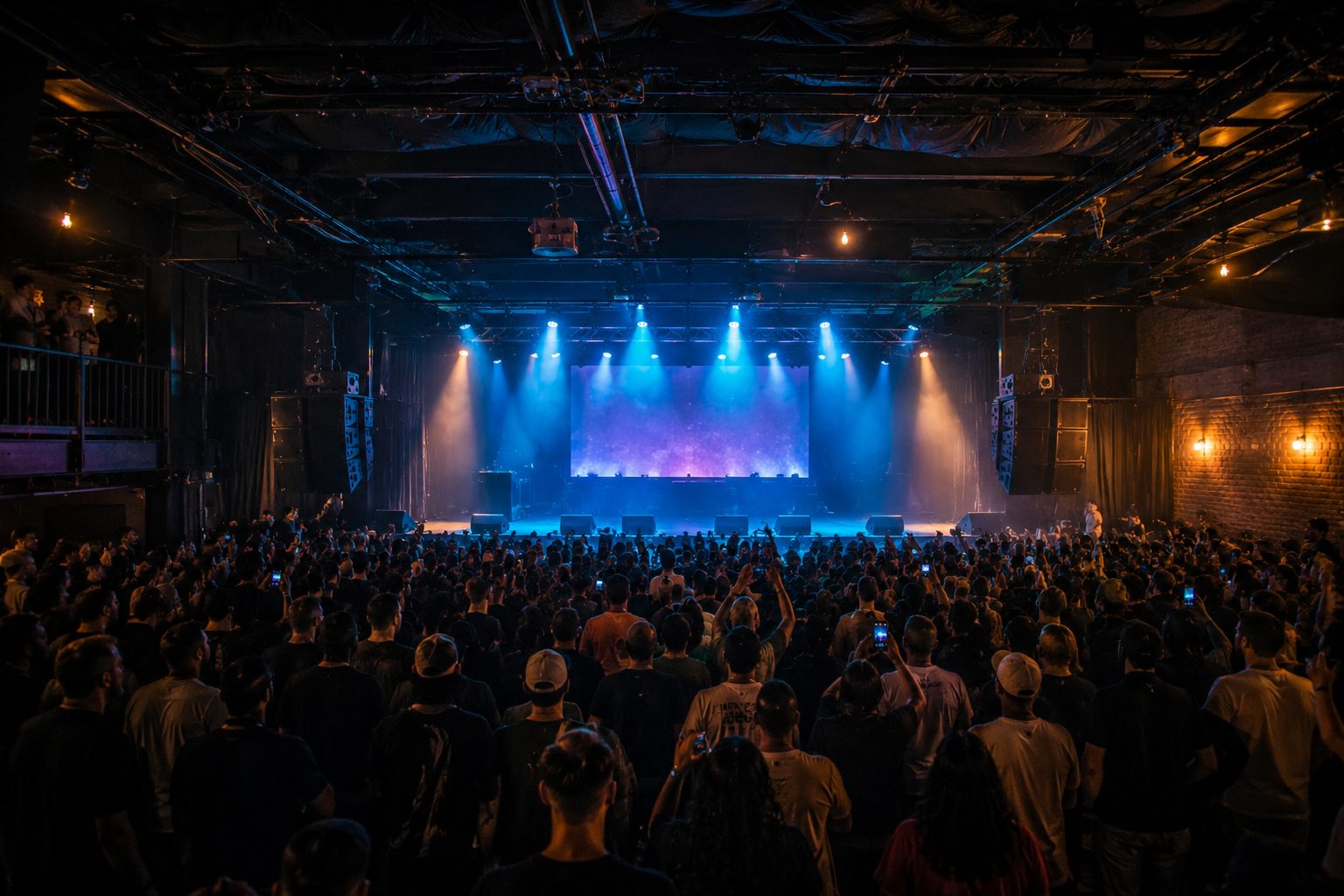
COVERAGE TYPES FOR HIP HOP & RAP CONCERTS
A complete hip hop concert program is built from several coordinated coverage lines. Each card below links to its own dedicated page where the line is explained in full.
COMMERCIAL GENERAL LIABILITY
The foundation of every concert program. Responds to third-party bodily injury and property damage arising from the event — crowd injuries, slips and falls, and damage to the venue. Almost always required by the venue contract.
OPEN PAGE →ASSAULT & BATTERY LIABILITY
One of the most critical — and most frequently excluded — coverages for hip hop events. Standard GL typically excludes fights, security-related injuries, and altercations unless A&B is specifically added back. Do not assume your GL covers it.
OPEN PAGE →LIQUOR LIABILITY INSURANCE
When alcohol is sold, served, or provided, dram shop laws can make the promoter or venue financially responsible for alcohol-related injuries. Commercial and host liquor liability are distinct coverages — KIG places both.
OPEN PAGE →EVENT CANCELLATION & NON-APPEARANCE
Responds to financial losses when an event is cancelled, postponed, or curtailed for covered causes — including artist non-appearance, severe weather, and venue failure. Core protection once deposits and advance costs are committed.
OPEN PAGE →PRODUCTION EQUIPMENT & INLAND MARINE
Covers sound systems, lighting rigs, DJ equipment, mixing consoles, and LED walls — owned, rented, or venue-supplied — against damage, theft, and loss at the venue and in transit. Essential whenever you're responsible for the gear.
OPEN PAGE →NEGLIGENT SECURITY LIABILITY
The lawsuit that often follows a crowd incident alleges the promoter or venue failed to provide adequate security. This exposure sits right alongside Assault & Battery and is a defining risk for high-energy shows.
OPEN PAGE →BUILD YOUR EVENT COVERAGE PROFILE
Answer a few quick questions about your show and this planner will outline the coverage lines most events like yours typically carry, with a link straight to each one. It is an educational starting point — not a quote, and not advice. Your actual program depends on your contracts, venue, and state law.
COVERAGE LINES TO REVIEW
- Make your selections to see which coverage lines events like yours typically include — each one links to its page.
TYPES OF HIP HOP & RAP EVENTS WE INSURE
KIG covers the full spectrum of urban music events — from intimate club performances to large-scale festival productions. Each event type has a dedicated page; tap through to the one that matches your show.
SMALL VENUE & CLUB SHOWS
One-night performances at clubs and theaters. Single-event policies can often bind quickly for smaller shows.
MULTI-DAY FESTIVALS
Multi-stage outdoor productions with several artists. Contracts, security agreements, and capacity plans are all reviewed.
ARENA & STADIUM SHOWS
Large-scale, nationally touring productions. KIG holds the market relationships for major-artist events.
PRIVATE & LABEL EVENTS
Label parties, album releases, and private engagements at clubs, estates, and rented spaces.
LIVESTREAM & HYBRID
Events with a streaming or pay-per-view component alongside in-person attendance. Media and equipment exposure apply.
BATTLE RAP & UNDERGROUND
Rap battles, open-mic showcases, and warehouse shows — high-energy crowds where GL still matters at smaller scale.
ANNUAL PROMOTER PROGRAMS
High-frequency promoters can cover all events under one policy with aggregate limits — often more efficient per show.
BLOCK PARTIES & COMMUNITY EVENTS
City-permitted outdoor events and neighborhood concerts. Permits frequently require evidence of general liability.
RAP TOURS
Multi-city routing with coverage that travels — transport, gear, and liability across every date on the run.
WHAT UNDERWRITERS NEED TO QUOTE YOUR HIP HOP EVENT
Underwriters evaluate hip hop and rap events against a specific set of criteria. Providing complete information upfront speeds the quoting process and improves the quality of coverage available.
| Underwriting Information | Required? | Why It Matters |
|---|---|---|
| Event date(s) and duration | REQUIRED | Policy must be bound before the event; single vs. multi-day affects the structure |
| Venue name, address & type (indoor/outdoor) | REQUIRED | Venue history, capacity, and location affect carrier appetite and pricing |
| Expected attendance / ticket capacity | REQUIRED | Crowd size is a primary driver of general liability premium |
| Performing artist name(s) and profile | REQUIRED | Well-known artists draw larger crowds and may require carrier-specific review |
| Security plan and staffing ratio | REQUIRED | Documented security protocols significantly affect A&B availability and premium |
| Alcohol service details (type, vendor, method) | REQUIRED | Determines whether host or commercial liquor liability applies, and at what limits |
| 5-year loss run (claims history) | OFTEN REQUIRED | Typical for larger events, complex venues, or promoters with significant history |
| Venue rental agreement / contract | OFTEN REQUIRED | Requirements for additional insured endorsements and limits must be matched by the policy |
| Pyrotechnics, special effects, or stunts | REQUIRED IF PRESENT | Requires separate disclosure and endorsement; non-disclosure can void coverage |
| Whether event will be filmed or livestreamed | DISCLOSE | Media/broadcast components call for a separate media liability evaluation alongside the GL |
WEATHER & CROWD SAFETY STANDARDS WORTH KNOWING
For outdoor hip hop festivals and block parties, weather and crowd standards directly affect both your safety plan and how underwriters view the event. The items below cite recognized public-safety authorities so you can verify each one yourself.
THE 30-30 LIGHTNING RULE
The National Weather Service advises that if you can count 30 seconds or fewer between a lightning flash and the thunder, the storm is close enough to be dangerous and people should already be indoors. Outdoor activity should not resume until 30 minutes after the last thunder is heard.
Source: U.S. National Weather Service lightning safety guidance.WRITTEN SEVERE-WEATHER PLAN
OSHA and the National Weather Service encourage outdoor event organizers to adopt a written emergency plan with defined monitoring, communication, and evacuation procedures before gates open. Many carriers and municipalities expect to see one for large outdoor gatherings.
Source: OSHA / NWS guidance on preparedness for outdoor events.CROWD MANAGER STAFFING
The NFPA Life Safety Code (NFPA 101) addresses crowd management for assembly occupancies, with a commonly referenced benchmark of trained crowd managers scaled to occupant load. Your venue's occupancy classification and local fire code govern the exact requirement.
Source: NFPA 101 Life Safety Code (verify the edition adopted in your jurisdiction).VERIFY LOCALLY BEFORE YOU PLAN
Codes and thresholds are adopted and amended at the state and local level, and editions change over time. Treat the items here as starting points and confirm the current requirements with your venue, your local fire marshal, and the authority having jurisdiction.
General guidance — always confirm with the authority having jurisdiction.CONCERT INSURANCE CLAIM SCENARIOS
Understanding the kinds of claims that occur at hip hop and rap events — and which coverage line responds — is the clearest argument for a complete program. These illustrate how coverage functions; they are not predictions or guarantees of any specific outcome.
ALTERCATION IN THE CROWD — NEGLIGENT SECURITY SUIT
A fight breaks out in the general-admission area during a high-energy set, and several attendees are injured. An injured party sues the promoter and venue for negligent security, alleging inadequate staffing and a failure to intervene. Without an Assault & Battery endorsement, a claim like this is typically excluded. With A&B in place, defense costs and any covered settlement fall within the program.
HEADLINER NO-SHOW — SOLD-OUT VENUE, ADVANCE COSTS COMMITTED
A featured artist cancels shortly before a sold-out show due to a documented emergency. The promoter has already committed artist deposits, venue deposits, and production setup costs. Event cancellation insurance with an artist non-appearance endorsement is the line designed to respond to irrecoverable advance costs in covered situations. Without it, the promoter generally absorbs the loss.
INTOXICATED ATTENDEE — POST-EVENT AUTO ACCIDENT
An intoxicated attendee leaves a festival and causes an auto accident, injuring others. The injured parties sue the promoter under dram shop laws, alleging over-service. A commercial liquor liability policy is the line built to respond to this kind of claim. A promoter without it faces this exposure essentially uninsured.
PRODUCTION GEAR STOLEN DURING TEARDOWN
High-value DJ and production equipment is stolen from the loading dock during overnight teardown. The gear belongs to the production company but was under the promoter's care and control. Inland Marine / Production Equipment coverage is the line designed to respond. Without it, the promoter can be left personally responsible for replacement.
HIP HOP CONCERT INSURANCE QUESTIONS & ANSWERS
Answers to the questions concert promoters, hip hop event producers, venue operators, and artist management teams ask most when shopping for event insurance.
Many standard carriers decline hip hop and rap events based on genre categorization rather than the actual risk of the specific show. That's a market limitation, not a reflection of whether a well-run hip hop event is insurable. KIG works with specialty entertainment markets that have long experience writing hip hop, rap, and urban music events and that underwrite each one on its real merits — the venue, the security plan, the artist profile, the crowd capacity, and the promoter's track record. With the right markets, genre alone is not a basis for declination. If you've already been turned down, our declined and hard-to-place page covers exactly how we work those placements.
For many festivals and rap concerts, we work with carriers that can turn a quote around in as little as a day. That said, if you have a well-known artist performing, give yourself more time to procure the proper insurance. The single best thing you can do is contact us early and have your event details ready. The sooner we go to market, the better your options. Start with our Special Event Insurance Quote Form or call/text (412) 212-2800.
Even if the venue carries its own general liability, you as the promoter almost always need your own separate event policy. The venue's policy protects the venue — not your event operations, production decisions, security staffing, or contractual obligations to the artist or sponsors. Most venue rental contracts also require the promoter to carry GL and to name the venue as an additional insured, meaning the venue is added to your policy, not the other way around. See our concert promoter insurance page for the full breakdown.
Assault & Battery coverage responds to injuries arising from fights, altercations, and crowd violence — including incidents involving security staff. Standard general liability policies commonly exclude assault and battery, which means that without a specific endorsement adding it back, an entire category of the most likely high-energy-event claims would be uninsured. For hip hop and rap shows, this is frequently the single most important endorsement on the program. Full detail lives on our Assault & Battery insurance page.
This needs careful legal and insurance review. If a licensed third-party caterer or bartending service handles the alcohol under their own license, the promoter typically needs Host Liquor Liability at minimum and coordinates with the vendor's policy. If no license is in place and alcohol is being served, you have a serious legal problem before you have an insurance problem — unlicensed service can void coverage entirely. Contact KIG early. Our event liquor liability page and the broader festival and concert liquor liability guide cover this in depth.
General liability does not respond to financial losses from weather cancellation or a governmental shutdown. Those scenarios are addressed — when addressed at all — under Event Cancellation insurance, a separate policy that can respond to irrecoverable advance expenses and lost ticket revenue when an event is cancelled for covered perils. Perils, waiting periods, and documentation requirements vary by policy. For outdoor shows, note the NWS 30-30 lightning guidance referenced above. Detail lives on our cancellation insurance page.
Yes — and for high-frequency promoters, an annual event liability program is often more efficient than insuring each show one at a time. Annual programs typically cover all events within a defined category under a single policy with aggregate limits, and you report events as they're booked. They also simplify certificate issuance — one policy, one carrier, consistent documentation. Tell us your event volume on our annual promoter program page and we'll evaluate the fit.
A promoter's concert insurance generally covers the promoter and the event — not the artist personally. Artists are typically either added as additional insureds on the promoter's GL policy (as specified in the booking rider) or carry their own touring artist liability coverage. If an artist's rider requires being named as an additional insured on your policy, KIG can add that endorsement at binding. Review the artist contract carefully — it spells out the insurance requirements for both parties. For multi-date runs, see our rap tour insurance page.
Once your policy is bound, KIG issues the Certificate of Insurance (COI) and any additional insured endorsements your venue, municipality, or sponsors require — and we can issue multiple COIs to multiple certificate holders for complex event contracts. Many of these turn around quickly. Our certificate of insurance page walks through the timing and what each certificate holder needs to see.
TELL US ABOUT YOUR SHOW IN 60 SECONDS
Drop your details and we'll reach out. For a full submission, the Special Event Insurance Quote Form gives us everything we need to go to market.
WHY HIP HOP PROMOTERS CHOOSE KELLY INSURANCE GROUP
Plenty of brokers will say they cover hip hop events and then struggle to find a market. KIG is a family agency with deep roots and a specialty book, and we know how to get your event insured — even when other brokers say it can't be done. Meet the people behind the work on our team page, or read the agency history.
DEEP EXPERIENCE IN ENTERTAINMENT INSURANCE
KIG has written special event and music festival placements for years, and our agency has insured concerts involving some of the biggest names in the hip hop community — alongside countless smaller, local, and regional shows.
SPECIALTY MARKETS THAT WRITE HIP HOP
We work with entertainment carriers that specialize in this genre and don't decline on category alone. When standard markets say no, our specialty markets evaluate the actual risk — your venue, your security plan, your artist, your track record.
ASSAULT & BATTERY EXPERTISE
A&B is the most critical and most difficult component for hip hop events — and one of our specialties. We know which carriers write it, what security protocols they expect, and how to structure the endorsement so claims are actually covered.
FAST QUOTING WHEN IT'S POSSIBLE
For straightforward shows, we work with markets that can often quote in as little as a day. For more complex productions, we'll tell you exactly how long it will take and why. We move at the pace the entertainment industry requires.
CERTIFICATE OF INSURANCE SUPPORT
Venues, municipalities, and sponsors need Certificates of Insurance, often on short timelines. Once your policy is bound, KIG issues COIs and additional insured endorsements — and clients can generate certificates through our portal as well.
FULL-SPECTRUM ENTERTAINMENT COVERAGE
Beyond event GL, KIG covers the broader entertainment ecosystem — production companies, AV and sound, staging, mobile stages, LED walls, liquor liability, and film production. One broker for your whole operation.
RELATED ENTERTAINMENT & EVENT INSURANCE FROM KIG
Hip hop concert insurance is part of KIG's broader entertainment and event platform. Explore related coverage for the rest of your production, promotion, and entertainment business.
The availability of coverage and eligibility for coverage can depend on numerous factors. We cannot guarantee that all customers, individuals, and businesses looking for coverage will be successful in these efforts when contacting our team. All policy coverages and terms need to be fully reviewed by the respective consumer to ensure the coverage asked for is what is specifically being quoted or provided by any insurance policy. Insurance Policies, Coverage Changes, and their terms and conditions are not bound or altered until written confirmation is provided by one of our licensed team members or underwriters. This page does not offer legal advice, legal opinions, or policy interpretations. Rather, this page is meant as a resource to help provide customers and insurance consumers with additional considerations that may help in their insurance buying or pursuit of insurance information. Kelly Insurance Group does not employ or direct attorneys.