
CONCERT CANCELLATION &
ARTIST NON-APPEARANCE INSURANCE
The liability lines protect you when something goes wrong at the show. This one protects you when the show doesn't happen at all. Deposits, production spend, marketing, venue fees — the money is committed long before the doors open. When a covered cause cancels the date or the headliner can't appear, cancellation and non-appearance coverage protects what you've already put on the line.
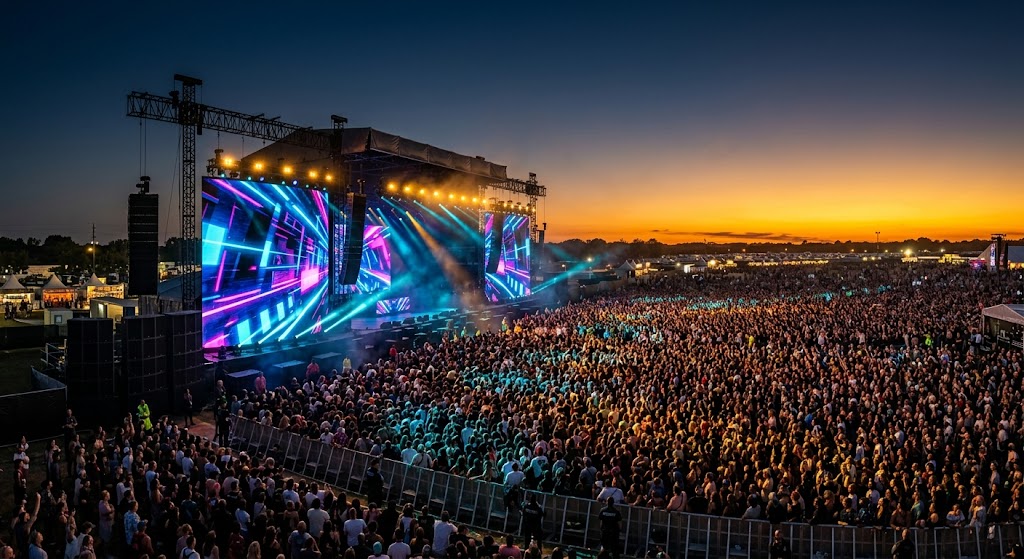
WHEN THE SHOW DOESN'T HAPPEN
Cancellation and non-appearance is the financial-protection line of an event program. It doesn't answer injury or property claims — it protects the spend you've committed when a covered cause stops the show.
Most of an event program is about liability — what happens if someone is hurt or something is damaged. Cancellation and non-appearance is different. It exists to protect the money: the non-recoverable expenses and lost revenue that are on the line when a show is cancelled, postponed, abandoned, or relocated because of a covered cause.
For a headliner-driven hip hop or rap event, the non-appearance piece is often the heart of it. The draw is the artist. If the headliner can't appear because of a covered reason — illness, injury, a travel disruption — and the show can't go ahead as planned, non-appearance coverage responds to the financial fallout. Cancellation covers the broader picture: weather where that peril is included, a venue becoming unavailable, certain civil-authority actions.
The key is that every policy defines its covered causes and its exclusions specifically. Some causes are commonly covered, some commonly excluded, and some depend entirely on the wording. Flip through the perils below to see how the big ones generally land — then we'll structure the coverage around the causes that matter most for your event.
WHAT IT PROTECTS: committed spend and lost revenue — not injury or property, which other lines handle.
THE HEADLINER FACTOR: for artist-driven shows, non-appearance is often the single most important cause to cover.
TIMING MATTERS: it covers unforeseen future causes, so it's arranged early — before any known issue and as the spend builds.
WHICH CANCELLATION CAUSES TYPICALLY RESPOND?
Tap any card to flip it and see how that cause generally lands on an event cancellation policy. These are common patterns for illustration only — every policy defines its own covered causes and exclusions, and the wording always controls.
HOW MUCH TO INSURE — REVENUE OR EXPENSES
The sum insured isn't a guess. Event cancellation cover is typically written on one of two clearly defined bases, and the figure has to be justified — usually with your event budget.
GROSS REVENUE
All monies paid or payable to you from every source arising out of the event — ticket income, and any other revenue the show generates. You're protecting what the event was set to earn.
EXPENSES
The total of all costs and charges you incur to plan, prepare, and stage the event — deposits, venue, production, marketing. You're protecting what you've already laid out.
Whichever basis you choose, underwriters generally ask you to justify the amount and to show how it was calculated — which is why having the event budget ready makes the process faster and the coverage more accurate.
WHEN WEATHER IS THE THREAT
For an outdoor hip hop festival, weather is the exposure that keeps promoters up at night. It can be addressed as a named peril within cancellation, or through dedicated weather cover built around measurable thresholds — which is worth understanding because it's how a weather claim actually pays.
Unlike most cancellation causes, weather can be insured against measured conditions rather than a yes-or-no event. Cover can be structured around rain — both total accumulation and the number of "rain-free hours" during the show — and extended to other perils like snow, wind speed, extreme high or low temperature, hurricane, tornado, lightning, and fog.
That structure has real consequences for how you buy it. Weather cover is commonly written per insured date with a defined limit per day and specific hours of coverage. It's also typically arranged as prepaid, fully-earned coverage that's put in place ahead of inception — so, like the rest of cancellation, it's something to lock in early, not at the last minute.
HYPER-LOCAL DATA
Third-party climate data measured at the exact event location for the insured date.
NEAREST WEATHER STATION
The closest official station — best when the venue sits near one, since conditions vary by the mile.
ON-SITE OBSERVER
An approved independent observer recording conditions at the site during the event.
HOW NON-APPEARANCE IS UNDERWRITTEN
For an artist-driven show, non-appearance is the coverage that protects you if the draw can't perform. Because it's built around a specific person, underwriters look closely at who that person is and what could keep them off the stage.
THE INSURED PERSON
Who is being insured, their role in the show, and whether their absence would genuinely stop the event from going ahead as planned.
PRIOR HISTORY
Whether the performer has any history of non-appearance — a key factor in how the exposure is assessed.
UNDERSTUDIES & SUBSTITUTES
Whether the show has a fallback if the headliner can't go on, which affects how the risk is structured.
HEALTH & MEDICAL
For higher-value bookings, a declared statement of health — and sometimes a medical examination of the artist — may be required.
THE SPEND A SHOW COMMITS UP FRONT
Cancellation protects non-recoverable costs — the money already spent or contractually owed when the show falls through. For a hip hop or rap event, that adds up fast.
ARTIST DEPOSITS
Booking deposits and guarantees committed to the headliner and supporting acts well ahead of the date.
VENUE & PRODUCTION
Venue fees, stage, sound, lighting, and crew — much of it non-recoverable once contracted.
MARKETING & PROMO
Advertising, promotion, and ticketing spend that's gone whether or not the show happens.
LOST REVENUE
The ticket income the event was projected to earn, depending on how the policy is structured.
CANCELLATION & NON-APPEARANCE QUESTIONS & ANSWERS
What promoters ask most about protecting the money behind a hip hop or rap show.
Event cancellation insurance helps protect the money at stake when a show cannot go ahead as planned due to a covered cause — for example, the event is cancelled, postponed, abandoned, or relocated. It is designed to respond to the financial loss, such as non-recoverable expenses and lost revenue, rather than to injury or property claims, which other lines like general liability handle.
Non-appearance coverage responds when a key performer fails to appear and the show cannot proceed as planned because of a covered reason, such as illness, injury, or a travel disruption. For a headliner-driven hip hop or rap event, where the draw is the artist, non-appearance is often the most important part of the cancellation conversation — and a core piece of tour programs.
Coverage depends on the policy, but commonly considered causes include severe weather where that peril is included, a venue becoming unavailable, and certain civil-authority actions. Each policy defines its covered causes and its exclusions specifically, so what is and is not covered is always determined by the policy wording for that event.
Generally no. Poor ticket sales or simply deciding the event is not financially worthwhile is treated as a business risk rather than a covered cause. Cancellation insurance is built to respond to defined external causes outside the organizer's control, not to a lack of demand.
Adverse weather can often be addressed, sometimes as an included peril and sometimes as a specific add-on, depending on the policy and the event. For outdoor festivals it is one of the most important causes to discuss, because weather is both a real operational risk and an area where policy wording matters a great deal.
Communicable disease and pandemic-related causes are commonly excluded from event cancellation policies. Whether any related coverage is available, and on what terms, varies and has changed over time, so this is an area to confirm specifically rather than assume. The policy wording controls.
Cancellation means the event does not happen at all, while postponement means it is moved to a later date. Many policies address both, but they can be treated differently — postponement may involve additional costs to rerun the event rather than a total loss. How each is handled depends on the policy terms.
No. Cancellation coverage responds to the financial loss from a show not going ahead, not to physical damage or theft of gear. Damage to or loss of sound, lighting, and staging is covered under equipment or inland marine coverage, which is a separate line that is often carried alongside cancellation.
Generally as early as possible, once non-recoverable costs start to build up and well before the event date. Coverage is intended for unforeseen future causes, so arranging it ahead of any known issue is important. The closer to the event and the more committed the spend, the more there is to protect.
Event cancellation cover is typically written on one of two defined bases: gross revenue, meaning all monies paid or payable to you from every source arising out of the event, or expenses, meaning the total of all costs you incur to plan, prepare, and stage it. Underwriters generally ask you to justify the figure and show how it was calculated, which is why having the event budget ready is helpful.
Weather cover can be built around measurable conditions — such as rain accumulation and the number of rain-free hours, plus perils like wind, snow, temperature, hurricane, and tornado — usually per insured date with a defined daily limit. A claim is verified against an agreed source: hyper-local climate data at the venue, the nearest official weather station, or an approved independent on-site observer. The policy defines the trigger and the verification method.
It can. Because non-appearance cover is built around a specific performer, underwriters look at who is insured, any prior non-appearance history, and whether understudies or substitutes exist. For higher-value bookings, a declared statement of the artist's health and sometimes a medical examination may be required as part of arranging the coverage.
KIG helps structure cancellation and non-appearance coverage around your event's real exposures — the headliner, the weather, the venue, and the committed spend — and coordinates it with the rest of your event program. Tell us about your show on the Special Event Insurance Quote Form, or call or text (412) 212-2800 to talk through the covered causes that matter for your event.
MORE HIP HOP & RAP COVERAGE PAGES
Return to the main coverage hub, or jump to any page below.
RELATED KIG COVERAGE & RESOURCES
The availability of coverage and eligibility for coverage can depend on numerous factors. We cannot guarantee that all customers, individuals, and businesses looking for coverage will be successful in these efforts when contacting our team. All policy coverages and terms need to be fully reviewed by the respective consumer to ensure the coverage asked for is what is specifically being quoted or provided by any insurance policy. Insurance Policies, Coverage Changes, and their terms and conditions are not bound or altered until written confirmation is provided by one of our licensed team members or underwriters. This page does not offer legal advice, legal opinions, or policy interpretations. Rather, this page is meant as a resource to help provide customers and insurance consumers with additional considerations that may help in their insurance buying or pursuit of insurance information. Kelly Insurance Group does not employ or direct attorneys.