Page 14 of 14 · Operator Profile

Indoor Arena Drone Show Insurance

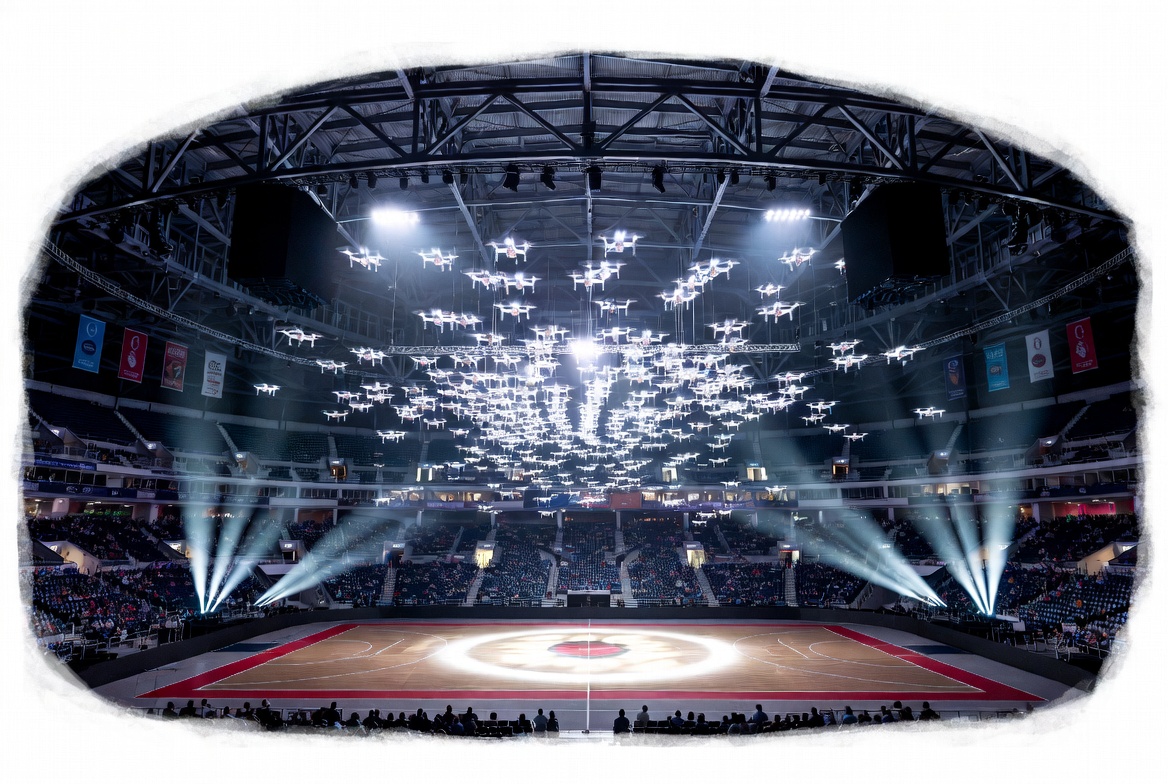
An NBA halftime, an NHL between-periods sequence, a touring concert reveal under a roof, an awards-show cold open — these are indoor drone shows, and they live inside a fundamentally different regulatory and risk framework than outdoor work. The FAA does not have jurisdiction over indoor flight, GPS does not work, and the venue's authority having jurisdiction (AHJ) — the building, the fire marshal, OSHA, the rigging supervisor — fills the regulatory gap. The coverage program has to follow.

No FAA
Indoor Jurisdiction
Part 107 applies to NAS — not enclosed structures
No GPS
Positioning Reality
UWB / VIO / motion capture replace GNSS
AHJ
Authority Having Jurisdiction
Venue, fire marshal, building official
Aviation+
Coverage Form
Aviation form + venue-aware endorsements
Section 01 · The Jurisdictional Pivot

Why Indoor Arena Drone Shows Are A Different Risk Category

Most drone insurance content treats "indoor arena" as a venue type — a checkbox on an outdoor program. It is not. Indoor arena drone shows live in a separate regulatory framework, use different positioning hardware, face different audience-proximity exposure, and depend on venue-side rigging and stagecraft systems that an outdoor show never touches. The coverage program has to map to all of that — not a re-skin of an outdoor placement.

The FAA Doesn't Reach Indoor Spaces

The FAA's authority extends to the National Airspace System (NAS). Spaces inside roofed structures are not part of the NAS. Part 107 — including the § 107.35 multi-aircraft prohibition — does not apply indoors. This is a structural fact, not a loophole. Operators do not need a § 107.35 waiver to run a multi-drone show inside an arena; they do still need the venue's AHJ approval and a defensible safety case.

Source: 14 CFR Part 107 framework; FAA Part 107 jurisdiction extends to the NAS, which excludes interior spaces of covered structures.

GPS / GNSS Doesn't Reach Indoor Spaces Either

Outdoor drone shows rely on RTK-corrected GNSS for centimeter-grade positioning. Indoor arenas block GNSS signal. The replacement positioning technologies — ultra-wideband (UWB), visual-inertial odometry (VIO), and motion capture systems — are real, well-documented, and require their own infrastructure: anchor placement, calibration, and a different failure-mode profile than RTK.

Source: Peer-reviewed research on UWB indoor UAV positioning (Sensors, MDPI; IEEE conference publications); industry vendor documentation.

The AHJ Replaces The FAA

Indoors, the regulatory authority is the venue's Authority Having Jurisdiction — building official, fire marshal, OSHA-compliant rigging supervisor, venue insurance compliance team. They set the rules: rigging anchor ratings, payload limits over audiences, fire-suppression interactions, evacuation pathways, and how the show integrates with existing venue safety systems.

⚠ Important Distinction — FAA Reporting Still Applies When Triggered

The FAA does not have operational jurisdiction over indoor flight. That does not eliminate every regulatory touch point. If an indoor incident produces a serious injury or significant property damage, operators should consult counsel about whether reporting obligations under any other statute apply — and insurance carrier notification is contractual, not jurisdictional. Practically: the absence of FAA Part 107 oversight does not make indoor shows "unregulated." It makes them differently regulated.

Section 02 · The Regulatory Split

What Each Side Of The Indoor / Outdoor Line Actually Cares About

The two columns below show the regulatory landscape on each side of the threshold. An operator who tours both indoor and outdoor shows lives across both columns, and a coverage program has to address both sides simultaneously — not pretend they're the same.

Outdoor · FAA Framework
National Airspace System
  • 14 CFR § 107.35 waiver required for multi-drone
  • 14 CFR § 107.29 night / anti-collision lighting
  • 14 CFR § 107.39 operation over people categories
  • 14 CFR § 107.41 controlled airspace authorization
  • 14 CFR § 107.9 10-day FAA reporting
  • 14 CFR Part 89 Remote ID broadcast
  • 14 CFR Part 48 aircraft registration
  • RTK-corrected GNSS positioning
  • Specialty aviation carriers / Lloyd's syndicates
Indoor · AHJ Framework
Venue Authority Having Jurisdiction
  • Venue safety / production manager approval
  • Local building official + fire marshal sign-off
  • OSHA-compliant rigging — anchor ratings, load paths
  • NFPA 1126 (proximate audience pyrotechnics, if hybrid)
  • Building / fire code occupancy and egress
  • UWB / VIO / motion-capture indoor positioning
  • Show control system integration (lighting, sound, video)
  • Audience-proximity zone definition
  • Aviation-form policy with venue-aware endorsements

Two columns, one operator, one show. The submission package for an indoor arena show needs to demonstrate competence on both sides — even though the FAA-side regulations don't operationally apply when the doors close.

Section 03 · Positioning Technology

How Drones Know Where They Are When GPS Doesn't Work

The single most consequential technical fact for indoor arena shows: GNSS satellite signals do not penetrate steel-roofed structures reliably. Every indoor show runs on a different positioning stack. Underwriters look at which stack is in use, the redundancy profile, and the failure modes. The three technologies below are the established options, each with documented academic literature and real-world deployment.

GPS / RTK GNSS
Global Navigation Satellite System
Use CaseOutdoor
Accuracycm-grade w/ RTK
InfrastructureBase station + sky view
Failure ModeSignal loss / multipath
Not Viable Indoors
UWB
Ultra-Wideband Anchor Positioning
Use CaseIndoor
Accuracycm to dm-grade
Infrastructure3+ rigged anchors
Failure ModeNLOS / antenna delay
Indoor Standard
VIO
Visual-Inertial Odometry
Use CaseIndoor / GPS-denied
AccuracyDrift accumulates
InfrastructureOnboard cameras + IMU
Failure ModeLighting changes / featureless surfaces
Indoor Capable

Most indoor show stacks use UWB as the primary anchor and either VIO, optical motion capture, or a sensor-fusion hybrid as redundancy. Underwriters reading an indoor show submission look for the redundancy specifically — single-source positioning is a higher-risk profile than fused multi-source positioning. The submission package should describe positioning technology by name, anchor placement, calibration procedure, and what happens on signal loss.

Sources: Peer-reviewed UWB indoor positioning research (Bao et al., Sensors 2024; Lou et al., Sensors 2022); IEEE conference publications on UWB UAV navigation in GNSS-denied environments; published vendor documentation on UWB and VIO systems.

Section 04 · Audience Proximity

The Four Zones Inside An Arena That Define Risk

Indoor arenas force a more compressed geometry than outdoor venues. Drones, audiences, and rigging share the same enclosed volume — and the show envelope, safety stand-off, audience seating, and cut-off line are not abstractions. They are the exact zones that the safety case, the venue contract, and the insurance program all have to map to.

Show Envelope
The volume drones may occupy during programmed flight.
Safety Stand-Off
Buffer between show envelope and the audience cut-off line.
Cut-Off Line
Hard limit beyond which no drone may travel under any state.
Seating Bowl
Audience zone — protected from any drone presence absolutely.

Quoting An Indoor Arena Drone Show Operation

Aviation-form policy with venue-aware endorsements, AHJ-aligned safety case, AI/PNC architecture for major-league venues. Submission packages reviewed in business hours.

Section 05 · Rigging & Load Paths

Where Drone Show Hardware Meets Venue Rigging Infrastructure

Indoor shows don't just fly drones — they rig hardware in the venue's overhead grid: UWB anchors, charging stations, comms repeaters, secondary cameras, sometimes lighting payload integration with the venue's existing show truss. The moment a third-party load is hung from venue-owned rigging, a different layer of regulatory and contractual exposure activates: rigging supervisor sign-off, anchor-point ratings, OSHA-compliant load paths, and venue-required Certificate of Insurance language.

Rated Anchor Points
Venue-supplied hardpoints with documented load ratings. Operators do not exceed rated capacity and do not modify anchor structures.
Rigging Supervisor
OSHA-aware rigging professional who signs off on third-party loads hung from venue grid. Required at most major-league venues.
COI With AI Endorsement
Venue and venue's parent (team, league) typically named as additional insureds with primary-and-noncontributory wording.
Section 06 · Venue Contract Risk Map

The Five Contract Clauses Major-League Arena Contracts Demand

Indoor arena contracts — particularly NBA, NHL, MLB, and NCAA Division I venues, plus theatrical touring contracts — carry standardized risk-transfer language. The table below maps the most common clauses to the policy line that has to respond and the broker action required to make sure the COI matches the contract before the show date.

Contract Clause What It Demands Policy Line That Responds Broker Action Required
Additional Insured · Primary And Non-Contributory Venue + venue parent named as additional insureds; their insurance does not contribute Aviation Liability w/ AI/PNC endorsement Confirm endorsement number, attach to COI before binding
Waiver Of Subrogation Operator's carrier waives recovery rights against venue Aviation Liability + Hull + Inland Marine Confirm waiver applies on each line, document on COI
Indemnification & Hold Harmless Operator indemnifies venue for claims arising from operator's work Aviation Liability + Commercial Umbrella Review contract assumed-liability scope vs. policy contractual liability coverage
Specific Limit Requirements $5M / $10M / $25M aviation liability + matching umbrella Aviation Primary + Excess Tower Build tower with aviation-following excess; confirm schedule of underlying
COI Format & Delivery ACORD form, specific named insured wording, delivery to venue compliance team Issued by carrier or broker on operator's behalf Issue COI early — venue compliance review can take 5–10 business days at major venues

The single most common indoor-show COI failure is language mismatch — the operator's policy carries the right limits but the endorsement language doesn't match the contract's exact wording. Major-league venue compliance teams reject the COI, the show date approaches, and the operator scrambles. The fix is the broker reviewing the venue's COI requirements against the policy's available endorsements before binding, not at the COI request stage.

Section 07 · Coverage Form Reality

Where Standard Aviation Policies Get Tested Indoors

Aviation liability policy forms are written around the FAA's framework. Definitions, exclusions, and conditions reference the language that governs outdoor flight in the National Airspace System. When the operation moves indoors — outside the FAA's jurisdiction — the policy still applies, but specific provisions can become contested. Below are the language pressure points operators and brokers should walk through before binding an indoor-heavy program.

1. Aircraft Definition

Aviation policies define the insured "aircraft" — and most define it broadly enough to cover indoor operation. Confirm the definition does not require operation in the NAS or under specific FAA authority. If it does, an indoor-specific endorsement or manuscript wording is needed.

2. Pilot Qualifications

Some aviation policies condition coverage on the pilot holding a current Part 107 certificate. Indoor flight does not legally require Part 107, but the policy may still require the pilot to hold one. Confirm the qualification clause does not lapse coverage when the FAA framework doesn't apply to the operation itself.

3. Geographic Territory

Aviation policies typically include geographic territory clauses. Indoor venues are within the listed territory but the policy's location language sometimes references "in flight in the airspace" — confirm the language doesn't accidentally exclude enclosed-structure operation.

4. Spectator Definition

Aviation policies often distinguish "passengers," "spectators," and "third parties." Arena audiences may fall into multiple categories at once depending on contract structure (ticket-holder, invited guest, talent, crew). Confirm the spectator-coverage scope matches the venue's audience profile.

5. Rigging / Premises Liability Overlap

Damage caused by rigged drone-show hardware (UWB anchor falling, charging station failing) may straddle aviation liability and premises/general liability. The fix is confirming both lines respond and that the venue's CGL is named appropriately, with no gap at the seam.

6. Hull Coverage In Storage At Venue

Drones stored at the arena between rehearsal and show typically fall under the in-storage definition of hull coverage — but venues are unfamiliar third-party premises. Confirm hull responds at the named arena address, not just at the operator's home base or hotel.

The pressure points above are policy-language considerations that require review of the actual policy form by the broker and underwriter. They are not assertions about how any specific carrier's form behaves. Operators should not rely on this list as policy interpretation — it is a list of items to discuss with their broker and carrier before binding coverage for indoor-heavy operations.

Section 08 · Indoor Arena FAQs

Questions Indoor Show Operators Ask Their Brokers

Do I need a Part 107 remote pilot certificate to fly an indoor arena drone show?
For the operation itself — strictly as a question of FAA jurisdiction — no. 14 CFR Part 107 applies to operations in the National Airspace System, and spaces inside roofed structures are not part of the NAS. That said, holding a Part 107 certificate is routinely demanded by venues, by insurance carriers as a policy condition, and by professional employers. The practical answer: every working indoor show pilot should hold a current Part 107 certificate even if the flight itself is technically outside FAA jurisdiction.

Sources: 14 CFR Part 107 framework; FAA "Become a Drone Pilot" guidance, faa.gov/uas/commercial_operators/become_a_drone_pilot; Pilot Institute primary-source FAQ on Part 107 indoor jurisdiction.
Do I need a § 107.35 multi-aircraft waiver for an indoor arena show?
For indoor flight, no — § 107.35 is part of Part 107, which applies only in the NAS, and indoor space is outside the NAS. Operators flying multi-drone shows entirely indoors do not need a § 107.35 waiver. However, the moment any portion of the operation occurs outdoors — load-in transport, outdoor rehearsal, exterior camera work — Part 107 applies again. Most touring operators carry a § 107.35 waiver regardless because their work crosses indoor and outdoor regularly.

Source: 14 CFR § 107.35 (eCFR); FAA Part 107 jurisdiction.
If the FAA doesn't have jurisdiction, who actually approves the show?
The venue's Authority Having Jurisdiction (AHJ). That generally means: the venue's safety/production manager, the local building official, the local fire marshal, an OSHA-aware rigging supervisor, and the venue's insurance compliance team — sometimes a code consultant or fire-protection engineer if pyrotechnics or open flame are involved. Approval typically requires a documented safety case, a rigging plan, a positioning system description, and a Certificate of Insurance matching the venue's contract requirements. The AHJ sign-off is the indoor equivalent of an FAA waiver.
How do drones know where they are without GPS indoors?
Three established technologies, used individually or fused: Ultra-Wideband (UWB) anchor positioning — typically three or more rigged UWB anchors at the corners of the show envelope provide centimeter-to-decimeter accuracy through radio-frequency time-of-flight measurement. Visual-Inertial Odometry (VIO) — onboard cameras and inertial measurement units (IMUs) estimate position by tracking visual features and integrating inertial data. Optical Motion Capture — Vicon-style tracking systems with infrared cameras tracking reflective markers on each drone. Mature shows commonly fuse two or more for redundancy.

Sources: Peer-reviewed UWB indoor UAV positioning research (Bao et al., Sensors 2024; Lou et al., Sensors 2022); IEEE conference publications on UWB UAV navigation in GNSS-denied environments.
Do my outdoor aviation policy and indoor work talk to each other?
It depends on the policy form. Many specialty aviation policies cover indoor operation under the standard form, but specific provisions — geographic territory wording, aircraft definition, pilot qualification clauses — may require review and potentially a manuscript endorsement to confirm indoor coverage is unambiguous. A specialty broker walks through the language with the operator and the underwriter before the first indoor show.
My venue contract demands $10M aviation liability. My current policy is $1M. What's the path?
A layered tower: $1M primary (or raised primary) + $9M excess in one or more layers, with the excess written as aviation-following and explicitly scheduling the aviation primary as underlying. A standard commercial umbrella that does not list the aviation policy as underlying generally will not respond. Build the tower before contract negotiation — venue compliance teams need to see the COI, not promises about the COI.

See the dedicated cluster page on Drone Light Show Aviation Liability Insurance.
Who's liable if a drone falls into the audience indoors?
Liability is allocated through contract and policy language, with judicial interpretation if it goes to litigation. The operator's aviation liability typically responds first as primary defense and indemnity. The venue's CGL may respond depending on contributing factors (rigging anchor failure, venue-supplied infrastructure issue). The audience member's claim path runs through whichever entity their counsel believes is most exposed. The structural answer: the operator carries primary aviation liability with adequate limits, AI/PNC endorsement to the venue, and waiver of subrogation — exactly the structure the venue contract demands. Doing this correctly upfront is the protection.
Can we add hybrid pyrotechnic effects to an indoor arena show?
Indoor pyrotechnics are governed primarily by NFPA 1126 — Standard for the Use of Pyrotechnics Before a Proximate Audience and NFPA 160 — Standard for Flame Effects Before an Audience. Both require a state-licensed pyrotechnician, an AHJ-approved permit, and a documented safety case. The insurance side requires either a manuscript hybrid endorsement on the aviation policy or a coordinated separate pyrotechnic placement. Indoor hybrid is possible, but it is the most paperwork-intensive show type in the category. Engage broker and pyrotechnician months before, not weeks.

See the dedicated cluster page on Hybrid Pyrotechnic Drone Show Insurance.
If our drone damages an arena's video board or rigging, what coverage responds?
The operator's aviation liability form responds to third-party property damage caused by the operation of the aircraft. The aviation form is the right line — not general liability, which excludes aircraft (UAS) damage. The waiver of subrogation provision in the policy and the venue's contractual language both shape how subrogation against any third parties (drone manufacturer, software vendor) plays out. The first move on a claim is immediate carrier notification — most aviation policies require it.
How long does an indoor arena show submission take to bind?
For a single-event indoor show with established underwriting and a straightforward AHJ profile, one to three weeks is realistic. For touring contracts with multiple major-league venues, $25M+ towers, AHJ-specific rigging requirements, or hybrid pyro components, four to eight weeks is more realistic — and the limiting factor is usually not the carrier but the venue compliance team's COI review timeline. Submit complete documentation early and work the COI process in parallel with the policy bind.
KIG Site Search

Search Kelly Insurance Group

Adjacent KIG Resources

Related Coverage At Kelly Insurance Group

Pages below come from the live KIG sitemap and are most relevant to indoor arena drone show work — drone hub, special event, AV/staging/rigging/theater, mobile stage, LED wall, GL, WC, COI, limits, umbrella, and hard-to-place inventory. Every link is a published page on kellyinsurancegroup.com.