Concert & Music Festival Insurance
A music festival or concert is one of the most layered commercial events an underwriter looks at. The same weekend can include a six-figure headliner, a thousand-foot perimeter, alcohol service across multiple zones, rented rigging suspended over a crowd, pyrotechnics, food vendors, ATM contractors, security, EMTs, and a parking lot that becomes a city for three days. Kelly Insurance Group has been writing concert and festival placements nationwide for decades and our entertainment specialty team handles everything from a 200-seat club show to a multi-day camping festival.
Concert & Festival Insurance In Numbers
Sourced figures that frame how live music events are actually underwritten. Every number on this page is tied to an identified primary source.
Why A Concert Is Not Just A Bigger Party
Live music events combine moving parts that almost never appear on the same general liability submission anywhere else — crowd dynamics, suspended structures over heads, alcohol service, performer contracts, and a weather window that can shut the whole thing down in twenty minutes.
Three threads run through every concert and festival submission. First, the crowd. A few hundred attendees at a club show, ten thousand at a regional fair, eighty thousand at a major outdoor festival. Crowd size drives required limits, required perimeter, required medical staffing, and the size of the additional insured list under the venue and municipality contracts.
Second, the weather. A festival is an outdoor production with no roof, run on a schedule that does not bend. The National Weather Service publishes the 30-30 lightning rule for outdoor events — when the time between flash and thunder is 30 seconds or less, the storm is within roughly six miles and activity must stop; resume only 30 minutes after the last thunder. OSHA recognizes lightning as an occupational hazard for outdoor workers, which is one reason event cancellation insurance is a separate product from general liability rather than a feature of it.
Third, the producer is not the only insured. Concert and festival GL placements routinely add the venue, the city or municipality, the property owner, the ticketing partner, the sponsor, and sometimes the headliner's loan-out — all as additional insureds. The certificate of insurance for a single festival can include twenty or more named parties before the show goes live.
Interactive Festival Site Risk Map — Click Any Zone
A live aerial view of a typical multi-zone outdoor festival. Click any area of the site — main stage, mix tent, vendor row, beverage zones, camping, parking, gates, medical, or perimeter — to see the exposure profile and the coverage lines that respond. Indoor concert venues drop several of these zones, but the underwriting logic is the same.
MAIN STAGE — THE PRODUCTION CORE
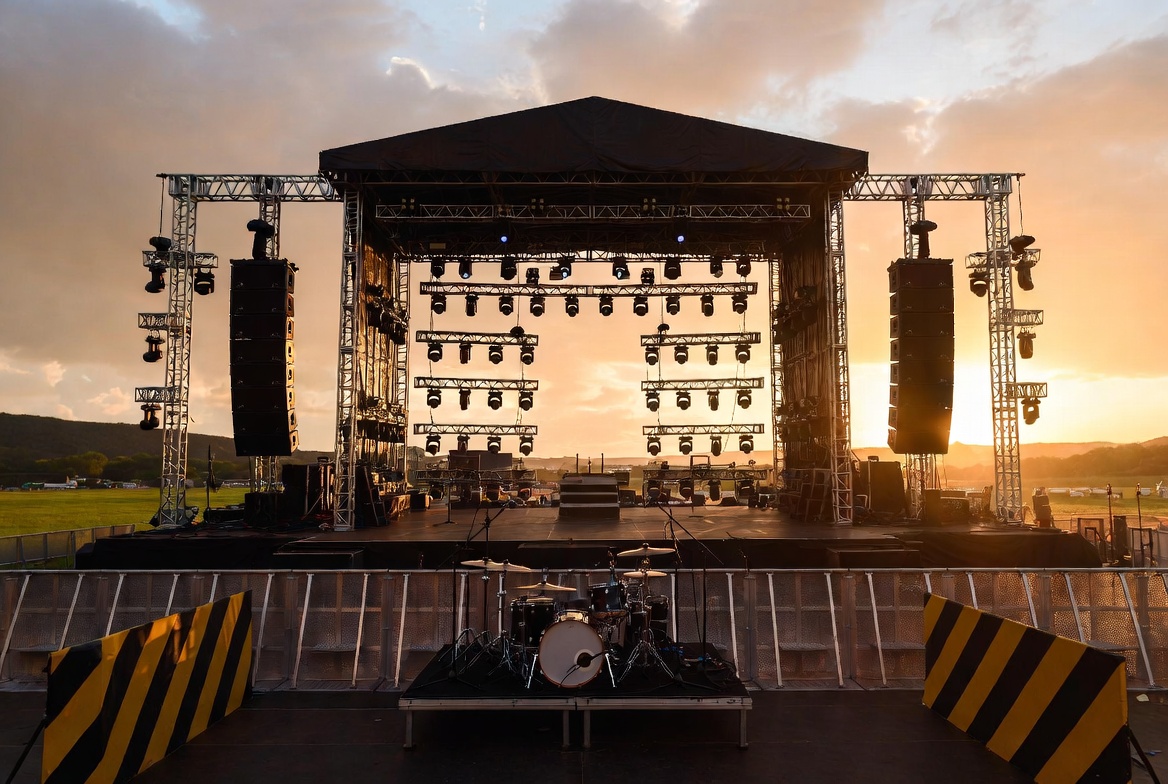
The main stage carries the show — and most of the production exposure. Suspended trusses, line array speakers, video walls, lighting rigs, moving lights, and pyro all live here. Rigging is loaded above the heads of crew during build and above audience heads during show. Most concert claims that make headlines start within a 30-foot radius of this footprint.
Build Your Event — Live Coverage Configurator
Pick the details of your event below. As you make selections, the coverage stack on the right rebuilds in real time — showing which lines are standard, which become required by the structure of your event, and which move into specialty territory. This is an educational tool, not a quote. Final placement is built around your contracts, venue requirements, and specific operations.
Concerts & Festivals We Insure
Live music spans wildly different audiences and operations. Kelly Insurance Group writes placements across the spectrum — from a hard rock club show to a multi-stage EDM festival to a symphony hall season.
Why Promoters Work With Kelly Insurance Group
Kelly Insurance Group has spent more than a century placing specialty commercial insurance for accounts that don't fit the standard market — and live music events are one of the cleanest examples. Our entertainment specialty team handles concerts, festivals, touring productions, and producers nationwide.
Most customers are also provided access to our custom client portal where certificates of insurance for venues, municipalities, sponsors, ticketing partners, and equipment rental houses can often be generated at any time. For special wording — additional insured by blanket endorsement, primary and non-contributory, waiver of subrogation — our service team handles the placement.
What Helps A Concert Submission Move Quickly
The more accurately the event is described up front, the smoother the underwriting review. Some accounts can be quoted in hours; complex festivals can take weeks. The following details tend to come up first.
Start The Conversation With Our Entertainment Team
Concerts and festivals are time-sensitive — call early. Some accounts quote within a day; complex festivals can take weeks once contracts, security agreements, loss runs, and venue requirements are in hand. Use the form to send the basic event profile, or reach the team directly through any of the buttons below.
Related Coverages & Resources
Pages from the Kelly Insurance Group site that connect to concerts, festivals, and live music productions.
Concert & Festival Insurance FAQs
Common questions concert promoters, festival producers, and venue operators ask Kelly Insurance Group during the underwriting conversation.
What is concert and music festival insurance?
It is a commercial insurance discussion built around live music events — covering general liability for attendees, performers, and venues, with additional lines for liquor, event cancellation, equipment, hired non-owned auto, and umbrella limits depending on the event size and structure.
What is the difference between event liability and event cancellation insurance?
Event liability insurance is a third-party coverage that responds when an attendee is injured or someone's property is damaged because of the event. Event cancellation insurance is an entirely separate product that reimburses pre-paid, non-refundable event expenses if a covered cause forces the event to be cancelled, postponed, or relocated. The two products do not overlap and most concerts and festivals carry both.
What is the NWS 30-30 lightning rule?
According to the National Weather Service, outdoor activities should be suspended when the time between a lightning flash and the sound of thunder is 30 seconds or less, which indicates the storm is within roughly 6 miles. Activities should not resume until 30 minutes after the last thunderclap or lightning flash. OSHA recognizes lightning as an occupational hazard for outdoor workers and expects employers to incorporate the rule into emergency action plans.
Do concert promoters need liquor liability insurance?
If alcohol is sold or served at the event by the promoter, the venue, or a third-party concession, liquor liability is typically part of the conversation. Some general liability policies include host liquor liability for events where alcohol is incidental and not sold, but a true sales-and-service operation requires full retail liquor liability either standalone or endorsed onto the GL.
Does the venue's insurance cover my concert?
Generally no. Venue policies typically protect the venue, not the promoter or producer of the event. Most venue contracts require the promoter to carry their own general liability policy and to name the venue, the property owner, and often the municipality as additional insureds.
What is a blanket additional insured endorsement?
A blanket additional insured endorsement automatically extends coverage to any party the named insured has agreed in writing to add — without listing each party individually on the policy. Concert and festival GL policies are often structured this way because the additional insured list for a single event can include the venue, the property owner, the municipality, ticketing partners, sponsors, and more.
What about pyrotechnics and special effects?
Pyrotechnics, flame effects, cold sparks, and confetti cannons are reviewed separately. Most carriers will not write pyro without a licensed pyrotechnician, a permit from the local fire marshal, and a documented site plan. Cold sparks and confetti are generally easier to place than open-flame or aerial pyro, but each is still its own conversation.
Do I need separate insurance for rigging and A/V?
Rigging, A/V, mobile stages, and LED walls each have their own specialty placements. Many concerts roll these into the production company's package, but rental houses, mobile stage operators, and rigging contractors typically carry their own policies and name the producer as additional insured on those policies.
What about camping festivals?
Overnight camping changes the risk profile materially. Twenty-four-hour exposure, on-site sleeping, vehicles in camping zones, food and alcohol overnight, and the security plan all factor in. Camping festivals are reviewed as their own category rather than as a standard one-day event with a campground attached.
How early should I start the insurance process?
Earlier is always better. Some concerts can be quoted within hours, but multi-day festivals with complex security plans, alcohol service across multiple zones, camping, and pyro can take weeks of underwriting work — including back-and-forth on contracts, loss runs, and venue requirements. Start the conversation as soon as the event is on the calendar.
Can Kelly Insurance Group customers generate certificates?
Yes. Most customers are provided access to our custom client portal where certificates of insurance for venues, municipalities, sponsors, ticketing partners, and equipment rental houses can often be generated at any time. Special wording — additional insured by blanket endorsement, primary and non-contributory, waiver of subrogation — is handled by the service team.
How does a promoter start the process?
Start by describing the event clearly — date, location, indoor or outdoor, expected attendance, headliners, alcohol service, security plan, rigging and production contractors, and any prior claims. From there our entertainment team can structure the placement around what the event actually is, rather than a generic template.