STAGE AND LIGHTING INSURANCE
For lighting designers, stage builders, rigging crews, and production companies that hang, power, and run live event lighting and staging. Built around overhead rigging, electrical load, rented gear, and crews working at height.
COVERAGE BUILT AROUND THE RIG, THE POWER, AND THE CREW
Stage and lighting work carries exposures most standard policies were never written for: overhead rigging and flown truss, heavy electrical distribution, expensive owned and rented gear, and crews working at height over crowds. A specialty program ties general liability, equipment coverage, rigging exposure, and workers compensation into one structure that matches how you actually load in and run a show.
COVERAGE BY STAGE ZONE
Select a zone of the production to see the exposures and coverages that tend to matter most there.
DECK & STAGE
Built platforms, sets, and the working surface where crew and talent move.
- GENERAL LIABILITY — slips, trips, falls, and collapse exposure on built staging and decking.
- PRODUCTS / COMPLETED OPS — claims that surface after a stage or set is built and handed off.
- CARE, CUSTODY & CONTROL — venue floors and surfaces in your charge during build.
TRUSS & RIGGING
Flown truss, motors, points, and everything supported overhead.
- RIGGING / INSTALLATION LIABILITY — bodily injury or property damage from hanging and flying loads.
- UMBRELLA & EXCESS — higher limits where crowds and crew work beneath the rig.
- CONTRACTUAL LIABILITY — venue, promoter, and production agreements that push risk onto you.
FIXTURES & POWER
Moving lights, conventionals, dimmers, distro, and cabling.
- INLAND MARINE / EQUIPMENT — owned and rented fixtures, dimmers, motors, and cable, on site and in transit.
- EQUIPMENT BREAKDOWN — electrical and mechanical failure of production equipment.
- FIRE / PROPERTY DAMAGE — heat and high-power distribution exposure at the venue.
FOH & CONTROL
Consoles, control packages, and the design behind the show.
- PROFESSIONAL LIABILITY (DESIGN E&O) — errors in lighting design, plots, or programming that cause loss.
- CONSOLE & CONTROL GEAR — high-value control packages covered as scheduled equipment.
- EVENT CANCELLATION — options where a failure stops the show from going on.
TRANSPORT & LOAD-IN
Trucks, trailers, crew vehicles, and gear on the move.
- HIRED & NON-OWNED AUTO — vehicles rented or driven for the production that you do not own.
- EQUIPMENT IN TRANSIT — gear floater coverage while loaded, in transit, and between dates.
- WORKERS COMPENSATION — crew injuries during load-in, work at height, and tear-down.
CORE COVERAGE LINES
The pieces a stage and lighting program is usually assembled from.
GENERAL LIABILITY
Third-party bodily injury and property damage during build, show, and strike, including the public and venue exposure that comes with live events.
INLAND MARINE GEAR FLOATER
Owned, rented, leased, and borrowed lighting, rigging, truss, motors, and cable, on site and in transit between dates.
RIGGING & INSTALLATION LIABILITY
Exposure tied to hanging, flying, and supporting overhead loads, structured for the work crews and crowds perform beneath.
CARE, CUSTODY & CONTROL
Venue property and client equipment placed in your charge, an exposure standard liability forms often limit or exclude.
PROFESSIONAL LIABILITY (E&O)
Errors in lighting design, plots, programming, or specification that lead to a financial loss for a client or production.
WORKERS COMPENSATION
On-the-job injury coverage for crews working at height, around power, and through long load-in and tear-down calls.
HIRED & NON-OWNED AUTO
Liability for rented trucks and personal vehicles used to move gear and crew for the production.
UMBRELLA & EXCESS
Additional limits over the underlying program, commonly required by venues, promoters, and larger productions.
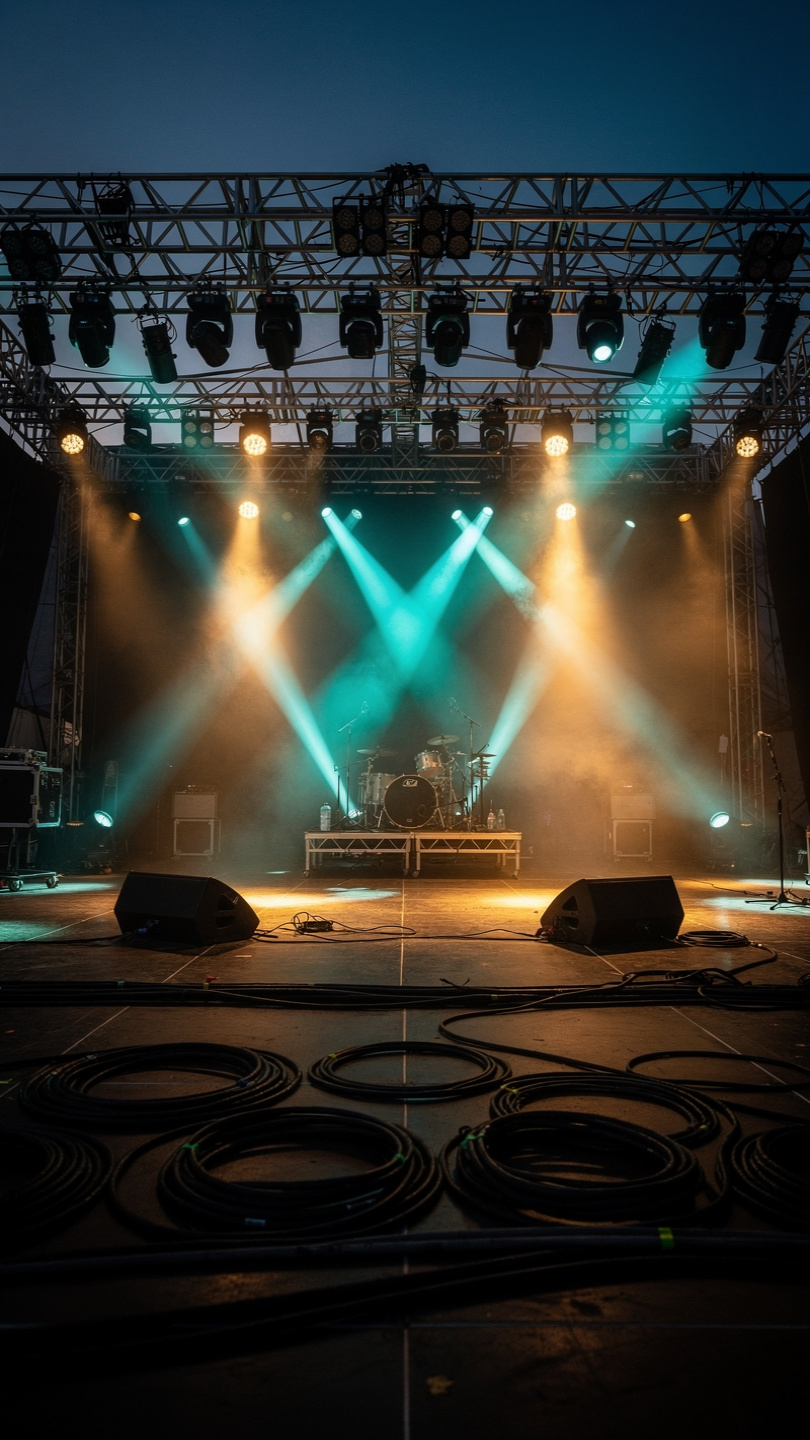
THE EXPOSURE LIVES OVERHEAD AND ON THE TRUCK
A single show puts your crew under flown truss, your gear in someone else's building, and your trucks on the road between dates. The same event sits on top of rigging, electrical load, rented equipment, and crowd proximity all at once, which is exactly why generic business policies tend to fall short.
A specialty program answers the questions venues and promoters actually ask: are the rigging limits high enough, is the gear covered in transit, does the certificate name the right additional insureds, and does the design work carry its own protection. Getting that structure right up front keeps a claim from becoming an argument over what was never covered.
WHERE STANDARD POLICIES FALL SHORT
The gaps that send stage and lighting companies to a specialty market.
RENTED & BORROWED GEAR
Generic property forms cap or exclude equipment you do not own — exactly the gear you rent, lease, and sub-rent every weekend.
RIGGING & WORK AT HEIGHT
Overhead rigging and elevated work are commonly limited or excluded — the single highest-severity exposure you carry.
DESIGN & PROGRAMMING E&O
A lighting design or programming error is a professional exposure. General liability does not respond to it, leaving a quiet gap.
WHO WE COVER
Specialty placement for the companies behind the rig and the look.
WHAT UNDERWRITERS WANT
Bring these and we can move straight to the right markets.
- Clear description of operations and services
- Owned vs. rented / leased equipment schedule
- Work-at-height and rigging practices
- Qualified or certified riggers on the crew
- Subcontractor and labor use
- Typical venues and contract requirements
- Prior loss history (loss runs)
- Target limits and certificate needs
COMMON CLAIM SCENARIOS
The kinds of losses these programs are built to answer.
FLOWN FIXTURE FAILURE
A motor or clamp lets go during load-in and a fixture drops to the deck. Rigging liability and umbrella respond to injury or damage beneath the rig.
RENTED CONSOLE IN TRANSIT
A leased control package is damaged between dates. Inland marine coverage with transit responds to gear you operate but do not own.
GUEST INJURY AT THE EDGE
An attendee trips on a cable run or stage edge. General liability handles the third-party bodily injury claim that follows.
VENUE STRUCTURE DAMAGE
Rigging points or truss damage a venue's structure or floor. Care, custody & control addresses property placed in your charge.
PLAN FOR LEAD TIME
This coverage rewards submitting early. How much overhead and crane exposure you carry drives how long underwriting takes.
The more your operation involves overhead rigging — especially when you use or subcontract cranes — the more underwriting review it takes. For an entertainment rigging company working with cranes, once your intake form is completed and submitted to Kelly Insurance Group, a realistic turnaround runs roughly two to six weeks. Operations that stay closer to the ground — lighting only, audio setup, and similar — usually move much faster. Submitting early gives us the room to market the account properly instead of rushing it.
Overhead rigging, flown truss, and operations that use or subcontract cranes. More moving parts means more underwriting review.
Lighting services, audio setup, and ground-level operations without crane or heavy overhead exposure typically quote on a shorter timeline.
CREDENTIALS THAT HELP YOUR SUBMISSION
Documented safety credentials can support better terms and can help speed up the quoting timeframe. The more your crew can show, the easier the account is to place.
ETCP — ENTERTAINMENT TECHNICIAN CERTIFICATION PROGRAM
ETCP is the entertainment industry's recognized safety certification for technicians, run by ESTA (the Entertainment Services and Technology Association). It focuses specifically on the safety-critical disciplines that protect crews, performers, and audiences — exactly the exposure this coverage is built around. Certification is offered in four areas:
- RIGGER — ARENA — chain hoists and truss systems for temporary overhead rigging.
- RIGGER — THEATRE — counterweight, mechanical, and hydraulic systems in permanent venues.
- ENTERTAINMENT ELECTRICIAN — power and electrical work across live production.
- PORTABLE POWER DISTRIBUTION TECHNICIAN — temporary power set, strike, and distribution.
An ETCP-certified rigger or electrician on your crew is a strong signal to underwriters that the work is done to a recognized standard. On rigging-heavy accounts especially, that can support better terms and help move the quote faster.
LEARN ABOUT ETCP ↗RIGGING & CRANE
- ETCP Certified Rigger (Arena & Theatre)
- NCCCO Certified Crane Operator
- NCCCO Rigger & Signalperson
- OSHA Qualified Rigger / Signal Person
ELECTRICAL & POWER
- ETCP Certified Electrician
- Qualified Electrical Worker (NFPA 70E)
- Lockout / Tagout (LOTO) training
HEIGHTS & EQUIPMENT
- Fall Protection / Competent Person
- MEWP / Aerial & Scissor Lift operator
- Forklift / Powered Industrial Truck
GENERAL SAFETY
- OSHA 10 & OSHA 30
- First Aid / CPR / AED
- Written safety program & toolbox talks
These are examples of credentials underwriters view favorably — not requirements. Bring whatever your crew holds; it all helps the file move faster.
One important caveat: depending on your operational activities, some of these credentials may not be optional. Work that involves crane operation, overhead rigging, or elevated work can carry regulatory or carrier requirements — an OSHA-recognized crane operator or qualified rigger and signal person, for example, may be mandatory before certain jobs or coverage can move forward. The heavier and higher your operation runs, the more likely a specific credential becomes a requirement rather than a nice-to-have.
SAFETY & MEMBERSHIP ORGANIZATIONS
The bodies that set the standards, run the certifications, and train the crews. Involvement signals a safety-first operation underwriters can get comfortable with.
START AN ENTERTAINMENT SERVICES SUBMISSION
Tell us how you operate, what you hang, what you own versus rent, and where you work. The more complete the picture, the faster we match it to the right specialty markets. Certificates, equipment schedules, and contract requirements in hand? Bring them along.
RELATED ENTERTAINMENT & PRODUCTION COVERAGES
Other specialty programs across the live event and production world.
FREQUENTLY ASKED QUESTIONS
Common questions about stage and lighting insurance.