CONDOMINIUM
ASSOCIATION INSURANCE
THE CONDO ASSOCIATION IS ITS OWN LEGAL ENTITY.
Roofs, lobbies, elevators, hallways, and structural components are association property — not individual owner property.
Bare walls, single entity, or all-in — the wrong form creates uninsured gaps that every owner absorbs during a claim.
Fannie Mae and Freddie Mac require specific coverage minimums. Falling short can block unit sales and financing.
Directors and officers can be personally sued over coverage decisions, assessment disputes, and vendor contracts.
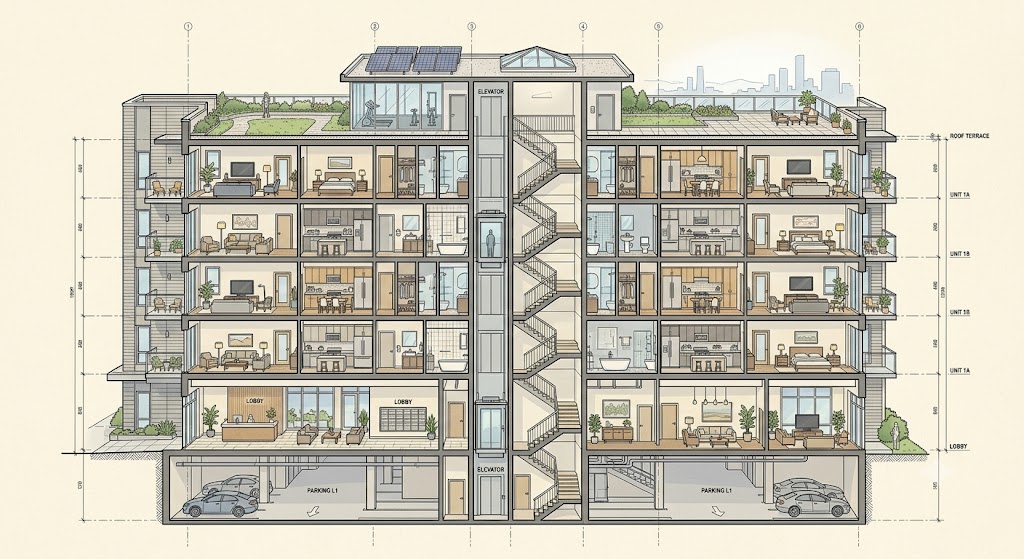
A condominium association holds title to everything outside the individual units — the structure, roof, exterior walls, lobbies, elevators, parking structures, landscaping, and every shared system that keeps the building functioning. That shared ownership is why the association, not any single unit owner, is the named insured on the master policy.
The master policy's form — bare walls, single entity, or all-in — determines exactly where association coverage ends and where the unit owner's HO-6 begins. Getting the form wrong leaves an uninsured layer that surfaces during every claim. Kelly Insurance Group reviews the CC&Rs alongside the master policy to confirm the two connect cleanly, and we place programs for condominium associations of every size and risk profile, including the hard-to-place, aging buildings, and coastal wind-exposed associations other brokerages turn away.
WHAT DOES YOUR MASTER POLICY ACTUALLY COVER?
Select a policy form to see where the association's coverage boundary falls inside the unit. This determines what the unit owner's HO-6 must pick up.
TWO KINDS OF SHARED PROPERTY, ONE MASTER POLICY.
Common elements are shared by every owner in the building — structural walls, roofs, lobbies, elevators, stairwells, mechanical rooms, and grounds. Limited common elements are assigned for the exclusive use of specific units — balconies, storage lockers, assigned parking spaces, and patios. The master policy typically covers both categories, but the CC&Rs often assign maintenance and repair obligations differently between the two. When a balcony fails or a storage unit floods, which policy responds depends on how the documents draw that line.
Kelly Insurance Group works with boards to confirm that both common and limited common elements are addressed in the master policy, and that the loss assessment structure matches the governing documents so claims are allocated correctly. We also coordinate with the association's directors and officers coverage and fidelity bond to build a complete program around the condo's specific structure.
INSURANCE THAT KEEPS UNITS FINANCEABLE.
Fannie Mae and Freddie Mac set minimum insurance requirements for condo projects to qualify for conventional mortgage financing. A project that falls below these thresholds loses warrantable status, which means buyers cannot obtain standard loans and unit values can drop. The requirements include master property coverage at full replacement cost, general liability of at least one million dollars per occurrence, fidelity bond coverage, and flood insurance if any part of the building sits in a mapped flood zone.
We help condo boards confirm they meet all current warrantability requirements and flag coverage gaps before they become lending problems. For a detailed breakdown of lender thresholds, see our condo association insurance requirements guide.
MORE COMMUNITY ASSOCIATION COVERAGE
CONDOMINIUM ASSOCIATION COVERAGE — ANSWERED.
WHAT IS THE DIFFERENCE BETWEEN COMMON ELEMENTS AND LIMITED COMMON ELEMENTS?
Common elements are shared by all owners — lobbies, hallways, elevators, roofs, and structural components. Limited common elements are assigned for exclusive use by specific units — balconies, storage lockers, assigned parking spaces, and patios. The master policy typically covers both, but the maintenance and repair obligations can differ under the governing documents.
HOW DOES THE ASSOCIATION DETERMINE WHAT THE MASTER POLICY COVERS INSIDE THE UNIT?
The CC&Rs and bylaws define the boundary. A bare walls policy covers only to the unfinished interior surfaces. A single entity policy adds the original fixtures and installations as built by the developer. An all-in policy covers everything inside including owner improvements. The correct form must match what the governing documents require the association to insure.
WHAT HAPPENS IF THE MASTER POLICY HAS A LARGE DEDUCTIBLE?
The association pays the deductible from reserves or through a special assessment to all owners. Some associations carry deductible assessment coverage or require unit owners to carry HO-6 policies with loss assessment coverage to absorb their share. The governing documents typically specify how deductibles are allocated across units.
DOES A CONDO ASSOCIATION NEED SEPARATE WIND OR FLOOD COVERAGE?
In many coastal and wind-exposed areas, wind is excluded from the master property policy and must be purchased separately. Flood coverage through an RCBAP is required if any part of the building is in a FEMA flood zone, and lenders often require it regardless. Both are essential for warrantability.
WHAT IS THE ASSOCIATION'S OBLIGATION TO MAINTAIN WARRANTABLE STATUS?
Fannie Mae and Freddie Mac require master property at full replacement cost, general liability of at least one million per occurrence, fidelity bond coverage, and flood if applicable. Losing warrantable status can block unit sales and severely impact property values across the entire building.
HOW ARE SPECIAL ASSESSMENTS AFTER A LARGE LOSS HANDLED?
When a covered loss exceeds the master policy limits or the deductible is large, the association may levy a special assessment. Unit owners with HO-6 policies that include loss assessment coverage can file claims to recover their share, up to policy limits. The association should communicate the assessment structure clearly so owners can use their personal coverage.
GET YOUR CONDO ASSOCIATION COVERED RIGHT.
Kelly Insurance Group has placed condominium association programs since 1881. Call, book a meeting, or contact us to begin.
The availability of coverage and eligibility for coverage can depend on numerous factors. We cannot guarantee that all customers, individuals, and businesses looking for coverage will be successful in these efforts when contacting our team. All policy coverages and terms need to be fully reviewed by the respective consumer to ensure the coverage asked for is what is specifically being quoted or provided by any insurance policy. Insurance Policies, Coverage Changes, and their terms and conditions are not bound or altered until written confirmation is provided by one of our licensed team members or underwriters. This page does not offer legal advice, legal opinions, or policy interpretations. Rather, this page is meant as a resource to help provide customers and insurance consumers with additional considerations that may help in their insurance buying or pursuit of insurance information. Kelly Insurance Group does not employ or direct attorneys.
RELATED INSURANCE PROGRAMS
Other Kelly Insurance Group coverages matched to this page