
ASSOCIATION
GENERAL LIABILITY
COMMON AREAS ARE SHARED RISK — EVERY VISITOR IS AN EXPOSURE.
Wet lobby floors, icy walkways, broken sidewalks, and poorly lit stairwells produce the most frequent GL claims for associations.
Pools carry drowning risk. Fitness centers carry injury risk. Playgrounds carry child-injury risk. Each amenity adds premises liability surface area.
If a landscaper's employee is injured or a contractor damages a visitor's car, the association can be named. Additional insured endorsements shift primary coverage to the vendor.
Fannie Mae and Freddie Mac mandate at least one million per occurrence for warrantable status. Higher limits are often warranted by the actual exposure.
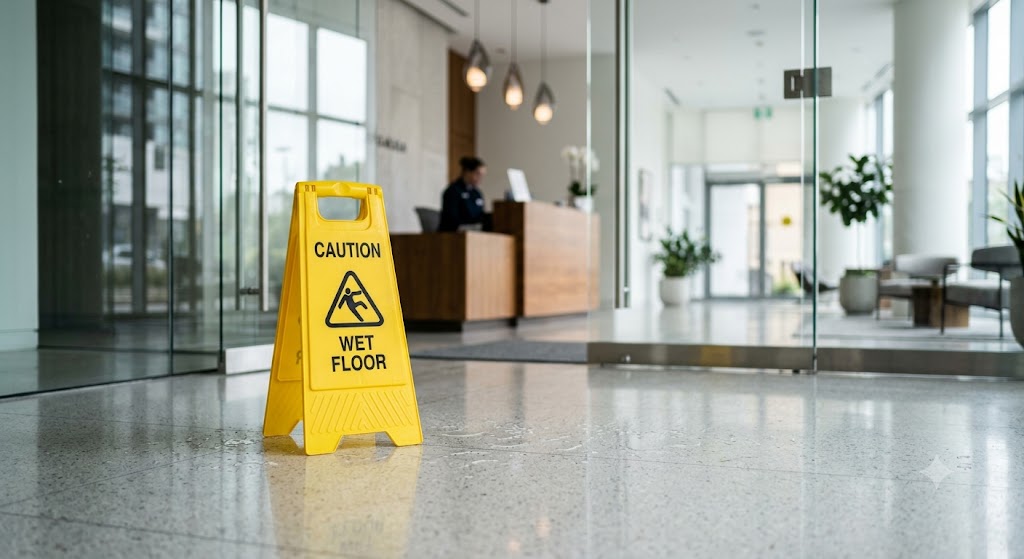
General liability is the second pillar of every community association program. While the master property policy covers what the association owns, GL covers what happens on and around it — bodily injury to residents, guests, delivery drivers, contractors, and anyone who sets foot on association property. The claims are as varied as the common areas: a broken ankle on an icy sidewalk, a drowning at the pool, a ceiling collapse from a plumbing failure in the hallway, or a tree limb that falls on a visitor's car.
Kelly Insurance Group scales GL limits to the actual premises footprint and amenity inventory, not a one-size-fits-all minimum. Communities with pools, fitness centers, playgrounds, and private roads need more than the warrantability minimum. We layer umbrella and excess above primary GL to match the real exposure.
TAP A CLAIM SCENARIO TO SEE HOW GL RESPONDS.
Different common-area incidents trigger GL in different ways. Tap each scenario to understand the coverage response.
EVERY CONTRACTOR ON YOUR PROPERTY SHOULD NAME THE ASSOCIATION.
When a landscaper's employee is injured on association grounds, or a painting contractor's equipment damages a resident's car, the association will be named in the claim because it owns the premises. If the vendor carries its own GL and has named the association as additional insured, the vendor's policy provides primary coverage — meaning the vendor's carrier handles the defense and pays the claim before the association's GL is touched. Without additional insured status, the association's GL responds first and the association must pursue the vendor's insurance through subrogation after the fact.
Kelly Insurance Group helps boards establish vendor insurance requirements, draft certificate-of-insurance language, and track vendor compliance so the association is not absorbing liability that belongs to its contractors.
MORE ASSOCIATION COVERAGE
ASSOCIATION GL COVERAGE — ANSWERED.
WHAT DOES ASSOCIATION GL ACTUALLY COVER?
Bodily injury and property damage arising from the association's ownership and maintenance of common areas and amenities. Slips, falls, pool injuries, falling debris, and contractor incidents on association property.
HOW MUCH GL DOES A CONDO ASSOCIATION NEED?
At least one million per occurrence (warrantability minimum) and two million aggregate. Communities with pools, fitness centers, or high foot traffic should carry higher limits or layer an umbrella above primary GL.
WHAT IS THE DIFFERENCE BETWEEN OCCURRENCE AND CLAIMS-MADE?
Occurrence covers incidents during the policy period regardless of when the claim is filed. Claims-made covers claims filed during the policy period. Most association GL is occurrence-based.
SHOULD VENDORS NAME THE ASSOCIATION AS ADDITIONAL INSURED?
Yes. Every contractor should carry their own GL with the association as additional insured. This means the vendor's policy provides primary coverage, protecting the association's own policy.
DOES GL COVER CLUBHOUSE EVENTS?
Standard GL covers association-hosted events. Outside renters should carry event liability naming the association as additional insured. The GL may have exclusions or sublimits for certain event types.
ARE SIDEWALK SLIP-AND-FALLS COVERED?
Yes. Slip-and-fall injuries on association-owned sidewalks, parking lots, lobbies, and walkways are core GL claims. Documented maintenance schedules and prompt hazard repair are central to defense.
SCALE YOUR GL TO YOUR ACTUAL EXPOSURE.
Kelly Insurance Group sizes association GL to the real premises footprint — not a one-size-fits-all minimum. Since 1881.
The availability of coverage and eligibility for coverage can depend on numerous factors. We cannot guarantee that all customers, individuals, and businesses looking for coverage will be successful in these efforts when contacting our team. All policy coverages and terms need to be fully reviewed by the respective consumer to ensure the coverage asked for is what is specifically being quoted or provided by any insurance policy. Insurance Policies, Coverage Changes, and their terms and conditions are not bound or altered until written confirmation is provided by one of our licensed team members or underwriters. This page does not offer legal advice, legal opinions, or policy interpretations. Rather, this page is meant as a resource to help provide customers and insurance consumers with additional considerations that may help in their insurance buying or pursuit of insurance information. Kelly Insurance Group does not employ or direct attorneys.
RELATED INSURANCE PROGRAMS
Other Kelly Insurance Group coverages matched to this page