Institutional Real Estate Portfolio Insurance
Institutional real estate portfolios are not ordinary property accounts. A portfolio may include senior housing, student housing, mixed-use developments, retail centers, office assets, multifamily buildings, vacant property, construction exposure, lenders, investors, management companies, tenants, contractual risk transfer, casualty claims, excess liability, environmental concerns, and certificate requirements. Kelly Insurance Group helps complex real estate owners and operators structure insurance programs around the actual portfolio, not a generic building schedule.
Insurance for Real Estate Owners, Portfolio Operators, Institutional Investors, Developers, and Property Management Groups
Institutional real estate insurance becomes complicated when the account is more than one building with one owner and one tenant. Large real estate accounts may include multiple entities, lender requirements, management agreements, tenant leases, operating companies, vacancy issues, construction projects, environmental concerns, habitational liability, hired vendors, certificates, additional insured requirements, and umbrella or excess liability needs.
A strong portfolio submission should explain not only the building values, but also occupancy, tenant mix, life safety systems, property management responsibilities, lease obligations, loss history, lender requirements, contractual risk transfer, vacancy, construction activity, and the difference between what the owner controls and what tenants or vendors control.
Kelly Insurance Group works with complex commercial insurance placements where the underwriting story matters. Institutional real estate accounts often need careful coordination between property, casualty, excess liability, environmental, builders risk, management liability, cyber, crime, and certificate workflows.
Institutional Real Estate Insurance Commonly Involves
- Property schedules with multiple buildings, locations, entities, lenders, and occupancy types
- General liability for premises, operations, tenants, vendors, visitors, residents, and common areas
- Umbrella and excess liability driven by lenders, investors, leases, and severity exposure
- Builders risk, renovation exposure, soft costs, and construction-related property issues
- Vacancy, habitational exposure, student housing, senior housing, mixed-use, and retail liability concerns
- Environmental liability involving older buildings, storage tanks, remediation, mold, water intrusion, and site conditions
- Cyber, crime, social engineering, and funds-transfer risk for management companies and ownership groups
- Certificate, additional insured, waiver, lender, vendor, and tenant insurance requirements
Institutional Real Estate Risk Environment
Real estate portfolio insurance should reflect the asset class, occupancy, control structure, tenant mix, management responsibilities, lenders, lease obligations, and portfolio-wide exposure. The same property value can create very different insurance problems depending on how the building is used.


Who This Insurance Hub Is Built For
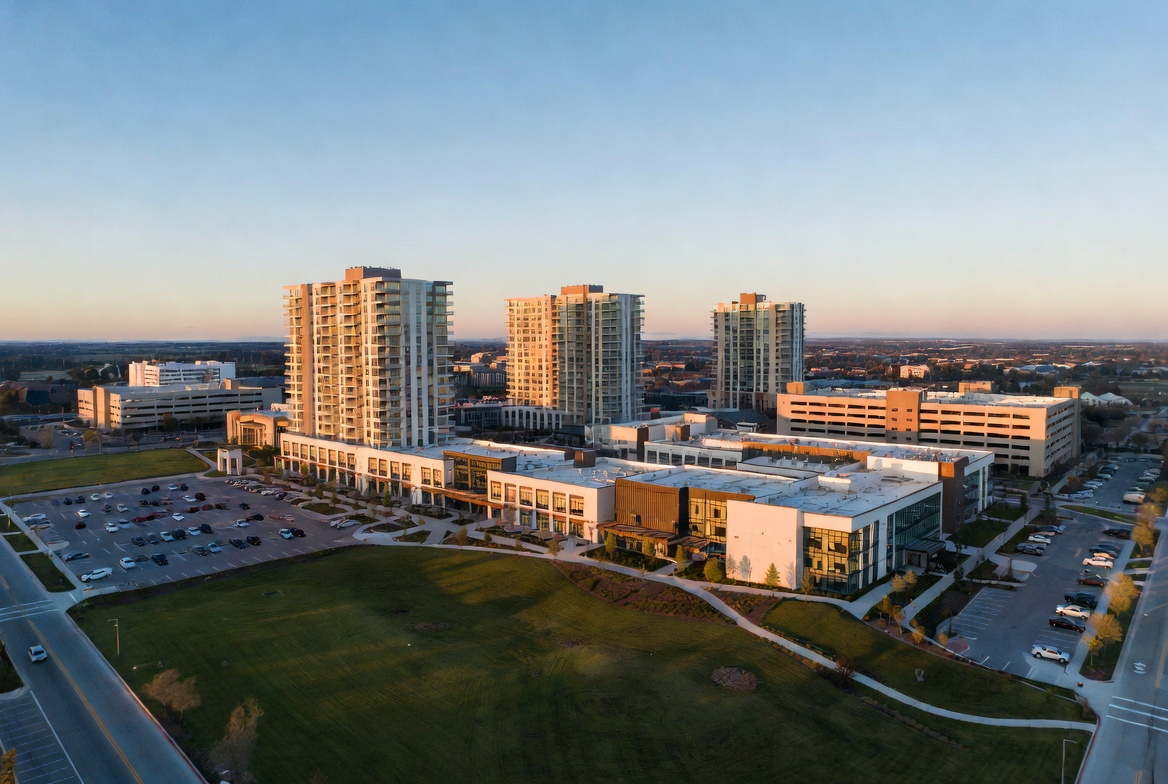
This page is designed for institutional real estate owners, private equity real estate groups, family offices, property managers, developers, senior housing owners, student housing operators, mixed-use owners, commercial landlords, and portfolio operators that need a more sophisticated insurance discussion.
Interactive Real Estate Portfolio Risk Stack
Click a risk layer to see how institutional real estate exposure changes the insurance structure. A portfolio is rarely just property insurance. The real account often sits at the intersection of property values, liability, contracts, lenders, management operations, and asset-class-specific risk.
Property Values
Institutional real estate insurance begins with accurate property values, but it does not end there. Building valuation, ordinance or law exposure, roof age, construction type, sprinkler protection, vacancy, tenant improvements, equipment, business income, and loss history can all affect underwriting.
- Property schedules should be clean, current, and tied to the correct entities.
- Replacement cost assumptions, building limits, and lender requirements need review.
- Vacancy, renovation, older building systems, and protection features can change the market response.
- Business income and extra expense may matter for operating real estate portfolios.
Institutional Real Estate Insurance Specialization Blocks
These supporting sections are built directly into the hub page so the content is substantial and customer-facing without creating thin standalone pages prematurely.
Senior Housing Portfolio Insurance
Senior housing portfolios can involve independent living, assisted living-adjacent real estate, senior apartments, care-related tenants, transportation exposure, resident safety concerns, vendor contracts, property management responsibilities, and high-severity liability questions.
The insurance discussion should separate the real estate owner’s responsibilities from the operator’s responsibilities. Lease language, management agreements, certificates, additional insured status, and contractual risk transfer become critical.
Control and Operations Matter
Underwriters need to understand whether the insured owns only the building, operates services, employs staff, provides transportation, coordinates care, manages vendors, or leases to a licensed operator. Those details can change the insurance structure substantially.
Common Review Areas
- Owner versus operator responsibilities
- Resident profile and services provided
- Transportation, staff, and vendor exposure
- Lease and management agreement requirements
- Property protection and life safety systems
- Umbrella and excess liability requirements
Student Housing Portfolio Insurance
Student housing portfolios can create a different liability profile than conventional multifamily property. Resident turnover, amenities, security, guests, parties, parking, maintenance, lease structure, and claims history can affect both property and casualty underwriting.
Insurance placement should address building values, premises liability, lease requirements, security controls, fire protection, water damage history, common areas, tenant responsibilities, and umbrella or excess liability needs.
Student Housing Is Not Generic Multifamily
The account should be presented around occupancy profile, management controls, maintenance procedures, resident rules, security, amenity exposure, and past losses rather than treated as a basic apartment schedule.
Important Details
- Number of units and beds
- Student versus conventional tenant mix
- Security, access, and common-area controls
- Fire protection and water damage controls
- Lease terms and tenant insurance requirements
- Loss history and management response
Mixed-Use Real Estate Insurance
Mixed-use developments can combine residential, retail, office, restaurant, parking, entertainment, professional office, medical office, common areas, rooftop amenities, garages, and construction exposure inside the same property.
The insurance program should clearly identify occupancy, tenant operations, lease obligations, additional insured requirements, property values, business income, common-area control, fire protection, and contractual risk transfer between owner, tenants, vendors, and managers.
Tenant Mix Drives Underwriting
A mixed-use building with office tenants is not the same as a building with restaurants, nightlife, medical tenants, residential units, or public-facing amenities. Tenant operations can change liability, fire, water, and business income exposure.
Review Points
- Occupancy schedule by tenant and use
- Restaurant, liquor, medical, or entertainment tenants
- Lease insurance requirements
- Common-area and amenity exposure
- Parking, garage, and exterior premises exposure
- Property protection and building systems
Multifamily Portfolio Insurance
Multifamily portfolios require more than a spreadsheet of addresses and values. Underwriters often need building age, construction type, roof updates, plumbing, electrical, HVAC, sprinkler protection, occupancy, management controls, loss history, and tenant-related controls.
Large multifamily accounts may also require excess liability, crime, cyber, employment practices liability, management liability, hired/non-owned auto, and coverage for property managers or related entities.
Loss History Can Shape Market Access
Water damage, habitability claims, fire losses, premises injuries, security claims, and older building systems can all influence underwriting. Strong property management procedures help tell the account’s real story.
Key Information
- Building schedule and valuations
- Roof, electrical, plumbing, HVAC, and sprinkler details
- Loss runs and corrective action history
- Tenant screening and lease requirements
- Security, maintenance, and inspection procedures
- Umbrella and excess liability requirements
Commercial Real Estate Portfolio Insurance
Commercial real estate portfolios may include office buildings, industrial buildings, retail centers, warehouses, flex space, medical office buildings, parking assets, and mixed-tenant commercial properties.
The insurance structure should reflect tenant use, building systems, lease insurance obligations, common-area control, vacant units, sprinkler protection, business income, lender requirements, and vendor risk transfer.
Occupancy Drives Property and Liability
The same square footage can create very different underwriting concerns depending on tenant operations. Industrial tenants, restaurants, medical offices, retail stores, and warehouse users do not create identical insurance profiles.
Common Review Areas
- Tenant list and occupancy use
- Lease insurance requirements
- Vacancy and tenant turnover
- Fire protection and building systems
- Maintenance, snow removal, and vendor contracts
- Lender and investor requirements
Vacant Property & Redevelopment Insurance
Vacant, partially occupied, repositioned, or redevelopment properties often require a different insurance approach than stabilized real estate. Vacancy can change property coverage, liability exposure, inspection expectations, vandalism concerns, utilities, water damage risk, and fire protection.
Redevelopment accounts may also involve builders risk, environmental liability, demolition, renovation work, soft costs, lender requirements, and contractor insurance controls.
Vacancy Should Be Disclosed Clearly
Underwriters need to know whether the property is vacant, partially occupied, under renovation, being stabilized, being sold, awaiting permits, or being prepared for redevelopment. The wrong occupancy description can create coverage problems.
Review Points
- Vacancy status and occupancy plan
- Utilities, protection systems, and inspections
- Renovation, demolition, or construction activity
- Security and vandalism controls
- Builders risk and soft costs
- Environmental or site condition concerns
Real Estate Umbrella & Excess Liability Insurance
Institutional real estate portfolios often need umbrella or excess liability because of lender requirements, investor expectations, lease agreements, habitational exposure, senior housing exposure, student housing exposure, parking exposure, and high-severity premises liability.
The excess structure should be reviewed for underlying carrier compatibility, exclusions, habitational limitations, assault or battery limitations, wildfire or catastrophe issues, auto exposure, and whether related entities are properly included.
High Limits Need Clean Underlying Coverage
Excess liability is not just a larger number. It should align with the underlying general liability, auto, employer’s liability, and other applicable policies. Exclusions and gaps can matter more than the headline limit.
Excess Review Areas
- Lender and investor required limits
- Underlying carrier acceptability
- Habitational or assault/battery limitations
- Auto, hired/non-owned auto, and employee driving exposure
- Entity schedules and additional insured needs
- Layering strategy for larger portfolios
Institutional Real Estate Coverage Structure
Institutional real estate insurance is usually a coordinated program, not one isolated property policy. The correct structure depends on the asset class, occupancy, ownership structure, lease obligations, lender requirements, management responsibilities, loss history, and development plans.
Leases, Lenders, Vendors, and Ownership Structures Can Control the Insurance Program
Real estate portfolio insurance frequently depends on documents outside the policy itself. Lender insurance requirements, leases, management agreements, vendor contracts, construction contracts, joint venture agreements, and investor requirements may impose coverage terms that need to be reviewed.
These requirements may involve mortgagee wording, lender loss payable status, additional insured status, waiver of subrogation, primary and non-contributory wording, property limits, ordinance or law, business income, umbrella liability, environmental liability, builders risk, or certificate requirements.
The insurance requirement should be reviewed before closing, refinancing, tenant onboarding, construction start, or certificate deadlines become urgent.
Information That Helps The Quoting Process
- Property schedule with addresses, values, occupancy, and entity ownership
- Current policies and five-year loss history when available
- Loan, lender, lease, and management agreement insurance requirements
- Roof, electrical, plumbing, HVAC, sprinkler, and life safety details
- Tenant list, occupancy type, and vacancy information
- Construction, redevelopment, renovation, or tenant improvement activity
- Vendor controls, maintenance procedures, and certificate requirements
- Environmental concerns, older building issues, mold, water intrusion, or tanks
- Umbrella or excess liability requirements
- Property manager and related entity information
Client Service, Certificates, Team Depth, and Long-Term Support
Institutional real estate accounts often need more than policy placement. They may need certificates for tenants, lenders, vendors, contractors, property managers, municipalities, and project partners. They may also need fast documentation when properties are acquired, sold, refinanced, leased, renovated, or added to a schedule.
Kelly Insurance Group is proud of its team of agents and the long history behind the agency. You can learn more about the people behind the agency on the Meet The Team page and the agency story on the History page.
Once you are a customer, most customers are given access to a custom client portal where certificates of insurance can be generated at any time. That is especially helpful for real estate portfolios dealing with tenants, vendors, lenders, contractors, and property management certificate requests.
Start With The Portfolio Details That Actually Matter
Real estate portfolio submissions need enough information to avoid being treated like a generic property schedule. The more clearly the portfolio is described, the better the chance of identifying markets willing to evaluate the account seriously.
Use the form to start the conversation. For larger real estate portfolios, include the property schedule, current policy information, lender requirements, loss history, occupancy details, vacancy concerns, construction activity, and umbrella or excess liability needs.
FIND RELATED COVERAGE FAST
Search by industry, coverage type, contract requirement, or hard-to-place exposure.
Institutional Real Estate Portfolio Insurance FAQs
What makes institutional real estate insurance different from ordinary property insurance?
Institutional real estate insurance is different because the account may involve multiple properties, entities, lenders, leases, tenants, property managers, vendors, habitational exposure, construction activity, environmental concerns, and umbrella or excess liability requirements.
Do real estate portfolios need umbrella or excess liability?
Many real estate portfolios require umbrella or excess liability because of lender requirements, investor expectations, leases, habitational exposure, premises liability, parking exposure, and contractual risk transfer obligations.
Why does occupancy matter so much?
Occupancy affects both property and liability underwriting. Student housing, senior housing, mixed-use, retail, office, restaurant, industrial, vacant, and redevelopment properties each create different risk profiles.
Can vacant or redevelopment property require different insurance?
Yes. Vacancy, renovation, demolition, construction, tenant improvements, utilities, fire protection, security, and redevelopment plans can all change how the property should be insured.
Can Kelly Insurance Group help with lender and certificate requirements?
Kelly Insurance Group can help review insurance requirements and identify what may require policy changes, endorsements, certificate coordination, underwriting approval, or additional coverage.
Have an Institutional Real Estate Portfolio, Mixed-Use Asset, Senior Housing Property, or Student Housing Schedule?
Real estate portfolio insurance requires more than a property schedule. The underwriting conversation often depends on ownership structure, occupancy, tenant mix, lenders, leases, property management duties, loss history, construction activity, environmental exposure, and excess liability requirements. Kelly Insurance Group works with difficult commercial insurance placements involving complex real estate and institutional ownership structures.