
SPORTS MEMORABILIA AND ENTERTAINMENT COLLECTIBLES COVERAGE
Kelly Insurance Group helps high-net-worth collectors and private clients review insurance for sports memorabilia, game-used equipment, autographed items, entertainment props, costumes, and collectibles — addressing agreed value coverage, authentication documentation, graded item scheduling, auction transit coverage, and the specific valuation challenges of a collectibles market that has seen dramatic price appreciation.
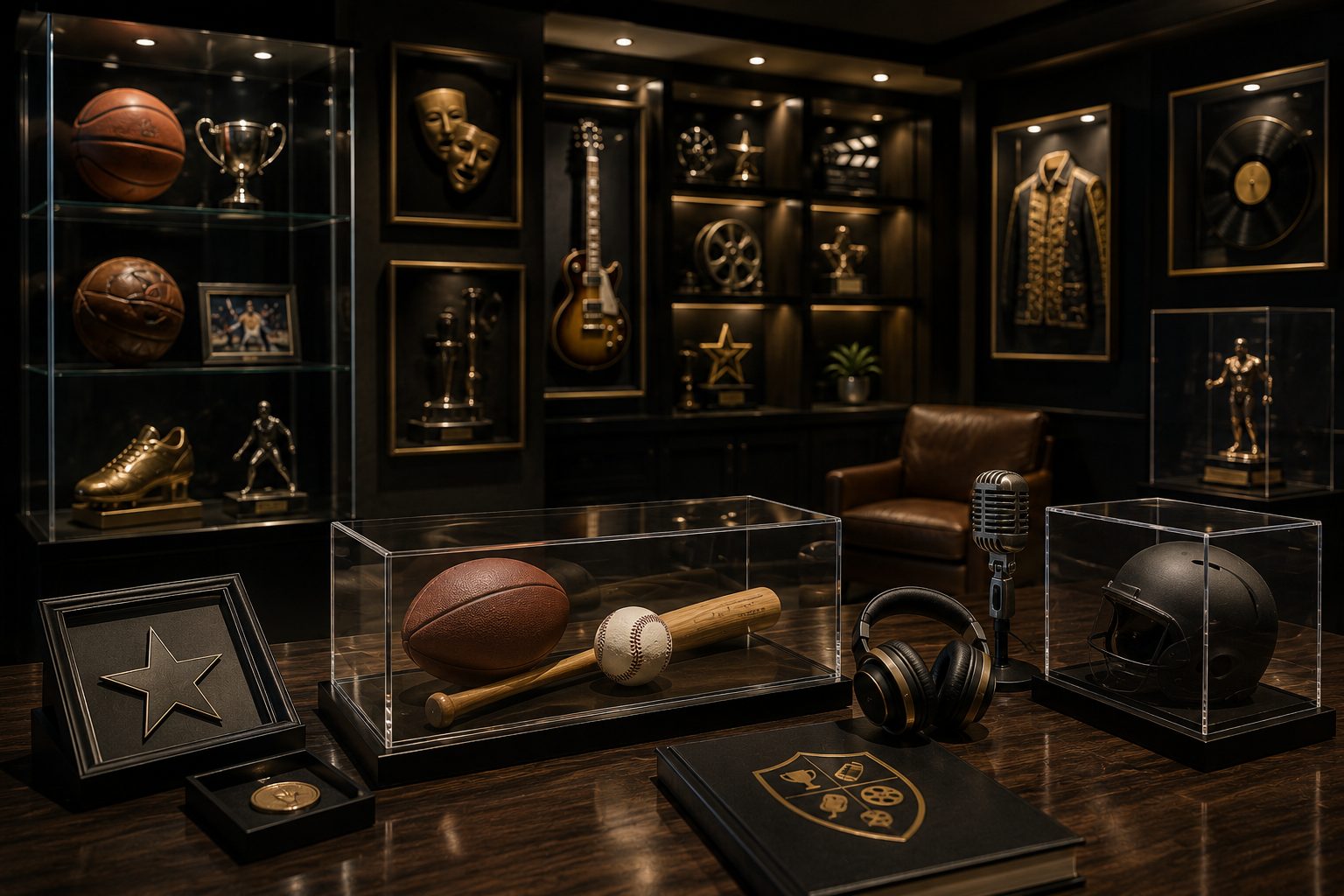
WHY THE SPORTS AND ENTERTAINMENT COLLECTIBLES MARKET REQUIRES SPECIALTY INSURANCE.
For signed memorabilia and game-used equipment, value is directly tied to authentication. An autographed Babe Ruth baseball with a PSA authentication certificate commands a dramatically different price than the same ball without authentication. Insurance agreed values for signed items should specifically reference the authentication certificate and its condition — and coverage should explicitly address the loss of authenticated value if the item's authentication is compromised.
Game-used equipment — jerseys, bats, balls, gloves, helmets — derives value from documented on-field use by specific players in specific games. MLB, NBA, NFL, and NHL authentication programs provide holographic certification for items pulled directly from game use. Photo-matched items — where the equipment's use in a specific play can be documented through published photography — command further premiums.
Screen-used props, costumes, and production items from major films and television series are traded through specialized auction houses at significant prices. Documentation from the production — continuity photographs, production paperwork, or certification from a major prop auction house — is the basis for establishing agreed value.
For cards, tickets, photographs, and flat collectibles, professional grading companies provide authenticated grade opinions on a 1-to-10 scale that directly determines market value. The population report — how many items of a specific grade exist — is a key driver of value. Insurance agreed values for graded items must reflect the specific grade and the population context.
Collectors who actively buy and sell at auction face a specific coverage gap: items in transit to grading companies, auction houses, and private buyers are outside the home and typically outside standard homeowners coverage. A blanket transit endorsement or specific consignment coverage addresses the gap for items that regularly leave the collection.
MEMORABILIA COVERAGE ELEMENTS
MEMORABILIA AND COLLECTIBLES COLLECTORS WHO NEED A COVERAGE REVIEW.
Any collector whose memorabilia holdings — signed items, game-used equipment, entertainment props, or graded collectibles — have grown beyond what homeowners personal property coverage addresses benefits from a specific review.
- Sports memorabilia collectors with signed items, game-used equipment, or display collections representing significant total value
- Entertainment and pop culture collectors with screen-used props, costumes, or production items from major films and television
- Collectors with PSA, BGS, or other graded items where grade-specific values make individual scheduling important
- Active collectors who regularly consign items to auction and need transit and consignment coverage
- Collectors who have acquired items through estate inheritance and have never had the collection appraised
- Any memorabilia collector whose collection has appreciated significantly and whose coverage has not been reviewed in more than two years
SELECT YOUR COLLECTIBLE CATEGORY TO SEE THE RELEVANT COVERAGE CONSIDERATIONS.
Sports memorabilia and entertainment collectibles span a wide range of item types, values, and storage requirements. Each category has distinct coverage questions.
Signed memorabilia — game-used jerseys, balls, bats, helmets, photographs, and entertainment props bearing authenticated signatures — derives its primary value from the provenance and authentication of the signature. Insurance coverage must reflect the authenticated value, not the value of the underlying object.
- PSA, JSA, Beckett, and other third-party authentication documentation
- Agreed value based on authenticated comparables — not raw item value
- COA copies maintained with insurance documentation
- Market comparables from recent auction results supporting the agreed value
- Transit coverage for items sent for authentication or consigned to auction
WHAT THE INSURANCE REVIEW COVERS.
AGREED VALUE MEMORABILIA COVERAGE
Agreed value coverage for sports memorabilia and entertainment collectibles — with authentication documentation on file, grade-specific values for graded items, and annual market comparables review to keep agreed values current with the collectibles market.
GRADED ITEM SCHEDULING
Individual scheduling of graded and authenticated items — with slab serial numbers, PSA/BGS/SGC certificate numbers, and grade-specific agreed values for significant individual pieces whose value is directly tied to the certified grade.
TRANSIT AND CONSIGNMENT COVERAGE
Coverage for items in transit to grading companies, auction houses, and private buyers — addressing the coverage gap when items leave the home for commercial activity and ensuring that collection items are covered throughout the transaction cycle.
DISPLAY AND STORAGE PROTECTION
Coverage for framed, displayed, and stored memorabilia — including UV-protected display cases, climate-controlled storage, and the specific conservation requirements for textile and paper items.
FOUR MEMORABILIA COVERAGE GAPS THAT AFFECT CLAIM SETTLEMENTS.
An insurance claim for a signed item requires documentation of its authenticated value. A collector who cannot produce the PSA, JSA, or Beckett certificate for a significant piece may receive a settlement based on an unauthenticated value — which can be a fraction of the authenticated market price.
The sports collectibles market has appreciated significantly for many categories. An agreed value established two years ago may be well below current market pricing. Annual review keeps agreed values current.
A valuable card sent to PSA for grading is outside the home, and standard homeowners personal property coverage typically does not follow personal property to off-premises locations. Specific transit coverage addresses this gap.
A display case that falls and damages a signed baseball, a framed jersey damaged by a burst pipe, or a display item accidentally knocked over — these are losses that homeowners named peril coverage may not address. All-risk valuable articles coverage addresses accidental damage.
QUESTIONS THAT OFTEN COME UP.
Does homeowners insurance cover sports memorabilia?
Standard homeowners personal property coverage applies to memorabilia — but subject to named peril limitations, ACV depreciation, and general personal property sublimits. There is no specific sublimit for sports memorabilia in most homeowners policies, but the lack of mysterious disappearance and accidental damage coverage makes homeowners coverage inadequate for significant collections.
How is an authenticated signed item's value established for insurance?
The agreed value for an authenticated signed item is established through recent auction comparables from major memorabilia auction houses for comparable items with the same authentication. The authentication certificate from PSA, JSA, or Beckett documents the specific item's authenticity.
Do I need separate coverage for items at a grading company?
Yes — items in transit to or from a grading company are outside the home. The grading company carries insurance for items in their possession, but their coverage protects their interest — the owner should have their own coverage for the item's full value while in transit and at the grading facility.
How should I document game-used equipment for insurance purposes?
The documentation chain should include: the league authentication hologram or certification if applicable, photo-matching documentation if available, chain of custody documentation, and recent auction comparables for similar authenticated game-used items by the same player.
What is the best way to store memorabilia to satisfy insurance requirements?
UV-protected display cases for signed items, acid-free archival storage for paper items, climate-controlled storage for textiles. Items of significant value that are stored rather than displayed should be in secured, locked storage.
Does insurance cover a decline in value if authentication is disputed?
Standard property insurance covers physical loss or damage — it does not cover diminution in value from market changes or authentication disputes. This is why authentication from recognized third-party services is both a value driver and a risk management practice.
COVER THE COLLECTION AT AUTHENTICATED VALUE — NOT AT WHAT A HOMEOWNERS POLICY ALLOWS.
Kelly Insurance Group can help memorabilia and collectibles collectors review agreed value coverage, authentication documentation, graded item scheduling, transit coverage, and annual valuation review for sports and entertainment collections.
The availability of coverage and eligibility for coverage can depend on numerous factors. We cannot guarantee that all customers, individuals, and businesses looking for coverage will be successful in these efforts when contacting our team. All policy coverages and terms need to be fully reviewed by the respective consumer to ensure the coverage asked for is what is specifically being quoted or provided by any insurance policy. Insurance Policies, Coverage Changes, and their terms and conditions are not bound or altered until written confirmation is provided by one of our licensed team members or underwriters. This page does not offer legal advice, legal opinions, or policy interpretations. Rather, this page is meant as a resource to help provide customers and insurance consumers with additional considerations that may help in their insurance buying or pursuit of insurance information. Kelly Insurance Group does not employ or direct attorneys.