Defense Contractor Insurance
Defense contractors do not fit inside ordinary business insurance. These accounts are shaped by contract requirements, prime contractor flow-down obligations, sensitive data, cyber controls, high-severity products liability, advanced manufacturing, drone and autonomous systems, tactical vehicle work, government job sites, and layered excess liability demands. Kelly Insurance Group helps difficult defense-adjacent businesses explain the risk correctly, structure the submission intelligently, and pursue insurance programs built around the actual operation instead of a generic class code.
Insurance for Defense Contractors, Government Subcontractors, and Defense-Adjacent Businesses
A defense contractor may be a manufacturer, engineering firm, cybersecurity vendor, drone technology company, robotics integrator, machine shop, aerospace supplier, tactical vehicle modifier, communications contractor, logistics provider, laboratory, software developer, or specialized service contractor. That is why the phrase “defense contractor insurance” is not enough by itself. The insurance program has to be built around what the company actually does, what the contract requires, what the downstream consequence of failure could be, and which insurers are willing to understand the account.
The danger with defense-related submissions is ambiguity. Underwriters may see words like military, tactical, weapon, drone, autonomous, classified, aerospace, federal, missile, sensor, surveillance, or secure facility and immediately slow down or decline the account. A good submission separates reality from assumption. It explains whether the business designs, manufactures, distributes, repairs, installs, modifies, codes, integrates, tests, consults, or merely supplies a non-critical component.
Kelly Insurance Group focuses on difficult commercial insurance placements where the operation cannot be reduced to a quick online quote. Defense-related insurance usually requires judgment, context, and a clear underwriting story.
Defense Contractor Insurance Is Usually Driven By
- Prime contractor or government contract insurance requirements
- Subcontractor flow-down obligations
- Products liability and completed operations severity
- Cyber liability and technology E&O exposure
- Advanced manufacturing, testing, and quality-control procedures
- Restricted sites, secure facilities, and sensitive customer relationships
- High-limit umbrella and excess liability requirements
- Commercial auto, hired/non-owned auto, fleet, and transportation exposure
- Property, machinery, prototypes, tools, and equipment schedules
- Foreign exposure, controlled information, and contract-specific terms
The Defense Risk Landscape Is Not One Industry
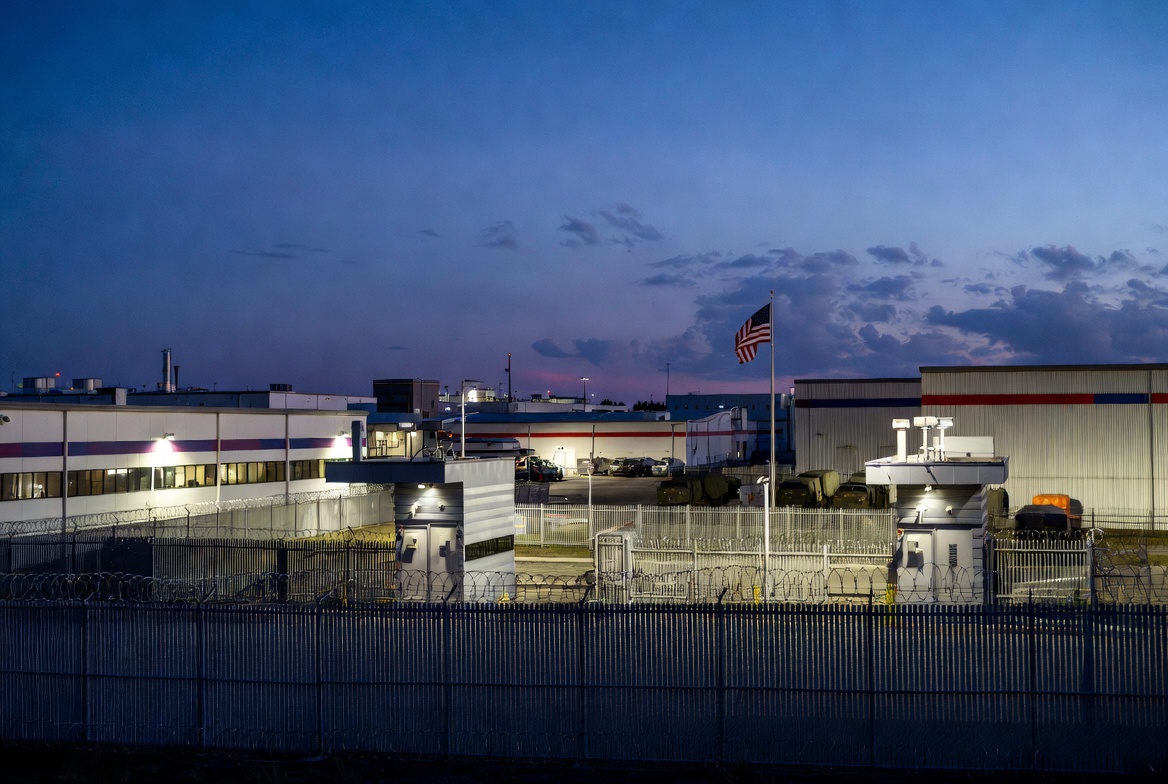
The defense contractor ecosystem crosses secure facilities, clean-room manufacturing, cyber research labs, precision component fabrication, autonomous systems, aerospace production, tactical equipment, and government subcontracting. These three images are used once to establish the visual risk environment. The supporting blocks below stay text-focused so they do not imply the wrong operation.


Who This Page Is Built For
This hub is for defense-adjacent companies that need more than a basic certificate. These businesses are often asked to prove coverage, satisfy contract requirements, meet vendor onboarding rules, carry higher limits, protect specialized equipment, insure technical services, and explain complex operations to cautious underwriters.
Defense Contractor Insurance Specialization Blocks
These supporting blocks are intentionally not linked yet. Each future slug is shown only as plain text so the hub can be built now without creating dead internal links before the supporting pages exist.
Military Contractor Insurance
Military contractors can range from administrative support firms to technical service providers working around equipment, vehicles, communications systems, training environments, secure facilities, logistics, or specialized field operations. The title alone does not tell an underwriter enough. A military contractor’s insurance program must be evaluated by scope of work, customer type, contract terms, work location, employee duties, subcontractor use, and whether the operation touches physical products, data, vehicles, aircraft, weapons, secure facilities, or mission-critical systems.
Many military contractors are not “military” in the way an insurance carrier may initially imagine. Some provide IT support, facility maintenance, staffing, engineering review, logistics, component supply, or advisory work. Others have more severe exposures involving vehicles, prototypes, tactical equipment, international work, product installation, or technical systems. The submission must make that distinction obvious.
What Makes Military Contractor Insurance Difficult?
Difficulty usually comes from contract language, restricted work locations, elevated liability expectations, government customer requirements, and the inability of a standard carrier to quickly categorize the account. A contractor may be required to carry commercial general liability, workers compensation, commercial auto, umbrella liability, professional liability, cyber liability, foreign liability, or specialty endorsements depending on the job.
Key Insurance Review Points
- Prime contractor or agency insurance requirements
- Employee duties and worksite conditions
- Commercial auto and hired/non-owned auto exposure
- Subcontractor certificates and indemnification controls
- Professional liability for technical or advisory work
- Foreign liability if operations extend outside the United States
- Umbrella or excess liability driven by contract requirements
Aerospace & Defense Manufacturing Insurance
Aerospace and defense manufacturing is one of the most serious insurance categories inside this hub because the product may become part of a larger aircraft, satellite, vehicle, communications platform, sensor package, industrial control system, or defense supply chain. A small part can carry a large liability shadow if failure could cause bodily injury, property damage, operational disruption, or contractual loss.
Insurance carriers will want to understand whether the company designs the product, manufactures to customer specifications, performs testing, modifies customer-owned property, handles prototypes, performs final assembly, imports or exports components, or provides engineering recommendations. The difference between “we make a metal bracket” and “we design and manufacture a mission-critical aerospace component” is massive.
Core Manufacturing Exposures
Defense manufacturing often requires commercial general liability, products liability, property, equipment breakdown, business income, inland marine, workers compensation, commercial auto, umbrella liability, cyber liability, and sometimes manufacturing E&O or professional liability. The program should account for quality-control procedures, traceability, testing records, vendor dependencies, and contract obligations.
Underwriting Questions
- Does the insured design products or manufacture to customer specifications?
- Are components used in aircraft, vehicles, drones, defense electronics, or critical systems?
- Are written quality-control procedures used?
- Are products serialized, traceable, tested, or inspected?
- Does the company handle customer property or prototypes?
- Are there clean-room, contamination, or specialized equipment exposures?
- What contracts, warranties, or indemnification obligations apply?
Government Defense Subcontractor Insurance
Government defense subcontractors often inherit insurance requirements from prime contractors, larger vendors, facility owners, or upstream contract administrators. Those requirements can be broad, rigid, and sometimes copied from a larger contract without being adjusted to the subcontractor’s actual work.
This is where many small and middle-market subcontractors get trapped. They sign a contract requiring limits, endorsements, waivers, cyber coverage, professional liability, or special certificate language before confirming whether their insurance program can support it. The broker then has to determine what is available, what requires underwriting approval, what is already included, and what may not be available at all.
Why Flow-Down Requirements Matter
A flow-down requirement can force the subcontractor to carry specific insurance limits, name additional insureds, waive subrogation, provide primary and non-contributory wording, carry completed operations coverage, maintain cyber liability, or provide professional liability. Some items may be simple. Others may require specific policy forms, underwriting approval, or a different carrier entirely.
Common Contract Requirements
- Commercial general liability limits
- Umbrella or excess liability limits
- Additional insured status
- Waiver of subrogation
- Primary and non-contributory wording
- Professional liability or technology E&O
- Cyber liability
- Commercial auto and workers compensation
Drone & Autonomous Defense Systems Insurance
Drone and autonomous defense systems create a collision between aviation, products liability, software, cyber, sensors, AI, electronics, testing, and government contracting. These accounts cannot be handled like ordinary drone operators or ordinary technology companies. The underwriting depends on what part of the autonomous system the company touches.
A company may manufacture airframes, write autonomy software, integrate payloads, design sensor packages, perform flight testing, sell components, train users, analyze collected data, or provide support to a prime contractor. Each activity produces a different insurance answer. Some carriers may be comfortable with software-only work but not hardware. Others may consider product components but not flight operations.
Cyber-Physical Risk Is the Core Issue
Autonomous systems are not just software and not just hardware. A defect can involve code, sensor calibration, battery systems, communications links, operator instructions, data processing, mechanical failure, testing protocols, or integration into a larger defense platform.
Important Distinctions
- Operator versus manufacturer versus software developer
- Commercial drone use versus defense systems development
- Payload integration versus data analysis
- Testing operations versus finished product sales
- Autonomy software versus human-controlled systems
- Component supply versus full platform responsibility
Tactical Vehicle Contractor Insurance
Tactical vehicle contractors may modify, repair, armor, retrofit, fabricate, transport, maintain, test, or integrate specialized equipment into vehicles used by defense, law enforcement, security, emergency response, infrastructure, or government customers. These operations can involve garage exposure, products liability, auto liability, property, inland marine, equipment, employee safety, and completed operations concerns.
The insurance program depends heavily on whether the contractor owns vehicles, works on customer vehicles, performs road testing, installs electrical systems, modifies braking or suspension, adds armor, installs communications equipment, fabricates mounted equipment, transports completed units, or performs field repairs.
Vehicle Work Creates Multiple Insurance Problems at Once
A tactical vehicle account may require commercial auto, garage liability, garagekeepers coverage, inland marine, property, tools and equipment, general liability, products liability, workers compensation, and excess liability. A standard businessowners policy is rarely the right structure when the business handles, modifies, stores, drives, or delivers specialized vehicles.
Coverage Areas to Review
- Garage liability and garagekeepers coverage
- Products and completed operations liability
- Commercial auto and transport exposure
- Tools, equipment, and property coverage
- Vehicle modification and installation work
- Umbrella or excess liability requirements
Ammunition & Weapons Component Manufacturer Insurance
Ammunition and weapons component manufacturing is one of the highest-scrutiny categories in the defense contractor ecosystem. The insurance marketplace treats these accounts carefully because product failure, misuse, storage conditions, manufacturing defects, labeling, distribution, and contractual risk can create serious severity potential.
Not every component manufacturer handles finished firearms, live ammunition, explosives, or complete weapons systems. Some manufacture housings, machined parts, casings, electronics, mounting hardware, packaging, non-critical accessories, or customer-specified components. The submission must explain exactly what is produced, who designs it, how it is tested, who buys it, and how it is used.
Clarity Is Everything
A vague submission using broad terms can kill the account before it gets reviewed. Underwriters need a disciplined explanation of the insured’s role. Does the company manufacture complete ammunition, a component, packaging, tooling, electronics, or a non-functional accessory? Does it design anything? Does it test anything? Are energetic materials present?
Underwriting Detail Needed
- Exact products manufactured or distributed
- Whether live ammunition or energetic materials are handled
- Design responsibility versus customer specifications
- Testing, inspection, and quality-control procedures
- Storage, fire protection, and property details
- Customer types and contractual requirements
Defense Technology Contractor Cyber Liability Insurance
Defense technology contractors face a very different cyber insurance conversation than ordinary office businesses. These companies may handle sensitive customer information, controlled technical data, platform credentials, software repositories, cloud systems, operational technology, remote access tools, defense research, or proprietary intellectual property.
Cyber underwriting is now deeply operational. Insurers may evaluate multifactor authentication, endpoint detection, backups, patching, vendor controls, employee training, access management, incident response planning, privileged accounts, cloud configuration, and prior security events.
Cyber Liability and Technology E&O Are Not the Same Thing
Cyber liability generally responds to network security, privacy, data, and incident response exposures. Technology E&O addresses financial injury or liability arising from failure of technology services or products. Defense technology firms often need both reviewed because a contract may involve software performance, data security, service failure, system interruption, or unauthorized access.
Cyber Review Areas
- Cyber liability and privacy liability
- Technology errors and omissions
- Incident response and breach expense
- Network business interruption
- Cyber extortion and social engineering
- Contract-driven security requirements
Defense Contractor Excess Liability Insurance
Defense contractor excess liability is not just “more insurance.” It is often the hardest part of the placement. Contract requirements may demand limits that standard carriers will not provide alone. Products liability, vehicle exposure, manufacturing severity, field operations, aviation-adjacent work, tactical equipment, or government contract requirements can force the account into a layered umbrella and excess structure.
Building an excess tower requires more than stacking limits. Each layer has to understand the underlying business. Exclusions, attachment points, follow-form wording, defense costs, products limitations, cyber exclusions, professional liability gaps, and underlying carrier acceptability can all create problems.
Why Excess Liability Becomes Complicated
A contract may require high limits, but the underlying account may include exposures that make excess carriers cautious. A clean submission should explain the actual operations, the underlying coverages, loss history, contract requirements, revenue split, products exposure, auto exposure, and safety controls.
Excess Placement Issues
- Required limits versus available capacity
- Underlying carrier acceptability
- Products and completed operations limitations
- Follow-form wording and exclusions
- Auto, employer’s liability, and professional coverage gaps
- Layering strategy for larger limits
Security Clearance & Government Contract Insurance Requirements
Some defense contractors operate in environments where the work is sensitive, the customer relationship is restricted, or the available public information is limited. That can make insurance placement harder because underwriters still need enough detail to evaluate the account. The goal is to provide a clear business explanation without disclosing information that should not be shared.
Government contract insurance requirements may include coverage types, limits, endorsements, notice provisions, certificate language, subcontractor obligations, cyber requirements, auto liability, workers compensation, professional liability, and umbrella or excess liability. These should be reviewed before assuming the existing program can satisfy them.
Insurance Has to Match the Contract
A certificate request may look simple, but the contract behind it can contain requirements that need carrier approval or policy changes. Additional insured wording, waiver of subrogation, primary and non-contributory language, completed operations, cyber limits, professional liability, and special endorsements are not automatically available on every policy.
Contract Review Checklist
- Required coverage lines and limits
- Additional insured wording
- Waiver of subrogation
- Primary and non-contributory requirements
- Cyber liability and professional liability requirements
- Subcontractor insurance obligations
- Special certificate or endorsement language
Coverage Structure for Defense Contractor Insurance
A real defense contractor insurance program is usually a coordinated structure, not one policy. The correct design depends on what the company does, what contracts require, what physical assets exist, what data is handled, and what severity exposure could follow the work.
What Underwriters Need to Understand
The fastest way to get a defense-related account declined is to send a vague submission. The following details help separate a serious submission from a pile of alarming keywords.
| Issue | Why It Matters | Helpful Information |
|---|---|---|
| Actual scope of work | Defense language can sound broader than the real exposure. | Detailed description of what the company does and does not do. |
| Contract requirements | Contracts may require specific limits, coverage lines, or endorsements. | Insurance section of the contract, certificate instructions, and required limits. |
| Products exposure | Components may become part of critical systems. | Design responsibility, end use, testing, quality control, and customer specifications. |
| Cyber controls | Defense technology firms may face stronger cyber underwriting. | MFA, backups, endpoint protection, incident response, cloud controls, and data handled. |
| Work locations | Secure sites, government facilities, ports, airports, and industrial sites change underwriting. | Where work occurs, who controls the site, and what employees do there. |
| Subcontractors | Uncontrolled subcontractors create contract and liability gaps. | Written agreements, insurance requirements, certificate procedures, and indemnity terms. |
Contract Requirements Can Break the Placement
Defense contractors often call after a contract has already been signed or after a prime contractor requests a certificate. That is late. Some requirements are easy. Some require carrier approval. Some require new coverage. Some may be unavailable under the current program.
Before assuming a certificate can be issued, the insurance requirement should be compared against the current policy. The certificate cannot create coverage that the policy does not provide.
This is especially important for additional insured wording, waiver of subrogation, primary and non-contributory language, completed operations, professional liability, cyber liability, commercial auto, employer’s liability, foreign liability, and umbrella or excess limits.
Send This Before Quoting
- Full description of operations
- Website and marketing materials
- Current policies and loss runs
- Contract insurance requirements
- Revenue breakdown by operation
- Payroll by employee class
- Vehicle schedule and driver list
- Property, machinery, tools, and equipment values
- Cyber controls and data exposure
- Subcontractor controls
- Any aviation, drone, weapons, ammunition, tactical vehicle, foreign, secure-site, or government facility exposure
Related Kelly Insurance Group Specialty Programs
Defense contractor insurance naturally overlaps with critical infrastructure, automation, data centers, cyber liability, drones, manufacturing, energy infrastructure, and excess liability.
Search Kelly Insurance Group Specialty Programs
Search the full Kelly Insurance Group website for related contractor, aviation, cyber, manufacturing, infrastructure, excess liability, and specialty insurance programs.
Defense Contractor Insurance FAQs
What makes defense contractor insurance different from ordinary business insurance?
Defense contractor insurance is driven by contract requirements, products liability, cyber exposure, sensitive operations, government subcontracting, high-limit liability demands, manufacturing controls, and the downstream consequence of failure.
Can a small defense subcontractor still be a complex insurance account?
Yes. A small company can still manufacture a critical component, handle sensitive data, perform work at restricted sites, or sign broad contract obligations that create a much larger insurance issue than its size suggests.
Do defense contractors need cyber liability insurance?
Many defense contractors should evaluate cyber liability, especially if they handle sensitive information, customer systems, cloud platforms, credentials, technical data, or contract-driven cybersecurity obligations.
Why do defense contractors often need umbrella or excess liability?
Umbrella and excess liability may be required by contract or needed because of products liability, manufacturing severity, vehicle exposure, field operations, completed operations, or high-limit procurement requirements.
Can Kelly Insurance Group review contract insurance requirements?
Kelly Insurance Group can help review insurance requirements and identify what may require coverage placement, endorsement review, certificate coordination, underwriting approval, or additional information.
Have a Defense Contract, Prime Contractor Requirement, or Hard-to-Place Defense Operation?
Send the details before the insurance requirement becomes urgent. Defense contractor insurance is not about forcing a generic application into the market. It is about explaining the operation clearly, separating real exposure from assumed exposure, and structuring the insurance program around the contract, customer, product, service, and severity profile.