
Generative AI Data Disclosure Insurance
Generative AI data disclosure insurance review is for businesses that put customer records, employee information, contracts, files, credentials, source material, or confidential business data near AI tools. The issue is not only whether someone broke into a system. The issue is whether information left through a prompt, upload, connected app, chatbot response, vendor tool, or AI agent workflow.
AI data exposure is easier to understand when you can see the path
The data-disclosure risk is not limited to a traditional breach. It can appear when ordinary business information is copied into prompts, attached to AI tools, pulled through connected apps, summarized by a chatbot, or moved by an AI agent.

Prompt uploads, connected copilots, vendor AI tools, chatbot responses, and AI agents can create a disclosure path that does not look like a traditional cyber intrusion.
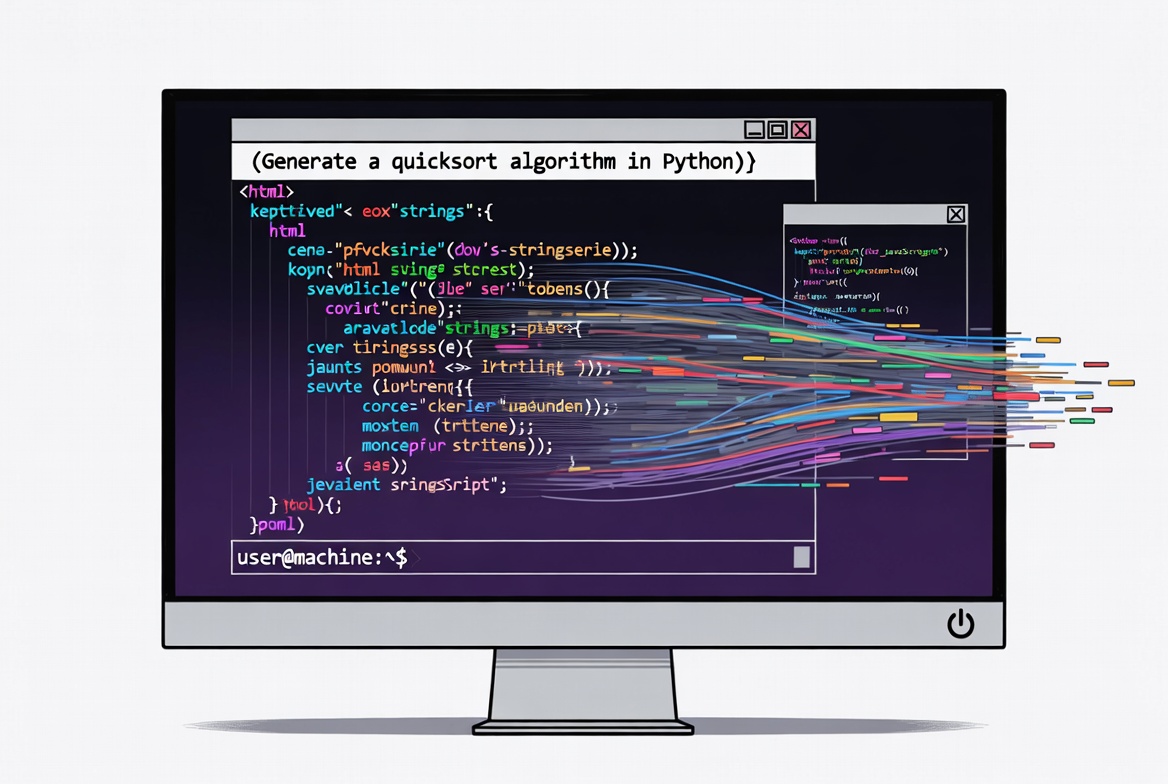
When AI-assisted code, summaries, prompts, or automated actions move into customer work or internal systems, the insurance review should follow the data trail.
A data leak can start with a normal workday prompt
The exposure often looks ordinary at first: an employee asks a public AI tool to summarize a spreadsheet, a team member uploads a contract for review, a chatbot sees a support ticket, or a copilot searches internal files. The insurance review should follow the data, not the buzzword. What entered the tool, where did it go, who can see it later, and what would happen if the output exposed something it should not?
A prompt can contain names, emails, customer lists, contract terms, financial records, health details, passwords, or source code.
Spreadsheets, PDFs, claims files, intake forms, proposals, logs, or contracts may be uploaded into tools that were never reviewed.
Copilots and assistants connected to email, calendars, storage, ticketing systems, CRMs, or databases can surface information quickly.
A response, summary, recommendation, chatbot answer, or agent action can reveal information beyond the intended audience.
Select the AI use case and see where the disclosure review starts
This visual map is built to start a better broker conversation. It does not decide coverage and does not replace policy review. It helps identify which facts should be collected before anyone assumes a cyber, E&O, privacy, or AI-specific policy will respond.
Employee prompt exposure
A team member pastes customer, employee, contract, or operational information into an AI tool to summarize, rewrite, analyze, or compare it.
Useful records include a list of approved AI tools, examples of allowed and prohibited prompts, and a practical rule for when human review is required.
Do not assume a traditional cyber policy answers every AI data event
Cyber insurance should still be part of the conversation, but AI data disclosure can involve a different path. The business may have authorized the tool, the employee may have had access to the data, and the disclosure may involve prompts, uploads, connected permissions, output behavior, or vendor handling rather than a classic network break-in.
Traditional cyber questions
A cyber review often starts with whether there was unauthorized access, network compromise, ransomware, stolen credentials, business interruption, privacy notification, or incident response.
- Was there an intrusion, compromise, or security failure?
- Was data accessed, stolen, encrypted, or exfiltrated?
- What response, notification, forensic, or legal obligations follow?
AI disclosure questions
An AI data disclosure review asks how information moved through prompts, uploaded files, AI outputs, vendor logs, connected apps, chatbot responses, or AI agents.
- Was sensitive information placed into or made available to an AI tool?
- Can the tool retain, summarize, expose, or route information?
- Was the output shared with a customer, user, vendor, or public audience?
The review gets better when the data trail is clear
A useful AI data disclosure review is not built from theory. It is built from examples: the tools your team uses, the information those tools can reach, the prompts people actually run, and the path output takes after the tool responds.
List tools the business allows, tools embedded in vendor platforms, and tools employees may be using informally.
Identify customer records, employee information, contracts, health details, payment data, credentials, source code, and confidential files.
Document what employees may and may not paste, upload, summarize, translate, analyze, or rewrite using AI tools.
Flag AI access to email, calendars, drives, CRMs, ticketing systems, databases, code repositories, or shared workspaces.
Review data retention, training use, logging, confidentiality, subcontractors, deletion rights, indemnity, and limitations of liability.
Know what customer-facing AI can answer, which records it can access, when it escalates, and how risky output is corrected.
For AI agents, document what they can read, send, move, edit, delete, trigger, or publish without approval at every step.
Know who handles a suspected AI data event, who preserves prompts and logs, and who communicates with customers, vendors, or carriers.
Find the insurance issue connected to this AI data risk
Search the map below. These are normal crawlable HTML links first, with a small on-page filter for visitors who want to move quickly.
The main AI liability review page for businesses using AI tools, chatbots, copilots, data, code, and agents.
Explore page 01Generative AI Errors & OmissionsFor inaccurate, incomplete, or fabricated AI output that creates a professional liability concern.
Explore page 02AI IP Infringement & DefamationFor AI-generated copy, creative work, code, media, false statements, or publication-related claims.
Explore page 04Agentic AI LiabilityFor AI agents that can read, move, send, update, or trigger workflow steps without approval at every step.
Explore page 05AI Bodily Injury & Property DamageFor physical-world consequences tied to AI instructions, recommendations, or automated actions.
Explore page 06AI Developer vs Deployer InsuranceFor sorting whether the business builds, modifies, deploys, integrates, or simply uses AI tools.
Explore page 07AI Governance & InsurabilityFor usage policies, prompt rules, human review, vendor controls, and records that help explain the risk.
Explore page 08Generative AI Insurance by IndustryFor industry-specific AI use in legal, healthcare, marketing, SaaS, financial, and service businesses.
Explore page 09How Generative AI Insurance WorksFor the review process, information usually gathered, and questions that shape the conversation.
Explore page CyberCyber InsuranceFor data breach, privacy, network security, ransomware, and incident-response questions connected to AI use.
Explore page E&OErrors & Omissions InsuranceFor professional service mistakes, advice, deliverables, and customer reliance concerns.
Explore page TechTechnology E&O / Cyber IntakeFor software, SaaS, IT, MSP, developer, and technology accounts needing a technical review.
Explore pageNo matching page found. Try “prompt,” “data,” “chatbot,” “agent,” “cyber,” “E&O,” or “governance.”
AI data exposure needs a disciplined commercial insurance review
Data disclosure through AI is easy to describe badly. A strong broker conversation separates normal cyber exposure, privacy liability, professional liability, vendor obligations, and AI-specific wording without pretending every policy answers the same way.
Our team of agents
Kelly Insurance Group is proud of its team of agents. For AI data disclosure, the value is in asking specific questions, organizing the data trail, and helping the account make sense before coverage is discussed.
Meet the teamInsurance lineage since 1881
The agency’s history traces back to an insurance lineage beginning in 1881. New exposures still require old-fashioned discipline: facts first, wording second, assumptions last.
Read our historyClient portal convenience
Once you are a customer, most customers are given access to the Kelly Insurance Group client portal. Depending on account setup and permissions, policy documents and certificate tools can be available, including certificate of insurance functions when enabled.
Client portalTell us what data your AI tools can touch
The most useful first conversation is specific. Tell us which tools are used, what data enters prompts or uploads, whether AI connects to internal systems, whether output reaches customers, and whether any AI agent can move or send information.
Book a conversationUse the appointment link when you are ready to walk through AI use, data handling, and coverage questions.
Bring real examplesPrompt examples, approved-tool lists, vendor tools, chatbot flows, and connected-system permissions are useful.
Map the policy stackThe review compares the exposure against cyber, privacy, professional liability, technology liability, and AI-specific wording.
Generative AI data disclosure questions
What is generative AI data disclosure insurance?
How is this different from a normal cyber insurance question?
Is employee prompt use really something to review?
Can vendor AI tools create disclosure risk?
What makes AI agents different?
What records help with the insurance review?
How do I start with Kelly Insurance Group?
What happens after becoming a Kelly Insurance Group customer?
Risk-management language that helps the conversation
These resources are included for general risk-management context. They are not insurance policy wording and do not determine whether a specific claim is covered.
This page provides general insurance information for businesses evaluating generative AI data disclosure insurance, AI prompt data exposure, AI privacy liability, AI chatbot data leakage, AI vendor data handling, shadow AI use, AI data governance, AI agent data movement, cyber insurance, privacy insurance, and technology E&O review. It is not legal advice, not a coverage opinion, and not a guarantee that any policy will respond to a particular claim or event. Coverage depends on the actual policy forms, endorsements, exclusions, underwriting, facts, jurisdiction, and carrier position.