LIABILITY PLANNING FOR PUBLIC VISIBILITY AND REPUTATION RISK
Kelly Insurance Group helps high-visibility individuals, entertainers, executives, athletes, and public figures review insurance for the specific liability exposures that come with public life — defamation, invasion of privacy, reputational damage claims, online content liability, and the coverage gaps in standard personal insurance programs that leave public-facing individuals exposed to claims that standard homeowners and umbrella policies were not designed to address.
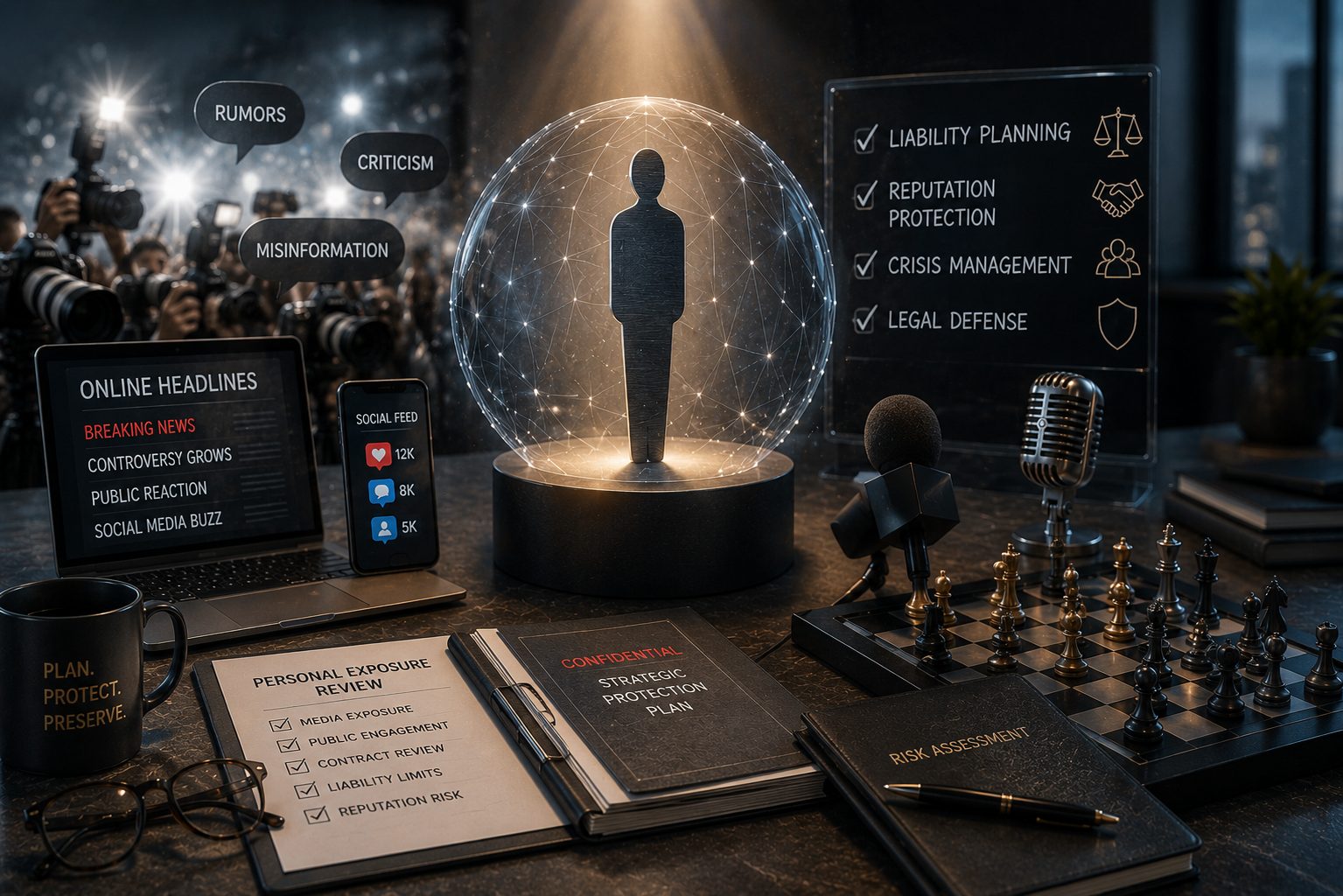
WHY HIGH-VISIBILITY INDIVIDUALS NEED LIABILITY COVERAGE BEYOND STANDARD PERSONAL INSURANCE.
A public figure who makes a statement that a third party claims is false and damaging — in an interview, on social media, in a podcast, in published content, or in a business context — faces a defamation claim. Defending a defamation claim, regardless of its merit, involves significant legal fees. Standard personal liability coverage rarely adequately addresses this exposure, particularly for content published through digital channels.
Public figures retain privacy interests in their personal and family lives, and can face claims from others whose privacy they are alleged to have invaded. Media liability policies address these claims; standard personal umbrella policies address some through personal injury provisions, but with limitations that may be inadequate for the scale of claims facing a high-profile individual.
A public figure with a million social media followers publishes content at a scale that creates proportional liability exposure. A statement that would be a minor interpersonal dispute between private individuals becomes a significant legal exposure when published to a large audience. The speed at which online content spreads — and the difficulty of retracting it — makes online content liability a specific planning consideration.
Public figures who enter brand partnerships, sponsored content arrangements, and endorsement deals create additional liability through the content they produce in those contexts. A statement made as part of a sponsored post, an endorsement that is later claimed to be misleading, or a brand association that creates reputational harm can generate liability that may not be addressed by the personal umbrella or the brand partner's commercial policy.
When a reputational event occurs — a media story, a social media controversy, a legal matter that becomes public — the immediate costs include public relations and communications firm fees, legal counsel, and in some cases security. Some specialty insurance products include crisis response services or cost reimbursement. Understanding which costs are insured before a crisis occurs changes the response planning equation significantly.
PUBLIC VISIBILITY LIABILITY COVERAGE ELEMENTS
HIGH-VISIBILITY INDIVIDUALS WHO NEED A PUBLIC LIABILITY REVIEW.
Any individual whose public profile — through social media, media appearances, business activities, or professional reputation — creates liability exposure beyond standard premises and auto negligence benefits from a dedicated public visibility liability review.
- Entertainers, musicians, actors, and performers whose public statements and content create defamation exposure
- Athletes and sports figures with significant public platforms and endorsement activities
- Executives and business founders whose public statements about competitors, markets, or individuals create liability
- Creators and influencers who publish opinion, commentary, and review content at scale
- Public officials and civic leaders whose official statements and public roles create specific liability exposure
- Any high-visibility individual whose personal insurance program has never been reviewed for public-figure-specific liability gaps
SELECT A LIABILITY SCENARIO TO SEE THE RELEVANT COVERAGE CONSIDERATIONS.
High-visibility individuals carry a distinct liability profile that standard personal insurance is not designed to address. Understanding where the exposure exists is the first step in structuring coverage that actually responds.
High-visibility individuals face elevated exposure to defamation claims. A public figure who makes statements about others in the course of their public activity — through social media, in interviews, or in published content — carries liability exposure for statements that a third party claims are false and damaging. Standard personal liability coverage rarely addresses this exposure adequately.
- Personal injury coverage in homeowners and umbrella policies may address defamation
- Media liability coverage specifically addresses libel and slander claims
- Social media activity is increasingly the source of defamation claims against public figures
- Brand-sponsored content and paid partnerships create additional liability for statements made
- Legal defense costs in defamation matters can be significant even without a judgment
WHAT THE REVIEW COVERS.
MEDIA LIABILITY COVERAGE REVIEW
Review of media liability coverage options for public-facing individuals — addressing defamation, libel, slander, invasion of privacy, and right of publicity claims arising from public statements, published content, and media appearances.
PERSONAL UMBRELLA LIABILITY GAP ANALYSIS
Review of the personal umbrella policy for public-figure-specific coverage gaps — identifying what the umbrella covers and what it excludes for defamation, privacy, and content-related claims.
BRAND PARTNERSHIP AND CONTENT LIABILITY
Review of liability exposure arising from brand partnerships, sponsored content, endorsement deals, and commercial content — confirming that coverage addresses the specific liability created by each type of partnership activity.
CRISIS RESPONSE COST COVERAGE
Review of insurance coverage for crisis response costs — PR fees, communications firm costs, legal counsel during a reputational event — and coordination of crisis response coverage with the broader liability program.
FOUR PUBLIC VISIBILITY LIABILITY GAPS HIGH-PROFILE INDIVIDUALS CARRY.
Homeowners personal liability and personal umbrella cover negligence — slipping on your property, auto accidents, premises injuries. They do not reliably cover defamation arising from published statements. A public figure who makes a statement that triggers a defamation lawsuit may find their personal insurance program provides no coverage for legal defense or judgment.
Posts, stories, and online statements that reach large audiences create liability at scale that standard personal insurance was not designed to address. A single social media post that generates a defamation or privacy claim can result in significant legal costs without any insurance response.
A sponsored post or endorsement deal often falls between the public figure's personal insurance and the brand's commercial policy. The brand's policy protects the brand — not the public figure. Specific media liability coverage addresses this gap.
PR firm fees, crisis communications consultants, and legal counsel during a public reputational event can reach tens of thousands of dollars before any litigation begins. Without specific coverage for these costs, they are entirely out of pocket — even when the underlying matter ultimately results in no judgment.
QUESTIONS THAT OFTEN COME UP.
Does my personal umbrella cover defamation claims?
Most personal umbrella policies include personal injury coverage that addresses defamation, libel, and slander — but the coverage is often limited and may contain exclusions for business activities, intentional acts, or content published in a professional context. The coverage that applies in any specific defamation claim depends on the specific facts and the specific policy language.
What is media liability insurance?
Media liability insurance covers claims arising from published content — defamation, libel, slander, invasion of privacy, right of publicity violations, and similar claims. It is specifically designed for individuals and entities that publish content at scale and face the liability that comes with public statements and media presence.
Are my social media posts covered by my personal insurance?
Possibly, under the personal injury provision of the homeowners or umbrella policy — but coverage depends on the specific policy language and whether the content was published in a personal or business capacity. Media liability coverage specifically addresses social media content liability at scale.
What does crisis response coverage provide?
Crisis response coverage reimburses the costs of professional crisis communications, public relations firm fees, and related expenses incurred in response to a reputational event. It addresses the PR and communications costs that arise alongside legal matters when a reputational incident goes public.
Is my brand partnership content covered by the brand's insurance?
The brand's commercial general liability and errors and omissions coverage protects the brand — not the public figure who is the partner. A claim arising from sponsored content would typically need to be addressed by the public figure's own media liability or personal umbrella.
What does invasion of privacy mean in an insurance context?
Invasion of privacy in an insurance context typically covers claims that the insured intruded upon someone's private life, disclosed private information without consent, or used someone's name or likeness without authorization. Media liability policies specifically address these claims.
COVER THE LIABILITY THAT COMES WITH BEING KNOWN — NOT JUST WITH BEING NEGLIGENT.
Kelly Insurance Group can help high-visibility individuals review media liability coverage, personal umbrella gaps for public-figure liability, brand partnership content risk, and crisis response cost coverage.
The availability of coverage and eligibility for coverage can depend on numerous factors. We cannot guarantee that all customers, individuals, and businesses looking for coverage will be successful in these efforts when contacting our team. All policy coverages and terms need to be fully reviewed by the respective consumer to ensure the coverage asked for is what is specifically being quoted or provided by any insurance policy. Insurance Policies, Coverage Changes, and their terms and conditions are not bound or altered until written confirmation is provided by one of our licensed team members or underwriters. This page does not offer legal advice, legal opinions, or policy interpretations. Rather, this page is meant as a resource to help provide customers and insurance consumers with additional considerations that may help in their insurance buying or pursuit of insurance information. Kelly Insurance Group does not employ or direct attorneys.