EQUINE FARM RANCH AND ESTATE LIABILITY PLANNING
Kelly Insurance Group helps high-net-worth individuals and private clients review insurance for equine ownership, farm and ranch properties, and agricultural estate liability — addressing equine liability for horse-related injuries, horse mortality and major medical coverage, farm and ranch premises liability, agricultural workers compensation, and the specific gaps in standard homeowners and umbrella policies that leave farm, ranch, and equine property owners without adequate coverage.
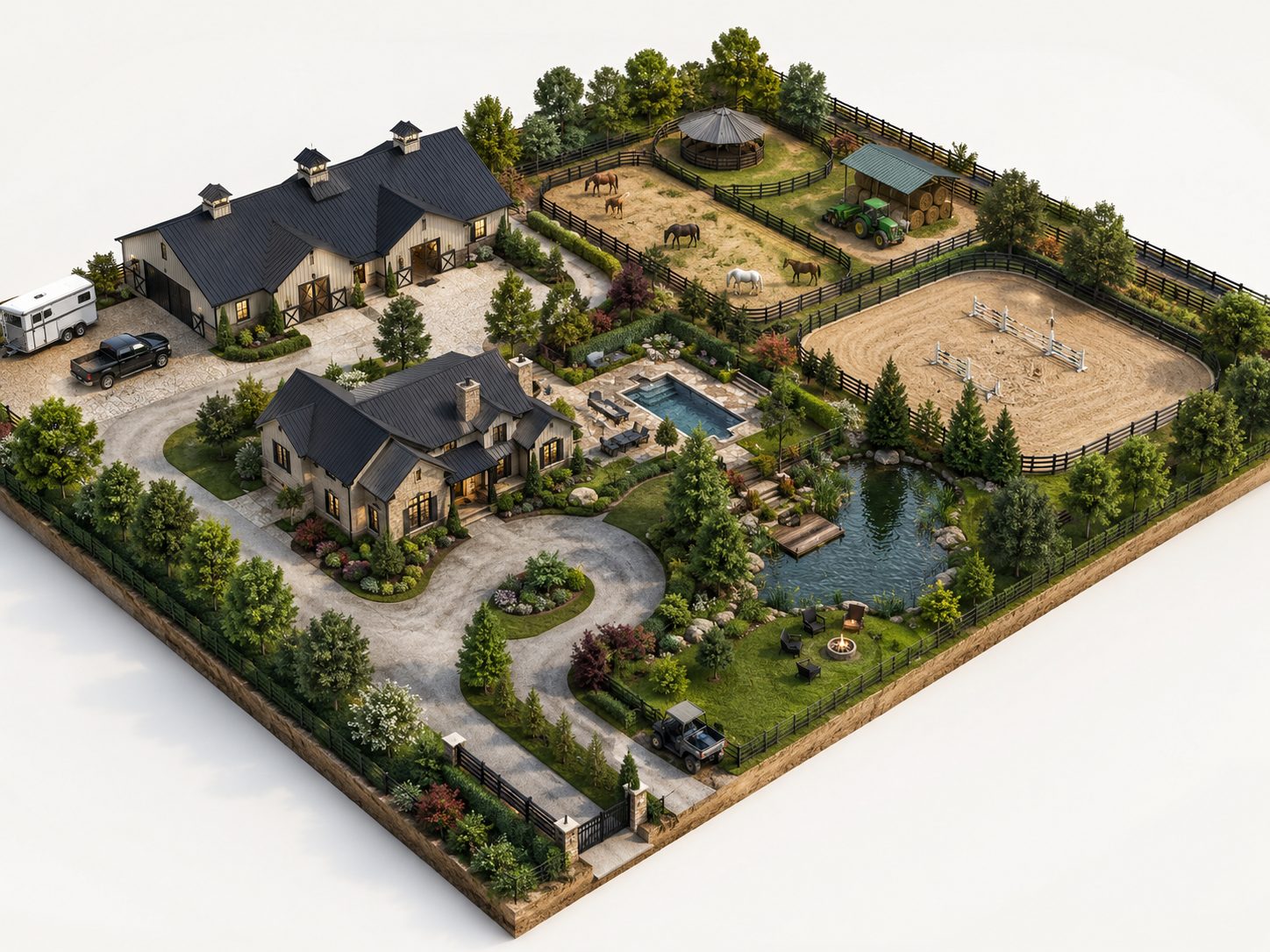
THE SPECIFIC INSURANCE REQUIREMENTS OF EQUINE OWNERSHIP AND FARM AND RANCH PROPERTY.
Horses are large, powerful animals that create significant liability exposure for their owners. A horse that kicks a handler, bites a visitor, escapes and damages neighboring property, or injures a rider creates bodily injury and property damage claims against the owner. Standard homeowners and personal umbrella policies frequently exclude farm animals and equine-related liability, leaving equine property owners without insurance coverage for these incidents. Specific equine liability coverage — either as a standalone policy or as part of a farm and ranch program — addresses this gap.
A quality horse is a significant financial asset. Equine mortality insurance provides agreed value coverage for the loss of the horse through death or humane destruction due to injury or illness — the horse equivalent of life insurance. Major medical coverage addresses the increasingly significant cost of equine veterinary care: colic surgery, orthopedic procedures, diagnostic imaging, and intensive care hospitalization for horses can reach $15,000 to $30,000 or more for a single incident.
A farm, ranch, or equestrian property creates premises and operations liability that extends beyond standard residential liability. Visitors to the property — for trail rides, lessons, boarding, or social access — have potential injury claims against the property owner. Farm operations — equipment use, chemical application, livestock management — create both premises and operational liability. A farm package policy or farm and ranch liability endorsement addresses these exposures in a way that standard residential coverage does not.
A private farm, ranch, or equestrian facility that employs workers — stable hands, trainers, grooms, farm laborers, or ranch hands — has employer obligations for workers compensation and employment practices liability. Agricultural workers compensation has specific state-by-state requirements that differ from standard household employee workers compensation. In some states, agricultural workers have separate workers compensation classification; in others, standard workers compensation requirements apply.
A high-net-worth individual with a large rural estate — combining residential property, equestrian facilities, agricultural operations, farm workers, recreational land, and outbuildings — requires a coordinated insurance program that addresses each component. The residential portion requires high-value homeowners coverage; the equine and agricultural operations require farm and ranch coverage; the workers require workers compensation; and the personal umbrella must sit over all underlying coverages with adequate limits.
EQUINE FARM AND RANCH COVERAGE ELEMENTS
PRIVATE CLIENTS WITH EQUINE, FARM, AND RANCH PROPERTY INSURANCE NEEDS.
Any high-net-worth individual who owns horses, maintains an equestrian property, or owns farm or ranch land with agricultural operations benefits from a dedicated equine, farm, and ranch insurance review.
- Horse owners whose equine liability is not specifically addressed by their homeowners or umbrella policy
- Competition horse owners whose animals represent significant financial investment requiring mortality and major medical coverage
- Owners of farm, ranch, or agricultural estate property with premises liability beyond standard residential coverage
- Private equestrian facilities that board horses or offer riding instruction — creating commercial equine liability
- Rural estate owners with farm employees, stable workers, or ranch hands requiring agricultural workers compensation
- Any property owner with livestock whose standard homeowners policy may exclude farm animal liability
SELECT A LIABILITY AREA TO SEE THE RELEVANT COVERAGE CONSIDERATIONS.
Equine ownership, farm and ranch property, and agricultural operations each create specific liability exposures that standard homeowners and umbrella policies were not designed to address.
Horses are large, powerful animals capable of serious injury to riders, handlers, bystanders, and neighboring property. Equine liability covers bodily injury and property damage claims arising from horse-related incidents — a horse that kicks a handler, a rider who falls and claims negligent instruction, a horse that escapes and damages a neighboring property. Standard homeowners and umbrella policies often exclude farm animals and equine liability.
- Bodily injury to riders — falls, kick injuries, and riding-related incidents
- Bodily injury to handlers and barn staff — handling and grooming injuries
- Equine escape and neighboring property damage
- Third-party livestock and property damage from escaped horses
- Equine liability exclusions in standard homeowners and umbrella policies
WHAT THE REVIEW COVERS.
EQUINE LIABILITY AND MORTALITY COVERAGE
Equine-specific liability coverage for horse-related injury and property damage claims, alongside equine mortality and major medical coverage for horses as high-value assets — placed with carriers that specialize in equine insurance.
FARM AND RANCH LIABILITY AND PROPERTY
Farm and ranch package coverage addressing premises and operations liability, farm personal property including barns and equipment, and agricultural liability for farms with livestock, crops, or active agricultural operations.
AGRICULTURAL WORKERS COMPENSATION
Workers compensation coverage for farm, ranch, and stable employees — confirmed against applicable state agricultural workers compensation requirements and coordinated with the overall household and farm employer insurance program.
ESTATE PROGRAM COORDINATION
Coordination of the full insurance program for large rural estates — residential high-value homeowners, equine and farm coverage, workers compensation, personal umbrella, and farm or equine umbrella — into a coherent program that addresses every exposure without gaps.
FOUR EQUINE AND FARM LIABILITY COVERAGE GAPS THAT CREATE UNINSURED EXPOSURE.
A homeowners policy that excludes farm animals — including horses — provides no liability coverage when a horse injures a visitor, escapes and damages a neighboring property, or injures the owner's own family member. Discovering this exclusion at claim time, rather than at policy review, is a common and costly oversight for equine property owners.
A competition horse valued at $50,000 to $500,000 that is covered only under standard personal property coverage — or not specifically covered at all — is a significant uninsured financial asset. Equine mortality insurance at agreed value specifically addresses the horse as a high-value living asset that standard property coverage is not designed to protect.
A private equestrian property with stable hands, grooms, or trainers operating without workers compensation coverage creates direct personal liability for any work-related injury. Agricultural workers compensation requirements vary by state, but most states require coverage for regular agricultural employees. An injured stable hand's medical costs and wage replacement are entirely the owner's personal liability without coverage.
A personal umbrella policy that is designed for residential exposures may not extend over farm and ranch underlying coverage. A farm property with farm and ranch underlying coverage may need a separate farm umbrella — or specific endorsement to the personal umbrella — to have excess liability coverage over the farm operations.
QUESTIONS THAT OFTEN COME UP.
Does my homeowners policy cover my horses?
Standard homeowners policies frequently exclude farm animals — including horses — from personal liability coverage. The specific exclusion language varies by carrier and policy form. For any horse owner, reviewing the homeowners policy for equine liability exclusions is a critical first step. Specific equine liability coverage addresses what the homeowners policy excludes.
What is equine mortality insurance?
Equine mortality insurance is the horse equivalent of life insurance — it pays the agreed value of the horse in the event of death or humane destruction due to injury or illness. The coverage is typically placed on an agreed value basis — the owner and the insurer agree on the horse's value at policy inception. Major medical coverage is a companion coverage that addresses the cost of veterinary care for illness and injury.
Is a private equestrian property that boards horses for others a commercial operation?
Generally yes — a property that boards horses for compensation, offers riding lessons, or operates training facilities has a commercial equine operation that requires commercial equine liability coverage rather than personal or residential equine coverage. The commercial nature of the activity changes the coverage requirements significantly.
Do I need separate workers compensation for my stable hands and farm workers?
In most states, yes. Workers compensation requirements for agricultural and farm workers vary by state but are required in most jurisdictions for regular agricultural employees. A private equestrian property with stable hands, grooms, or trainers working regularly on the property has employer obligations for workers compensation. The state where the workers are employed determines the applicable requirements.
Does my personal umbrella extend over my farm and ranch coverage?
Not automatically. A personal umbrella policy designed for residential exposures may not extend over farm and ranch underlying coverage. A farm umbrella — or a specific endorsement to the personal umbrella confirming that farm and ranch underlying coverage is included — is needed for the umbrella to provide excess liability over farm operations.
What is loss of use coverage for horses?
Loss of use coverage provides financial compensation when a horse is permanently unable to perform its intended purpose — competition, breeding, or other specific use — due to injury or illness, even when the horse survives. It is particularly relevant for competition horses and breeding stallions whose specific performance value is integral to their overall economic value.
READY TO START?
Tell us about your situation and a member of the team will be in touch.
COVER THE PROPERTY FOR WHAT IT ACTUALLY IS — NOT JUST AS A RESIDENCE.
Kelly Insurance Group can help private clients review equine liability and mortality coverage, farm and ranch insurance, agricultural workers compensation, and the coordination of the full rural estate insurance program.
The availability of coverage and eligibility for coverage can depend on numerous factors. We cannot guarantee that all customers, individuals, and businesses looking for coverage will be successful in these efforts when contacting our team. All policy coverages and terms need to be fully reviewed by the respective consumer to ensure the coverage asked for is what is specifically being quoted or provided by any insurance policy. Insurance Policies, Coverage Changes, and their terms and conditions are not bound or altered until written confirmation is provided by one of our licensed team members or underwriters. This page does not offer legal advice, legal opinions, or policy interpretations. Rather, this page is meant as a resource to help provide customers and insurance consumers with additional considerations that may help in their insurance buying or pursuit of insurance information. Kelly Insurance Group does not employ or direct attorneys.