Pet Food Product Recall Insurance
Recall coverage review for pet food manufacturers, treat brands, chew companies, animal feed producers, supplement makers, co-packers, importers, private-label brands, and animal product distributors.
A pet food recall is not just a bad batch. It can become a retailer problem, distributor problem, customer notification problem, brand problem, shipping problem, disposal problem, replacement problem, supplier problem, and insurance problem at the same time. Kelly Insurance Group helps pet food, treat, chew, feed, and supplement businesses review product recall coverage around the actual product chain: ingredients, batching, labels, lot codes, distributors, warehouses, retailers, online sales, complaints, and recall response.
contamination, labeling, ingredient, foreign material, withdrawal demand
lot codes, supplier records, batch logs, production dates, warehouses
retailers, distributors, customers, online platforms, private-label partners
freight, storage, retrieval, disposal, replacement, documentation
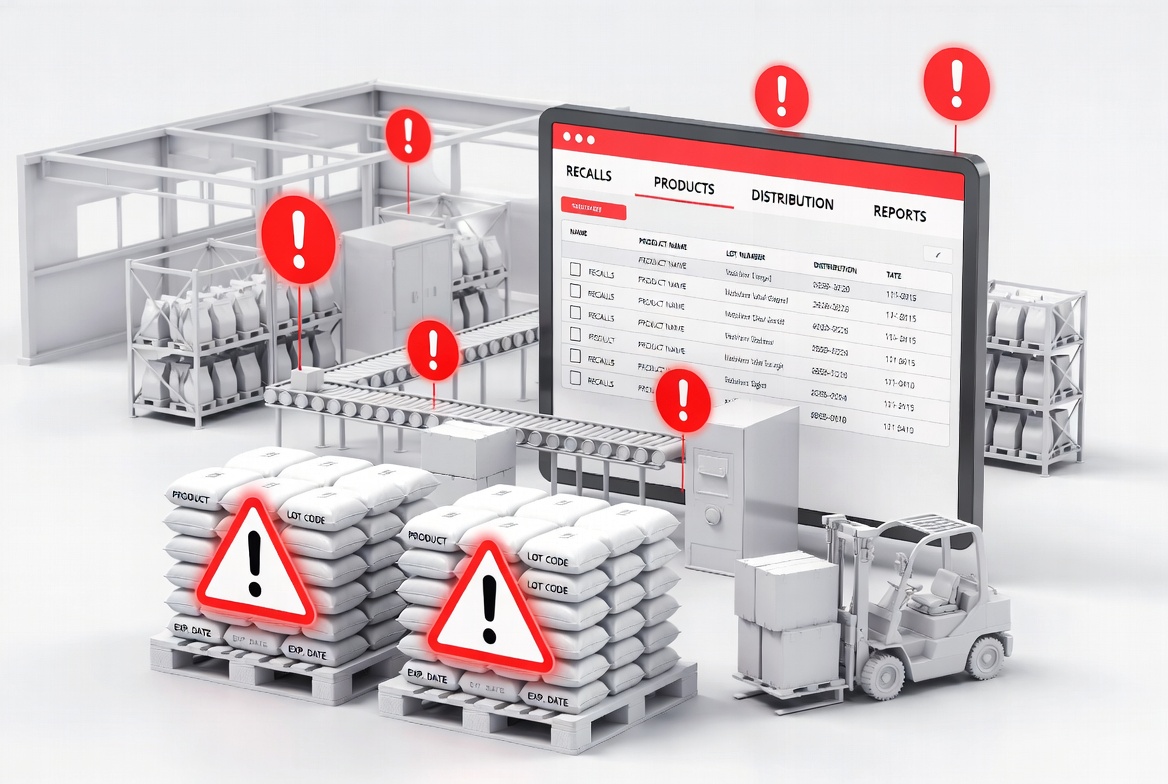
Move through the recall pressure points
Pet food product recall insurance is easier to review when the response chain is clear. Select a pressure point and see what the underwriter needs to understand.
The recall discussion starts with what can activate the response.
A recall or withdrawal concern may involve contamination, foreign material, mislabeling, supplier problems, formula issues, adverse reports, retailer demands, or quality-control findings. The exact coverage trigger depends on policy wording, endorsements, exclusions, and documentation.
A product recall can hit every part of the pet food business at once
A recall event may start with one complaint, one ingredient, one supplier, one production run, one lot code, one warehouse, or one retailer. The problem is that the response rarely stays in one place. Product may already be sitting in a distributor warehouse, on a store shelf, in an online fulfillment center, with a private-label customer, or inside a consumer’s home.
Product recall coverage should be reviewed beside products liability, commercial property, equipment breakdown, business income, cargo, inland marine, cyber, crime, contracts, general liability, and umbrella coverage. The policy wording, trigger language, sublimits, exclusions, notification requirements, and crisis-response provisions need to match the way the product is actually made and sold.
Recall details carriers may want to understand
- Products manufactured, imported, packaged, co-packed, private-labeled, distributed, or sold online
- Ingredient sources, imported components, supplier controls, certificates, testing, and quality checks
- Lot coding, batch records, production dates, expiration dates, retention samples, and traceability procedures
- Retailers, distributors, warehouse locations, online platforms, private-label customers, and contract requirements
- Recall plan, mock recall history, complaint logs, adverse reports, customer notification process, and crisis communication
- Prior recalls, market withdrawals, product complaints, contamination allegations, rejected batches, or carrier restrictions
Recall insurance should be reviewed beside the rest of the product program
Recall insurance is not a substitute for products liability. It is a separate review focused on response costs and product withdrawal pressure. A strong account explains how the company identifies the affected product, communicates with the market, retrieves the product, replaces or disposes of it, and documents what changed afterward.
Product Recall Expense
Reviews certain costs tied to product withdrawal, customer notification, retailer communication, shipping, storage, disposal, replacement, testing, crisis response, and recall management, subject to policy wording.
Product recall informationProducts Liability
Reviews claims alleging injury, illness, contamination, foreign material, defective product, labeling problems, ingredient issues, packaging defects, or other product-related damage allegations.
Products liability pageBusiness Income & Extra Expense
A recall or production shutdown can create revenue interruption, emergency logistics, replacement production, customer communication expense, and operational pressure.
Review business income exposureCommercial Property & Stock
Reviews raw ingredients, packaging inventory, finished goods, rejected stock, refrigeration, warehouse space, production equipment, storage areas, and property affected by a batch issue.
Pet food manufacturer hubCargo & Inland Marine
Product may be in transit, at a third-party logistics location, inside a distributor warehouse, at an online fulfillment center, or moving through a retailer network.
Inland marine informationCyber, Crime & Contracts
Recall response may rely on customer databases, retailer portals, email, payment systems, inventory systems, vendor records, distributor files, and contract obligations.
Cyber liability informationAnimal product businesses where recall planning belongs in the insurance review
Information to prepare before a product recall insurance review
- Product list, product categories, animal type, formulas, annual sales, and distribution channels
- Manufacturing role: manufacturer, importer, distributor, private-label brand, co-packer, or contract manufacturer
- Lot codes, batch records, production dates, expiration dates, retention samples, and traceability procedures
- Ingredient sourcing, supplier agreements, imported ingredients, certificates, testing, and quality-control procedures
- Recall plan, mock recall results, complaint handling, adverse report handling, notification process, and crisis response
- Retailer contracts, distributor agreements, private-label agreements, online platform requirements, and customer records
- Prior recalls, withdrawals, product complaints, rejected batches, contamination allegations, and corrective action
- Current policies, exclusions, recall sublimits, deductibles, endorsements, contract requirements, and carrier restrictions
The recall submission needs to prove the company can find the product, pull it, and explain the response
Pet food product recall insurance is easier to review when the underwriter can see how the business tracks batches, handles complaints, manages suppliers, communicates with retailers, and responds to a withdrawal. A recall plan that only exists after a crisis is already too late.
Kelly Insurance Group helps organize the recall story around the actual operation: product categories, ingredients, manufacturing process, batch tracking, quality controls, distribution channels, customer obligations, and prior product issues. That structure matters for manufacturers, importers, private-label brands, co-packers, and hard-to-place accounts.
How to make a pet food recall account easier to underwrite
List food, feed, treats, chews, supplements, private-label items, imported goods, formulas, and animal type.
Show lot codes, production records, supplier records, testing, retention samples, expiration dates, and complaint logs.
Document retailers, distributors, warehouses, online marketplaces, private-label customers, and customer records.
Provide recall plans, mock recall results, notification procedures, replacement process, disposal process, and corrective action.
Use the right page for the actual product risk
Product recall is one part of the pet food and animal feed manufacturing insurance cluster. Use the related pages below when the issue is products liability, feed supplements, imported treats, manufacturing property, or broader recall review.
Pet Food Product Recall Insurance Questions
What is pet food product recall insurance?
Pet food product recall insurance is reviewed for certain expenses tied to withdrawing, replacing, disposing of, notifying customers about, or responding to a recalled product, subject to policy wording. It should be reviewed for pet food, animal feed, treats, chews, supplements, imported products, private-label brands, and co-packed products.
Is product recall insurance the same as products liability insurance?
No. Products liability generally addresses claims alleging injury or damage caused by a product. Product recall coverage focuses on certain costs involved in pulling, replacing, disposing of, or responding to a recalled or withdrawn product, depending on the policy.
Why does batch tracking matter for recall insurance?
Batch tracking matters because the business needs to identify which ingredients, lots, production dates, warehouses, distributors, retailers, and customers may be affected. Strong traceability can help explain the account to carriers.
What information helps quote pet food product recall insurance?
Useful information includes product categories, annual sales, manufacturing role, supplier controls, quality control, lot coding, recall plan, complaint history, distribution channels, retailer requirements, and prior recalls or withdrawals.
Can Kelly Insurance Group help with a prior recall or withdrawal history?
Yes. Prior recall or withdrawal history should be explained with what happened, what products were involved, current status, corrective action, supplier changes, quality-control changes, and current recall procedures.
Send the recall plan, product list, batch tracking, supplier, and distribution details before a product problem becomes urgent.
Tell us what products are involved, how batches are tracked, how ingredients are sourced, how complaints are handled, where products are distributed, and whether there are prior recalls, withdrawals, rejected batches, or carrier restrictions.