FOOD HALL INSURANCE
Multi-vendor shared seating and a curated food scene — specialty coverage for food halls and shared food markets.
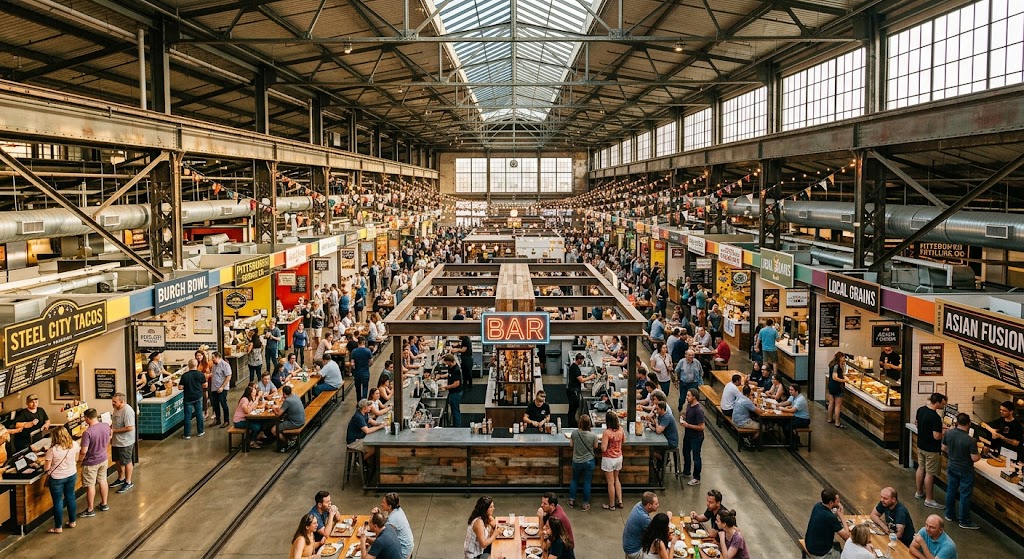
A FOOD HALL IS A VENUE AND A LANDLORD AT THE SAME TIME.
A food hall operator is both a venue and a landlord — responsible for the shared dining area, the overall premises liability, and the experience of every guest across all vendors. Individual vendors carry their own food liability, but the food hall operator needs to address the shared space, the common areas, and the overall event footprint that no individual vendor covers.
The communal seating area is the food hall operator's premises liability — not any individual vendor's.
Each vendor carries their own food liability, but the operator is responsible for gaps in the shared space.
Food halls with bars or vendors serving alcohol carry liquor liability across the shared footprint.
The food hall structure, shared kitchen infrastructure, and common area improvements are the operator's property.
TAP EACH AREA TO SEE THE COVERAGE QUESTION.
Food hall liability spans shared and vendor-specific space. Tap each. A general illustration — not a coverage determination.
HOW THE PROGRAM IS BUILT.
Shared dining area, common areas, entry, and grounds — the food hall operator's liability for the full footprint.
Requiring vendor certificates, managing coverage gaps, and addressing shared space liability at the operator level.
Bar and alcohol vendor service liability for the shared space, coordinated with the food hall's general liability.
Food hall structure, shared kitchen infrastructure, and common area improvements with income protection for covered closures.
STRAIGHT ANSWERS.
What does food hall insurance cover?
Food hall insurance covers general liability for shared dining and common areas, coordination with individual vendor coverage, liquor liability where alcohol is sold, commercial property for the food hall structure and shared infrastructure, and workers compensation for operator staff.
Who holds liability for the shared dining area?
The food hall operator holds premises liability for the shared dining area, common areas, restrooms, and entry — the spaces that no individual vendor controls. Individual vendors hold food liability for what they serve, but the operator is responsible for the shared space.
Do food hall vendors need their own insurance?
Yes. Each vendor should carry their own general liability and food product liability, and the food hall operator should require current certificates of insurance as a condition of participation. Vendor certificate management is an important part of operating a food hall.
Is liquor liability needed if a food hall has a bar?
Yes. A food hall with a bar or alcohol vendor carries liquor liability for the shared space. Whether the bar is operated by the food hall or a vendor, the liability exposure reaches the operator who controls the overall venue.
What happens if a vendor doesn't have adequate insurance?
If a vendor operates without adequate insurance and an incident occurs at their stall, the food hall operator's policy may be the last line of defense. This is why vendor certificate requirements and food hall operator coverage are both critical.
How do I get a food hall insurance quote?
Completing the intake form gathers your food hall format, vendor count, alcohol program, shared area square footage, and event schedule so the account can be reviewed and matched to the right specialty markets.
COVER THE HALL, THE VENDORS, AND EVERYONE IN THE SHARED SPACE.
Kelly Insurance Group builds specialty programs for food hall operators and multi-vendor shared dining venues.
The availability of coverage and eligibility for coverage can depend on numerous factors. We cannot guarantee that all customers, individuals, and businesses looking for coverage will be successful in these efforts when contacting our team. All policy coverages and terms need to be fully reviewed by the respective consumer to ensure the coverage asked for is what is specifically being quoted or provided by any insurance policy. Insurance Policies, Coverage Changes, and their terms and conditions are not bound or altered until written confirmation is provided by one of our licensed team members or underwriters. This page does not offer legal advice, legal opinions, or policy interpretations. Rather, this page is meant as a resource to help provide customers and insurance consumers with additional considerations that may help in their insurance buying or pursuit of insurance information. Kelly Insurance Group does not employ or direct attorneys.
RELATED INSURANCE PROGRAMS
Other Kelly Insurance Group coverages matched to this page