AIRCRAFT DAMAGE LIABILITY
Aircraft Damage Liability Insurance
Who Pays If You Damage a Plane?
This is one of the most important questions in aviation contractor insurance. If your business works around aircraft and a plane is damaged during your operations, your company may be responsible for a very large claim. That can include aircraft detailing, ramp service work, aircraft marshaling, towing coordination, fueling support, hangar operations, airport contractor work, and other aviation support services performed around high-value aircraft.
Many aviation contractors assume general liability automatically covers aircraft damage. That is a dangerous assumption. Depending on the facts, the policy language, and whether the aircraft was in your care, custody and control, the claim may not be covered the way you expect.
The Short Answer
If your company damages an aircraft, your business may be responsible for the repair cost, downtime exposure, and potentially related claims depending on the circumstances. That is why aviation contractor insurance needs to be structured correctly before a loss happens — not after.
Common Damage Scenarios
- Wing strike during ramp activity
- Surface scratches during aircraft detailing
- Equipment contact during servicing
- Improper marshaling or movement guidance
- Damage while fueling or supporting fueling operations
Why Claims Get Complicated
- Aircraft values are often very high
- General liability may not respond as expected
- Care, custody and control issues may exist
- Airport or FBO contracts can shift liability
- One incident can trigger multiple coverage questions
Who Should Care About This Page
- FBO service contractors
- Aircraft detailers and cleaners
- Ramp and ground handling contractors
- Fuel support and airport service vendors
- Aviation subcontractors working around aircraft
Why Aircraft Damage Claims Are So Serious
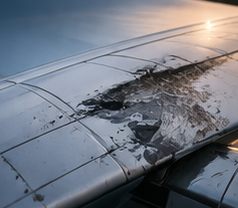
Aircraft damage claims are not like normal property damage claims. Even relatively minor damage to a wing, control surface, fuselage, propeller, paint system, or aircraft component can lead to major repair bills. Depending on the aircraft, what looks like a small issue can easily become a high-severity aviation claim.
For aviation contractors, the real problem is not just the damage itself. The real problem is whether the loss falls into a coverage gap created by policy exclusions, poor placement, or misunderstanding of aircraft-related liability exposure. This is why a page like this matters. Businesses searching for aircraft damage liability insurance are usually trying to figure out whether they are truly protected.
What Most Contractors Get Wrong
The biggest mistake is assuming a standard policy handles aircraft damage automatically. It often does not. If the aircraft is considered property in your care, custody and control, or if the facts point to direct responsibility tied to your operations, the claim can get messy very fast.
That is why aviation contractors should review aircraft damage exposure separately from standard business insurance assumptions. This is especially true for aircraft detailing insurance, aviation support services insurance, FBO contractor insurance, airport service contractor insurance, and any business operating near high-value aircraft on the ramp or in hangars.
How Aviation Contractors Should Think About This Exposure
Identify When Your Team Is Near Aircraft
If your employees or subcontractors work around aircraft, you likely have aircraft damage liability exposure.
Review Care, Custody & Control Issues
If an aircraft is under your supervision, being serviced by your business, or effectively entrusted to you, the coverage analysis changes.
Review Airport and FBO Contract Language
Contracts may expand your obligations through indemnification, insurance requirements, additional insured wording, and higher liability limits.
Make Sure the Insurance Structure Matches the Exposure
The goal is not just to have insurance. The goal is to have the right structure for your actual aviation operations.
Frequently Asked Questions
Does general liability cover damage to an aircraft?
Not automatically. That depends on the facts of the loss, the policy language, and whether care, custody and control issues are involved. Many aviation contractors assume the answer is yes when the real answer is far more complicated.
What if my employee damages a plane during detailing or ramp work?
Your business may still be responsible. That is why aviation contractors need to evaluate aircraft damage liability exposure carefully rather than relying on assumptions based on ordinary contractor policies.
Is this only an issue for mechanics?
No. This affects many kinds of aviation contractors including aircraft detailers, FBO service contractors, airport support service vendors, marshaling crews, fueling-related operations, and ground handling businesses.
Can Kelly Insurance Group help if the risk is difficult or already declined?
Yes. Hard-to-place aviation contractor risks are exactly where specialty placement matters. The issue is often not that coverage is impossible. The issue is that the submission has to be packaged properly and presented to the right market.
Related Aviation Insurance Pages
Need Help Reviewing Aircraft Damage Exposure?
If your business works around aircraft and you want help evaluating aircraft damage liability exposure, care, custody and control issues, or difficult aviation contractor insurance placement, Kelly Insurance Group can help.