PRIVATE CLIENT RISK MANAGEMENT FOR HOME STUDIOS AND CREATIVE SPACES
Kelly Insurance Group helps high-net-worth creators, executives, collectors, and private clients review insurance for home-based studios, creative workspaces, recording rooms, photography studios, and professional production environments — addressing the equipment coverage gap in homeowners policies, business visitor liability, studio build-out protection, and the coordination between personal and business insurance for production spaces within private residences.
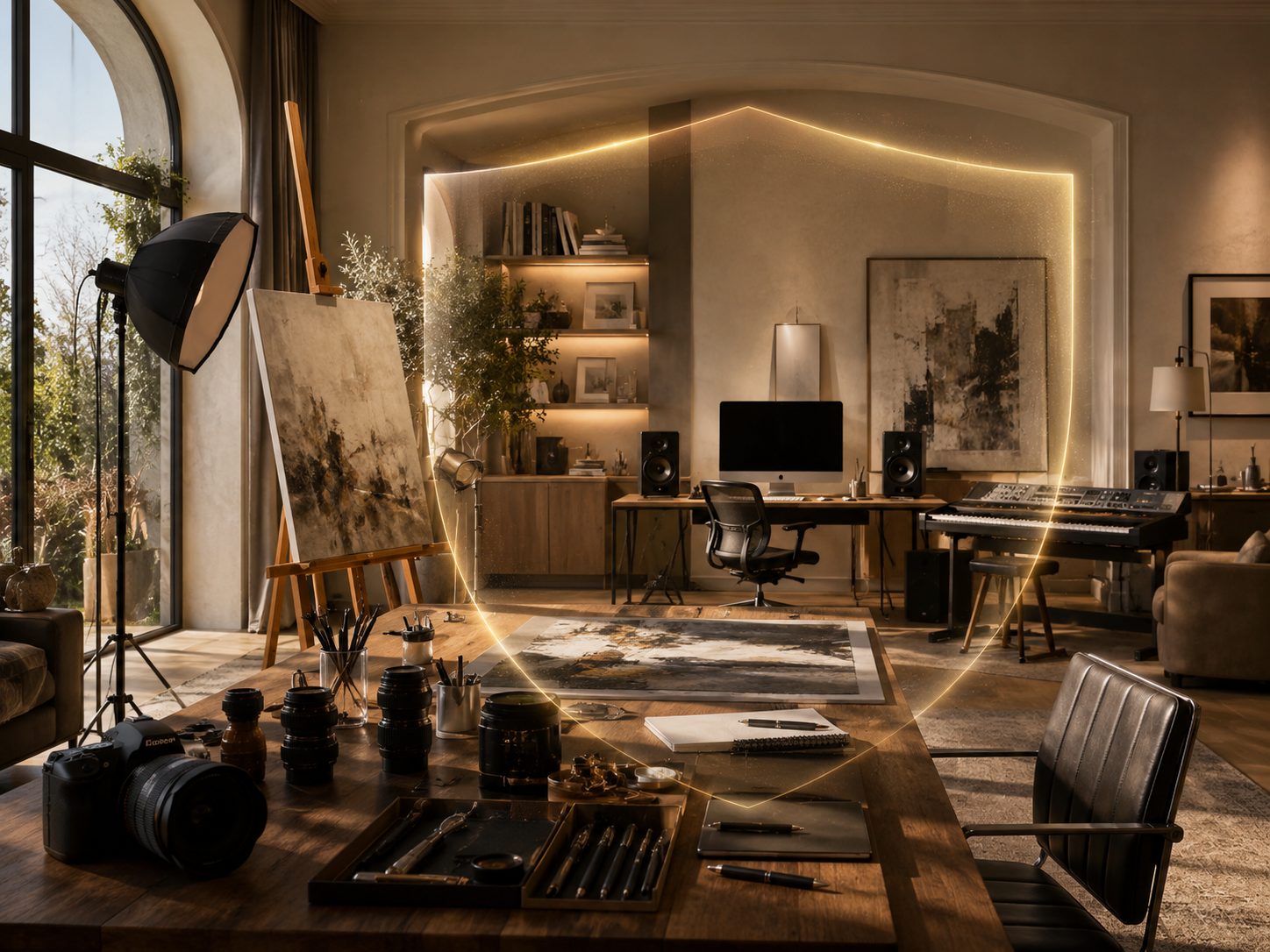
WHY A HIGH-VALUE HOME STUDIO NEEDS MORE THAN A HOMEOWNERS POLICY ENDORSEMENT.
For a private client whose home studio contains a cinema camera system, professional audio rig, commercial lighting setup, and a high-performance editing workstation, the homeowners business property sublimit of $2,500 covers a trivial fraction of the actual inventory value. At $50,000 to $150,000 in studio equipment, the gap is not a minor underinsurance issue — it is a near-total coverage failure for the studio's content.
Commercial inland marine insurance — commonly called an equipment floater — is the coverage type designed for professional equipment. It covers equipment at replacement cost, at the home studio, in transit, and at any off-site location. It has no business use exclusions, follows the equipment wherever it travels, and can be scheduled for individual high-value items with specific agreed values.
In an owned home, acoustic panels, custom lighting infrastructure, soundproofing, and studio modifications are permanent improvements that may not be covered under either the dwelling or personal property sections of the homeowners policy without specific scheduling. In a rented home, the situation is further complicated by the landlord's interest in the structure and the tenant's need to cover improvements that will be left behind.
A home studio that regularly receives business visitors — photographers with clients, video producers with brand reps, podcasters with interview guests, or executives with advisors — is functioning as a business premises for those visits. Homeowners liability coverage contains business activity exclusions that may not respond to injuries arising from those business-purpose visits. Commercial general liability coverage addresses this gap.
For a private client whose home studio is a professional production environment — not a casual hobby space — the insurance program needs to address both the personal residence and the business operation within it. In some cases this means separate business insurance alongside the homeowners program; in others, a high-value homeowners policy from a specialty carrier with elevated business property limits and commercial liability may be the more appropriate structure.
HOME STUDIO COVERAGE ELEMENTS
PRIVATE CLIENTS WHO NEED A HOME STUDIO INSURANCE REVIEW.
Any high-net-worth individual who maintains a professional production environment in their home — whether for content creation, music production, photography, or executive media work — carries equipment and liability exposure that a standard homeowners policy is not designed to address.
- High-net-worth creators and public figures who have invested significantly in home production infrastructure
- Executives and thought leaders with podcast studios, home broadcast setups, or executive media rooms
- Photographers and videographers who use their home as a professional studio and client space
- Musicians and audio producers with home recording studios containing professional equipment
- Private clients with home studios built out with significant acoustic, lighting, or production infrastructure
- Any homeowner whose home-based professional equipment inventory significantly exceeds the homeowners business property sublimit
SELECT YOUR STUDIO SITUATION TO SEE THE RELEVANT COVERAGE CONSIDERATIONS.
Insurance requirements for a home-based creative studio vary based on whether the home is owned or rented, how the studio is used, whether clients or collaborators visit, and the value of the equipment and build-out.
A creator who owns their home and has built out a dedicated production studio — whether a converted room, basement, garage, or outbuilding — faces the standard homeowners business property sublimit problem: the studio equipment and build-out represent significant value that the homeowners policy is not designed to cover at replacement cost.
- Homeowners business property sublimit — typically $2,500, covers a fraction of studio equipment value
- Commercial inland marine or equipment floater for production equipment at replacement cost
- Business liability for clients, brand representatives, or collaborators visiting the studio
- Outbuilding coverage if the studio is in a detached garage or converted structure
- Build-out and improvements — acoustic panels, lighting grids, and studio modifications
WHAT THE INSURANCE REVIEW COVERS.
INLAND MARINE — EQUIPMENT FLOATER
Commercial inland marine or equipment floater coverage for all professional production equipment — at replacement cost, covering the home studio, transit, and off-site locations — with scheduled coverage for high-value individual items at agreed or appraised values.
STUDIO BUILD-OUT AND IMPROVEMENTS COVERAGE
Coverage for permanent studio modifications — acoustic panels, soundproofing, custom lighting infrastructure, and other capital improvements — whether in an owned home or a rented space, with appropriate coverage for the specific ownership structure.
BUSINESS VISITOR LIABILITY
Commercial general liability coverage for business-purpose visits to the home studio — addressing the homeowners policy business activity exclusion for injuries to clients, brand representatives, collaborators, and other professional visitors.
PERSONAL AND BUSINESS PROGRAM COORDINATION
Review of how the home studio's insurance needs interact with both the personal homeowners program and any business insurance the private client carries — identifying gaps, removing duplicates, and confirming that both programs address the full exposure profile of a professional production environment in a private residence.
FOUR HOME STUDIO INSURANCE GAPS PRIVATE CLIENTS CARRY.
The $2,500 homeowners business property sublimit is adequate for a laptop and a printer. It covers nothing meaningful in a professional production environment. Every home studio owner whose equipment value exceeds this threshold is carrying a large uninsured gap — typically discovered only after a fire, theft, or water damage claim.
Acoustic panels, custom lighting rigs, soundproofing materials, and permanent studio fixtures represent real capital investment. Without specific scheduling or endorsement, these improvements exist in a coverage gray zone — not clearly covered under dwelling or personal property, and not automatically included in a business property endorsement.
A brand representative or client who trips over a cable, slips on a step, or is injured during a professional meeting at the home studio may have a claim against the homeowner. The homeowners personal liability coverage may deny the claim due to business activity exclusions. Commercial general liability coverage for the studio addresses this exposure directly.
A camera rig taken from the home studio to a location shoot is outside the homeowners insured premises. Without an inland marine policy that specifically follows the equipment, a loss on location is not covered. This gap is particularly acute for equipment lost in transit or stolen from a vehicle.
QUESTIONS THAT OFTEN COME UP.
Does my homeowners policy cover my professional studio equipment?
Only up to the business personal property sublimit — typically $2,500 to $5,000 for all business equipment combined. Most professional production studios contain equipment worth many times this amount. A commercial inland marine policy or equipment floater covers professional equipment at replacement cost with no business use exclusions.
Does inland marine coverage follow equipment when I take it to shoots?
Yes. Commercial inland marine coverage is specifically designed to cover equipment at any location — the home studio, in transit, at off-site shoots, at event venues, and at any temporary location. This is the primary advantage of inland marine over homeowners business property coverage, which is typically limited to the insured premises.
Am I liable if a client is injured at my home studio?
Potentially yes. A business visitor injured during a professional meeting at the home studio may bring a claim against you as the property owner. Homeowners personal liability coverage contains business activity exclusions that may not respond. Commercial general liability coverage for the studio addresses this exposure.
Is the studio build-out covered under my homeowners policy?
Not automatically. Permanent improvements to the home — acoustic panels, soundproofing, custom lighting infrastructure — may fall into a coverage gap between the dwelling and personal property sections of the homeowners policy. These improvements should be specifically reviewed and addressed in the coverage program.
What if my studio is in a rented home?
A renter's home studio faces the same equipment coverage gap — with even lower renters insurance business property sublimits — along with the additional consideration that the landlord may have restrictions on commercial activity at the rental property. Inland marine coverage for the equipment, commercial general liability for business visitors, and a review of the lease terms are all relevant.
How should home studio insurance coordinate with business insurance?
If the private client also operates a business entity that owns or uses the studio, the insurance program should be reviewed to confirm that both the personal homeowners program and the business insurance program address the studio without gaps or conflicts. In some cases, a single specialty homeowners policy from a high-value carrier with elevated business property limits and commercial liability is the cleanest structure; in others, separate business insurance is appropriate.
READY TO START?
Tell us about your situation and a member of the team will be in touch.
COVER THE STUDIO AT WHAT THE EQUIPMENT AND BUILD-OUT ARE ACTUALLY WORTH.
Kelly Insurance Group can help private clients review inland marine equipment coverage, studio build-out protection, business visitor liability, and the coordination of personal and business insurance for professional production environments in private residences.
The availability of coverage and eligibility for coverage can depend on numerous factors. We cannot guarantee that all customers, individuals, and businesses looking for coverage will be successful in these efforts when contacting our team. All policy coverages and terms need to be fully reviewed by the respective consumer to ensure the coverage asked for is what is specifically being quoted or provided by any insurance policy. Insurance Policies, Coverage Changes, and their terms and conditions are not bound or altered until written confirmation is provided by one of our licensed team members or underwriters. This page does not offer legal advice, legal opinions, or policy interpretations. Rather, this page is meant as a resource to help provide customers and insurance consumers with additional considerations that may help in their insurance buying or pursuit of insurance information. Kelly Insurance Group does not employ or direct attorneys.